
By GearDeep Editorial · Updated
Amazon Affiliate Disclosure: As an Amazon Associate I earn from qualifying purchases. This comes at no extra cost to you. How affiliate links work.
The best underwater metal detectors suit the search you are equipped and permitted to make. The Nokta PulseDive is our first pick to compare for a compact scuba detector, while the Minelab Excalibur II is the fuller shaft-and-headphone option. This shortlist also includes a specialist pinpointer, which serves a different role from a main search detector.
The short answer
Quick Verdict
The Nokta PulseDive is our top compact scuba-detector pick. Its 8-inch coil configuration, selectable feedback and dive-key-lock mode make it a practical starting point. Check the exact coil and bundle contents, since the Scuba Detector and 2-in-1 packages are not identical offers.
- Minelab Excalibur II: compare it when you want a full detector arrangement with a shaft, larger coil and wired waterproof headphones.
- Quest Scuba Tector Pro versus Scuba Tector II: choose between a folding body and a sealed one-piece charging arrangement.
- Vibra Tector 740: a compact 4-inch-coil option using vibration and light feedback.
- Vibra Quatic 320: a close-localization pinpointer to complement a main detector, rather than replace broad search coverage.
For our selection process, read How We Research.
On this page
Underwater Detector Comparison
Compare the features that affect your purchase, then check the selected listing for the current price, version and package contents.
| Model | Best For | Search Role / Coil / Submersion Rating | Main Purchase Check | Price / Where to Buy |
|---|---|---|---|---|
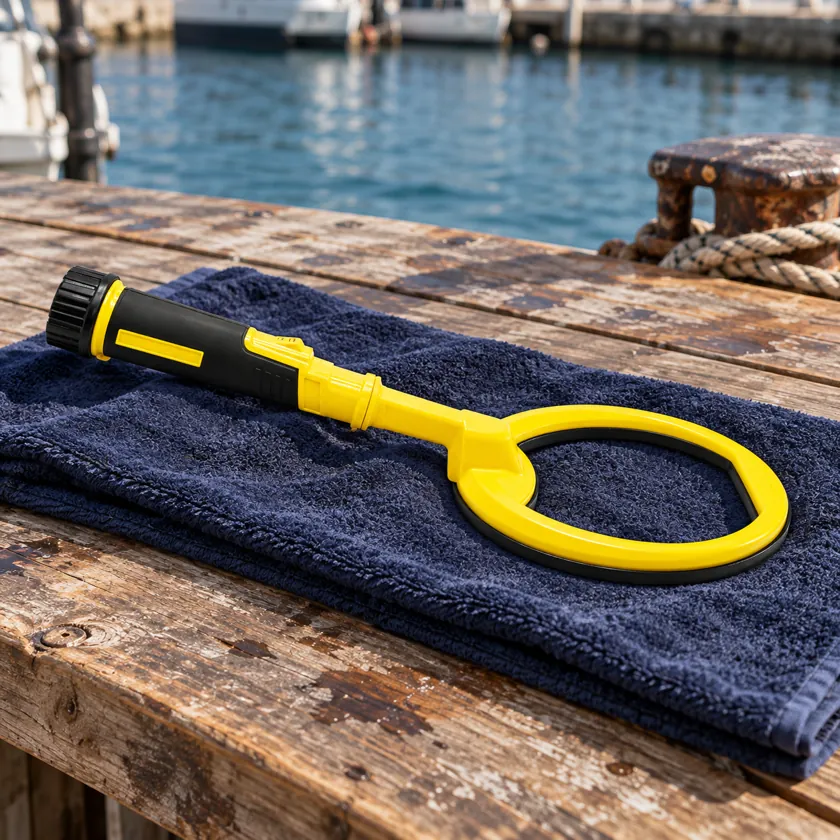 Nokta PulseDive 8-inch Configuration | Compact Scuba Pick | Compact PI detector; 8 in coil; 60 m / 200 ft | 8-inch coil, exact bundle and included attachments | Check price on Amazon |
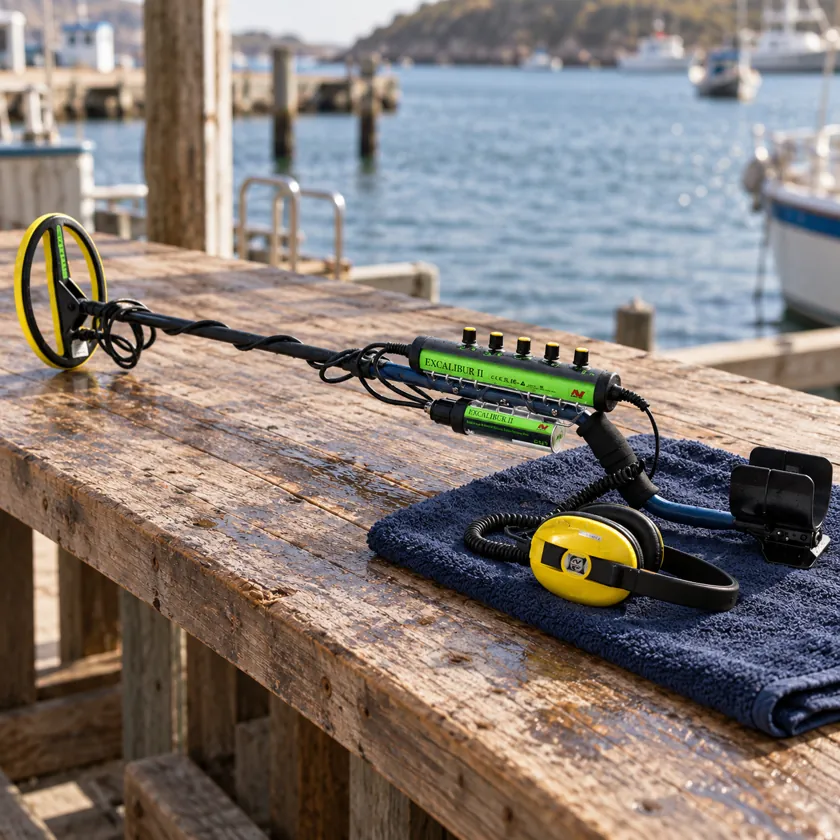 Minelab Excalibur II | Full Shaft-and-Headphone System | Full system; 10 in coil; 60 m / 200 ft | Coil, shafts, headphones and battery package | Check price on Amazon |
 Treasure Products Vibra Quatic 320 | Specialist Pinpointer Companion | Pinpointer; 2 in tip; 30 m / 100 ft | Exact 320 model, battery and pinpointer role | Check Amazon listings |
 Quest Scuba Tector Pro | Folding Compact Alternative | Folding compact PI detector; current rating 60 m | Revision, charging port, search head and package | Check price on Amazon |
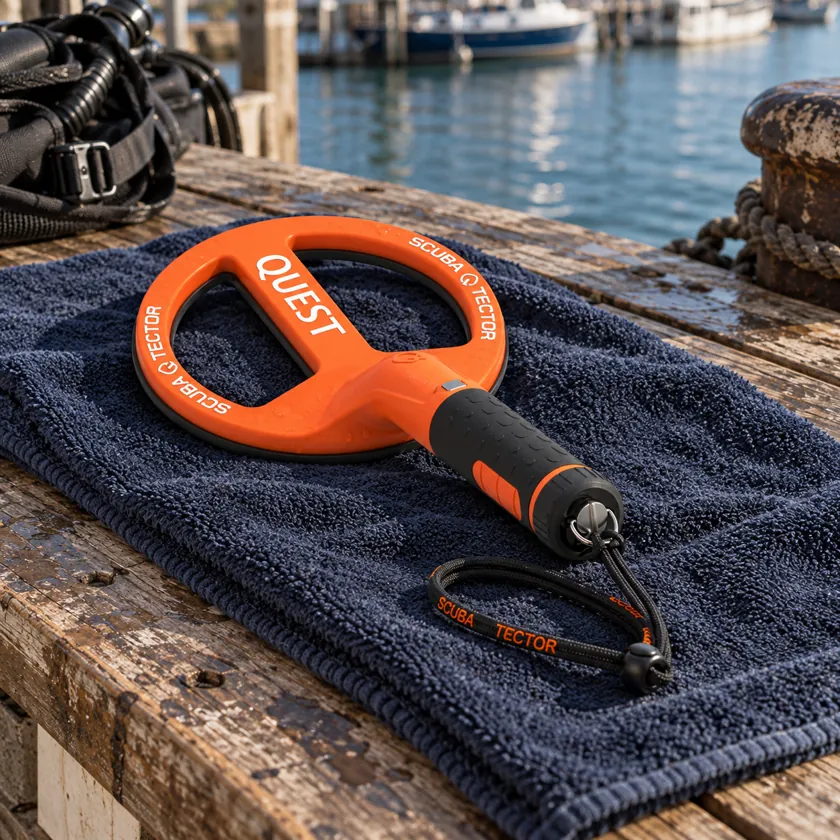 Quest Scuba Tector II | Sealed One-Piece Alternative | One-piece detector; magnetic charging; 60 m | Exact II model, charger and service support | Check Amazon listings |
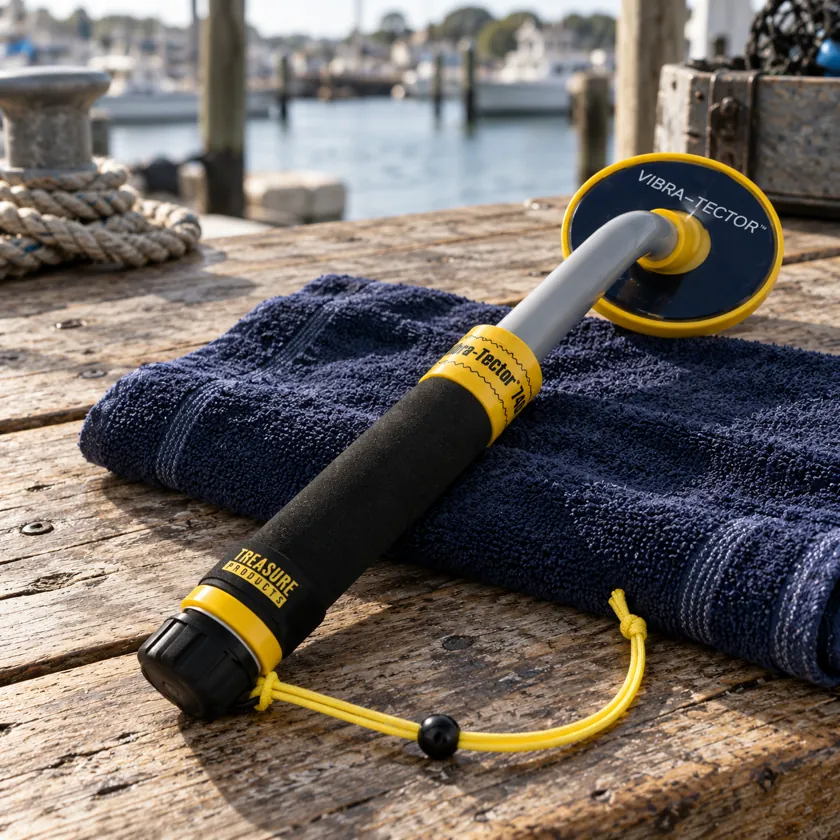 Treasure Products Vibra Tector 740 | Small 4-inch-Coil Option | Compact PI detector; 4 in coil; 30 m / 100 ft | Exact 740, tilt control and battery instructions | Check price on Amazon |
Entries labeled “Check Amazon listings” open a search for that exact model; confirm a matching product and selected configuration before ordering.
1. Nokta PulseDive 8-inch Configuration — Best Overall Compact Scuba Pick
The PulseDive is our first compact detector to compare for scuba searching. Its 8-inch configuration and selectable feedback give you useful practical checks, but the linked 2-in-1 bundle must be distinguished from the standalone Scuba Detector package.
Key Features
- Pulse-induction detector
- 8-inch / 20 cm coil configuration
- 60 m / 200 ft manufacturer submersion rating
- Selectable audio and vibration with LED indication
- Dive mode locks the keys
- Standalone Scuba Detector and 2-in-1 bundles have different contents
Why It’s Our #1 Pick
The PulseDive takes first place for a compact scuba search setup because its configuration is easy to compare on useful details: an 8-inch coil option, pulse-induction operation, several feedback modes and a dive mode that locks the keys. These address how you hold, perceive and control the instrument rather than promising a particular find.
It also sits between two very different ownership choices. The Excalibur II is a fuller shaft-and-headphone system, while the Vibra Quatic 320 is a tip-directed pinpointer for work after an area has already been narrowed. The PulseDive’s compact detector form makes it a more relevant starting point for someone who specifically wants a handheld scuba search tool.
The package deserves attention. The current standalone 8-inch Scuba Detector and the 2-in-1 set can contain different parts, so confirm the coil, pointer attachment and accessories in the chosen offer. The recommendation also assumes the controls and feedback suit you and that adding the search task is compatible with your training, equipment and permitted activity.
What to Consider
Read the actual PulseDive scuba manual for coil fitting, caps, charging and care. Follow the complete model-specific sealing instructions. Before a trip, identify which parts are installed and which protective components belong with that arrangement. Do not infer underwater suitability from a connector that appears to fit another accessory.
Pros
- Compact main-detector format
- Several feedback options to assess
- Dedicated dive-key-lock mode
Cons
- Coil and bundle differences need careful checking
- Interchangeable parts add configuration and seal checks
- Compact equipment still adds a diving task
Who Should Buy It?
Start with the PulseDive if you want a compact main detector and its controls and feedback work for you. Confirm the 8-inch coil and all parts in the selected bundle before ordering.
2. Minelab Excalibur II — Best Full Shaft-and-Headphone System
The Excalibur II is the fuller search-system alternative to the compact handheld models. Compare it when its shaft, wired headphones and larger coil suit the intended search and the extra equipment is manageable.
Key Features
- BBS detector technology
- Wired waterproof headphones
- Wired 10-inch coil configuration
- Standard and dive shaft arrangements
- Rechargeable NiMH battery system
- Current manufacturer submersion rating: 60 m / 200 ft
Why It Makes the Shortlist
The Excalibur II is worth investigating when you want a full detector system with audio feedback and a listed dive-shaft configuration. Wired headphones and coil connections are part of the system’s design. They also create cable-management considerations that an integrated handheld does not have. A shaft arrangement comfortable on a beach can need a different assessment when the diver is maintaining position underwater.
What to Consider
Compare this full-system arrangement with the compact candidates only after deciding what form of search is appropriate. The Quatic pinpointer serves a different, close-localization role and should not be priced as a replacement for a main search system. Ask for the matching manual and confirm the regional package. A used Excalibur also needs condition and sealing assessment; the name alone cannot establish the state of a cable, battery pack or housing exposed to saltwater.
Pros
- Full detector arrangement
- Larger coil than the compact tip and 4-inch options
- Defined shaft and headphone configuration
Cons
- More cables and components to manage
- Separate battery and charging routine
- Used units require careful condition assessment
Who Should Buy It?
Consider the Excalibur II for a full-system search arrangement when its handling suits your planned activity. Match the coil, shafts, headphones and charging package in the exact offer.
3. Treasure Products Vibra Quatic 320 — Best Specialist Pinpointer Companion
The Vibra Quatic 320 belongs here as a specialist pinpointer. Its small sensing tip helps with close localization; it should be bought for that task rather than treated as a compact equivalent of a broad-search detector.
Key Features
- Pulse-induction pinpointer
- 2-inch detection tip
- Vibration and flashing-light feedback
- Automatic tuning
- Standard 9-volt battery
- 100 ft / 30 m manufacturer submersion rating
Why It Makes the Shortlist
The manufacturer’s comparison of its detector models explicitly positions the Quatic as a companion to a main detector. That makes it relevant when a diver already has a search tool and needs to decide whether a separate pinpointing device adds something useful. Buy it for that identified task, rather than interpreting six entries in a comparison as six interchangeable primary detectors. A diver who needs only one broad-search instrument should compare the other candidates first.
The Quatic uses tilt-based activation instead of a push button. Its manual describes how vibration and light communicate detection and power states. That control arrangement changes the familiarization task: recognize the signals, understand how orientation affects switching, and establish a workable storage position. Check whether vibration is perceptible through the gloves and grip you actually use. The presence of a visible light should not be assumed to solve every visibility problem underwater.
A tip-only sensing area can help distinguish where a nearby response originates, but it covers a limited patch at a time. It does not provide a map of the surrounding bottom, prove the identity of an object or establish a repeatable detection depth in all sediments. Its equipment submersion rating describes the housing, not distance to a buried target. Do not add a target-depth promise, recovery-time claim or treasure-value estimate that the evidence does not support.
Pros
- Clear close-localization role
- Tactile and light feedback
- Defined replaceable battery format
Cons
- Limited area coverage
- Adds another item to manage
- Lower submersion rating than the 60 m options
Who Should Buy It?
Choose the 320 when you already have a main search method and a separate pinpointer solves a specific problem. It is not our recommendation as the only broad-search instrument.
4. Quest Scuba Tector Pro — Best Folding Compact Alternative
The Scuba Tector Pro is the folding-body choice to compare with the PulseDive and Tector II. Match the supplied generation carefully because current charging details may differ from older marketplace stock.
Key Features
- Compact pulse-induction detector
- Folding body
- STP20 search-head arrangement
- Current manufacturer waterproof wording: 60 m
- Current version uses cap-protected USB-C charging access
- Supported rod-adaptor option
Why It Makes the Shortlist
The reason to consider the Pro is the combination of compact storage and an integrated detector head rather than a small probe alone. A folding body can help transport, but hinges and accessory arrangements also deserve inspection. Ask how the manufacturer expects the unit to be positioned and retained for your intended task, and review the supported parts rather than assuming that every extension rod is compatible.
What to Consider
Compare the Pro with the Scuba Tector II specifically on body, charging and supported configuration. They should not share one copied battery or sealing procedure. Read the current manual through Quest's download directory and check the exact package. A generic USB-C cable is a connection detail, not proof that charging may be performed while the equipment is wet or outside the maker’s instructions.
Pros
- Folds for storage
- Integrated search-head layout
- Alternative reach arrangement through supported accessories
Cons
- Charging access has its own sealing routine
- Older offers may have a different port
- Hinges and accessories add inspection points
Who Should Buy It?
Consider the Pro when folding storage and its grip suit the task. Confirm the exact revision, charging port and included head rather than applying current-page details to every older offer.
5. Quest Scuba Tector II — Best Sealed One-Piece Alternative
The Tector II is a separate one-piece design with magnetic charging. It is worth comparing if you prefer that arrangement to the Pro’s folding body and cap-protected charge access.
Key Features
- Sealed one-piece body
- Enlarged integrated coil
- Current manufacturer waterproof wording: 60 m
- Magnetic charging connection
- Model-specific charging accessory
- Separate from the original Scuba Tector and Pro
Why It Makes the Shortlist
The useful comparison is whether a sealed one-piece arrangement and magnetic charging simplify your own equipment routine. Fewer routine openings can address one particular handling task, but they do not eliminate inspection or make the charging contacts immune to salt and damage. A sealed body can also imply different service access from a product with a user-accessible compartment. Ask the manufacturer about the actual support route.
What to Consider
Try the grip and control access with the gloves you normally use during an appropriate dry demonstration. Then assess how the detector fits into the rest of the diving configuration with qualified guidance. If it occupies a hand needed for ordinary equipment management, resolve that issue before adding a search task. Buying a compact instrument is not a substitute for managing the extra workload.
Pros
- No routine charging-port opening in the stated design
- One-piece handling arrangement
- Distinct alternative to the folding Pro
Cons
- Fixed body geometry may not suit every grip
- Sealed construction needs a service plan
- Exact II listings can be difficult to identify
Who Should Buy It?
Investigate the Tector II if its one-piece shape and magnetic charger fit your routine. Match the II model specifically and confirm support and charging accessories.
6. Treasure Products Vibra Tector 740 — Best Small 4-inch-Coil Option
The Vibra Tector 740 is a compact integrated detector with vibration and light feedback. Its 4-inch coil and tilt-based control are the distinctions to assess, alongside its lower submersion limit.
Key Features
- Pulse-induction detector
- 4-inch coil
- Vibration and LED feedback
- Tilt-based operating concept
- Standard 9-volt battery
- 100 ft / 30 m manufacturer submersion rating
Why It Makes the Shortlist
The model is worth comparing where a small integrated instrument and tactile feedback suit the permitted task. A compact coil can be convenient for a limited search area while covering less area per sweep than some larger systems. That trade-off is about the task and handling, not a claimed measured recovery rate. Test whether you can perceive and distinguish the feedback through your actual gloves during appropriate familiarization.
What to Consider
Read the manufacturer's 740 manual for the operating and battery-compartment instructions. A standard battery format does not remove the need to inspect and close the seal correctly. Keep the exact seal and battery guidance with the unit. If a different Vibra model appears in a retail listing, establish its own coil, depth and control details rather than borrowing the 740’s record.
Pros
- Compact integrated form
- Does not rely on headphones for feedback
- Replaceable standard battery format
Cons
- Smaller coverage than larger coils
- Tilt control requires familiarization
- 30 m rating differs from the 60 m candidates
Who Should Buy It?
Compare the 740 when a small integrated coil and tactile feedback suit the permitted search. Check that you can interpret the controls and signals with your actual gloves.
How to Choose an Underwater Metal Detector
Decide whether you need broad search coverage, a compact integrated detector or a close-localization pinpointer. Then compare feedback, controls, charging, retention and the exact manufacturer-rated configuration. Confirm that the planned search is permitted at the site before adding the equipment to your dive.
Six distinct designs and their limits
The comparison covers Minelab Excalibur II, Nokta PulseDive Scuba Detector, Quest Scuba Tector Pro, Quest Scuba Tector II, Treasure Products Vibra Tector 740 and Vibra Quatic 320. These are five search-detector designs and one specialist pinpointer. The Quatic is clearly separated as a companion for close localization, rather than treated as an equivalent broad-search tool. The two Quest models have different body and charging arrangements. Select a product for its role in the task; purchasing every type is neither necessary nor recommended.
Some models are full detector systems with shafts, headphones and cabled components. Others are compact integrated handheld instruments. That distinction changes coverage, handling and the way feedback reaches the diver. Compare the actual task before comparing depth figures. A compact recovery tool and a longer-shaft search system need not solve the same problem simply because both can be used underwater.
Separate broad searching from close pinpointing
Compare the Excalibur II with the coil-equipped PulseDive when the task calls for broader searching. The Excalibur’s complete wired-audio and coil arrangement differs substantially from the compact PulseDive package, so transport, feedback and underwater handling matter alongside a shared depth figure. The selected PulseDive part number must identify the intended coil; a different family bundle should not inherit its contents by assumption. Site permission and sufficient diving control come before adding either search task.
For compact searching, compare Scuba Tector Pro’s folding body and sealed charge access with Scuba Tector II’s fixed body and magnetic charging. Vibra Tector 740 gives another coil-based compact option with a lower published submersion limit and vibration/light feedback. The Vibra Quatic 320 is the specialist companion: its tip-directed locating can help after an area is narrowed, but it is not a sixth broad-search detector. Buy that additional tool only if its close-localization role solves a real need. None of the quoted equipment ratings predicts target depth, guarantees a valuable find or extends the diver’s training limits.
Submersion depth is not target-detection depth
A waterproof rating concerns the instrument’s ability to operate under specified immersion conditions. A claim that a detector locates a target at some distance concerns a different measurement. A detector rated to 60 m does not detect objects buried 60 m beneath the seabed. Confusing these two meanings of depth can turn a product table into a seriously misleading comparison.
Target response can depend on size, material, orientation, coil, ground and water conditions. Unmatched demonstrations are a poor basis for comparing target-detection distance. Our underwater detector depth-rating guide explains the distinction. Treat a product’s equipment limit separately from the limits established by your training, certification, plan and conditions.
Verify the entire submerged configuration
Some land detectors have a waterproof coil while the control box, connectors or headphones are not suitable for immersion. Confirm the rating of the complete configuration that will go underwater. An accessory’s higher rating does not raise the rating of the assembled instrument, and a generic underwater label does not establish an operating depth.
Identify the fitted coil, caps, cable and headphones in the actual package. Read the complete instructions for that arrangement and obtain clarification where manufacturer documents conflict. Do not use an old manual’s larger depth number to override the current product record. A discrepancy should be resolved before use, not averaged into a new specification invented by an editor.
Full systems and compact handhelds support different tasks
Excalibur II illustrates a full-system approach with shaft and audio arrangements. The compact search detectors integrate more of the instrument into a shorter body. A longer shaft can help coverage in an appropriate setting while adding reach and management demands underwater. A handheld can be easier to transport while requiring more deliberate coverage of a larger area. The Quatic pinpointer narrows that role further: it helps localize a response rather than efficiently scan a broad area.
Start with a permitted, realistic task such as investigating a limited lost-item area under appropriate conditions. Do not choose solely from a beach-search demonstration if the intended use is scuba. Body orientation, buoyancy and hand availability change the experience. The form that suits a land hobbyist’s swing is not automatically the best arrangement for a diver.
Feedback must work for the user
Headphone audio, vibration and light convey information differently. The Excalibur’s wired audio and the Vibra Tector’s vibration-and-light arrangement are useful contrasting examples. Ask to experience the actual feedback in an appropriate demonstration and consider the effect of gloves, equipment noise and attention. A feedback method that sounds convenient in a product description can be difficult for a particular user to interpret.
Also consider the rest of the dive information. Searching should not displace monitoring, buddy awareness or the controls needed for ordinary diving. A loud signal or a promising vibration is not a reason to ignore the plan. End the search when the dive plan requires it.
Pulse induction is a design feature, not a treasure guarantee
Several manufacturers here identify pulse induction, while Minelab identifies its BBS system. Those technology names help find the correct documentation and understand the broad design. They do not establish that one detector finds every valuable target or that discrimination perfectly separates desired and unwanted objects in every environment.
Ask what a control actually does under the exact manual. Treat claims of stable saltwater operation as manufacturer claims unless independently tested under comparable conditions. Promotional photographs of jewelry or stories of spectacular finds are not specification evidence, and they do not establish that recovering a particular object is lawful or appropriate.
Coil size and shape need a task-based comparison
A larger search head can cover more area in a sweep, while a compact head can be easier to position in a confined permitted search area. The practical result depends on the task and the user’s control. Do not infer a universal depth ranking from coil diameter alone. A larger object also can create different handling and packing requirements from a smaller integrated instrument.
Check the exact coil supplied. Nokta’s current standalone Scuba Detector record names an 8-inch package, while other PulseDive offers can show different parts. Quest also describes different search-head configurations. A product photo that contains multiple optional coils does not prove every coil is included. If changing a head, follow only the supported configuration and sealing requirements.
Controls and pressure-related behavior
Buttons and seals behave within the manufacturer’s design conditions. Nokta’s listed dive-key-lock feature addresses pressure-related key operation; other products use different control concepts. Understand the actual mode and transport requirements rather than assuming that a familiar push button works identically on every detector. A control lock does not change the housing’s operating rating.
Try the grip and controls with the intended gloves during a safe dry demonstration. Ask whether the unit can be stowed and retrieved within the planned configuration. Avoid adding an improvised extension, tether or mount that blocks controls or creates an unmanaged snag point. Configuration choices need appropriate training and the actual product instructions.
Battery and charging arrangements are not interchangeable
The shortlist includes Minelab’s NiMH system, compact rechargeable designs and the Vibra Tector’s replaceable 9-volt arrangement. Quest II’s magnetic charging and Pro’s protected USB-C access are different ownership tasks. A common connector or battery shape does not establish compatibility with another charger or a different product’s sealing procedure.
Charge and maintain equipment according to the exact manual in an appropriate dry setting. Inspect charging accessories and connections before travel, and establish the manufacturer’s support route for a damaged or flooded unit. Do not repeatedly energize questionable equipment merely to see whether it still detects metal. For air travel, verify the current rules for the actual battery chemistry and rating rather than assuming all detector batteries follow one baggage rule.
Saltwater care and seal access
Follow the manufacturer’s instructions for rinsing, drying, cap handling and any required lubrication. A product rated for saltwater still needs the specified care. Keep grit away from open sealing surfaces and do not assume extra grease improves a damaged seal. Replacement parts must match the exact model and generation.
After use, inspect the housing, cables, coil connections and charging area as appropriate to the design. A one-piece detector and a modular instrument have different access points to examine. If there is evidence of leakage or damage, obtain qualified manufacturer guidance before reuse. A dry exterior is not proof that the interior or seals are sound.
Retention and diving workload
A detector adds an object to hold, stow or manage. Consider it alongside the existing regulator, BCD controls, lights and instruments. Appropriate retention should support the trained configuration without creating a new entanglement problem. Do not improvise a wrist attachment or long tether simply because losing an expensive detector would be inconvenient.
Assess the task in suitable conditions and obtain relevant instruction. Being able to operate the detector on land is not evidence of being able to search while maintaining buoyancy and awareness underwater. Our pre-dive equipment-check guide addresses the wider kit. The detector belongs inside that preparation, not outside the ordinary dive plan.
Site permission comes before searching
Check the landowner, operator and relevant authority’s rules before detecting, disturbing sediment or recovering objects. Search permission and recovery permission can be separate questions. Protected areas and cultural sites can impose restrictions even where recreational diving is allowed. NOAA’s marine-sanctuary permit guidance is one official example of why otherwise prohibited activities require specific authorization; rules must be checked for the actual location.
Do not disturb habitats, wrecks or historic material to improve a detector demonstration. A signal is not permission to excavate or keep an object, and a product’s promotional treasure imagery does not establish ownership rights. If an object may be hazardous, leave it undisturbed and follow the relevant local authority’s instructions. This buying comparison is not a recovery, salvage or legal-permission guide.
Budget for a supported package
Compare the actual detector, included coil, headphones where applicable, charger, approved accessories and service support. An apparently low-priced body-only offer can require additional parts before it forms the intended system. A used instrument also needs a separate condition assessment and a clear record of seals, cables and battery history.
Check warranty eligibility and parts availability in your region. Fulfillment by a marketplace does not by itself prove an authorized seller or current package. If the manufacturer source is an older manual, establish whether it still applies to the item offered. A detailed old document is useful evidence about that version; it does not establish current production or retail availability.
Organize the final comparison
Compare Excalibur II with the compact search detectors if a full wired system is one option for the permitted task. Compare PulseDive’s identified coil package with the two Quest body and charging arrangements when a compact detector is appropriate. Consider Vibra Tector 740 for its small-coil, vibration-and-light approach while keeping its lower rating explicit. Consider Quatic 320 only when a separate close-localization tool has a defined purpose alongside your main detector.
Reject an uncertain whole-system immersion rating, a wrong package or a configuration you cannot manage before comparing cosmetic details. Resolve the source and manual discrepancies, verify the exact offer and leave time for familiarization. The useful outcome is equipment appropriate to a permitted task and a trained dive plan, with realistic limits on what the detector and the buyer’s research can establish.
Define the lost-item task before buying
A permitted search for a recently lost object in a limited area is a different equipment problem from a broad beach survey. Record what is known about the location, object and site conditions without turning uncertainty into a promise of recovery. The information helps a qualified operator decide whether the task is appropriate and which detector form might be useful. A compact handheld may suit one controlled task while a full shaft system addresses another.
Consider whether specialist help or rental is more practical than a purchase for a single incident. Buying a detector does not establish diving competence, site access or the likelihood of finding the object. It can also leave you with equipment you have no supported reason to use again. Compare ownership against the actual repeat use, charging and maintenance responsibilities rather than the emotional value of a particular lost item.
If an operator offers a demonstration or service, establish what it includes and what permissions are required. Avoid treating a detector’s advertised target pictures as an estimate of success. The honest purchase question is whether a supported tool suits a permitted, realistic task, with the search and diving work kept within the abilities and authorization of the people involved.
Ask for a demonstration of information, not a treasure show
A useful product demonstration shows the controls, feedback and listed configuration. Ask the supplier to identify the exact coil and show how the selected feedback mode communicates a response in an appropriate dry setting. Notice whether the signal is clear to you and whether changing settings is understandable. A staged valuable object appearing beside a coil does not demonstrate comparative performance underwater.
Keep the conditions of any comparison consistent and describe their limits. A large exposed object and a small obscured object are different tests; a different mode or coil can also change the result. Do not infer a ranking from demonstrations that change several variables together. Where a manufacturer provides test conditions, read them before attaching a distance claim to every possible target.
Then return to the ownership questions. Can you obtain the correct charger, seal or approved accessory? Is the current manual available for the supplied version? Can the unit be serviced in your region? A detector that produces an impressive signal once on a counter still needs a supported routine for the period between purchases, trips and future maintenance.
Keep a configuration and condition record
Record the exact model, product generation, fitted coil, charging arrangement and relevant manual version. Include any service or seal work and keep purchase documentation available. The record is especially useful for a modular PulseDive package or a full detector system whose accessories may change over time. A generic label such as underwater detector does not identify which parts were actually used.
Before a later trip, compare the physical configuration with that record and review any relevant manufacturer updates. An accessory borrowed from another kit or a cap replaced after travel should be checked for exact compatibility. Document unusual operation or suspected damage clearly and arrange the appropriate assessment. Do not clear a concern simply because the detector still gives a signal when held near a metal object.
Frequently Asked Questions
Is the waterproof depth rating the same as detection depth?
No. A submersion rating describes the equipment’s permitted underwater use in the specified configuration. It does not say how deeply a target can be detected in sand or sediment. Target size, material, orientation and conditions all affect the response.
Is a pinpointer a replacement for a main underwater detector?
Usually it solves a different task. The Vibra Quatic 320 has a small tip-directed sensing area intended for close localization after a search area is narrowed. A larger search coil covers a different area per pass. Choose the role you need before comparing prices.
Does every Nokta PulseDive package include the same coil?
No. The current Scuba Detector configuration and the 2-in-1 sets can differ, and older offers may show another coil size. Confirm the exact coil, pointer attachment, protective parts and accessories in the selected offer rather than relying on the PulseDive family name.
Which is better underwater: vibration, lights or headphones?
Choose feedback you can reliably perceive with your actual gloves, grip and equipment during suitable familiarization. Light, vibration and wired audio each introduce different handling considerations. A mode listed on a specification sheet does not prove it will be comfortable or clear for every diver.
Can I charge an underwater detector while it is wet?
Follow the exact model’s charging and drying instructions. A sealed cap, USB connector or magnetic charging arrangement does not by itself establish that wet charging is permitted. The Quest Pro and Tector II use different arrangements, and older versions may also differ.
Can I use an underwater metal detector at any dive site?
Do not assume so. Access, detecting and recovery rules depend on the site and jurisdiction, with particular restrictions possible around protected or heritage areas. Check the relevant authority and operator before the trip. An equipment rating or a retailer’s recovery story does not establish permission.
Our recommendation
Final Verdict
Start with the Nokta PulseDive if you want a compact scuba detector and its controls suit you. Match the 8-inch coil and exact package. Compare the Minelab Excalibur II when a fuller shaft-and-headphone system better fits the search.
,The Quest models offer different body and charging layouts, while the Vibra Tector 740 is a smaller integrated option. Buy the Vibra Quatic 320 specifically as a pinpointer companion. Keep equipment submersion ratings separate from target-detection claims, and confirm site permission before planning a search.
Specifications and Manuals
For model details, see Minelab Excalibur II specifications, Nokta PulseDive 8-inch Configuration specifications, Treasure Products Vibra Quatic 320 specifications, Quest Scuba Tector Pro specifications, Quest Scuba Tector II specifications, Treasure Products Vibra Tector 740 specifications.
About the author
Robert
Robert bohat acha bacha hay