
By Robert · Updated
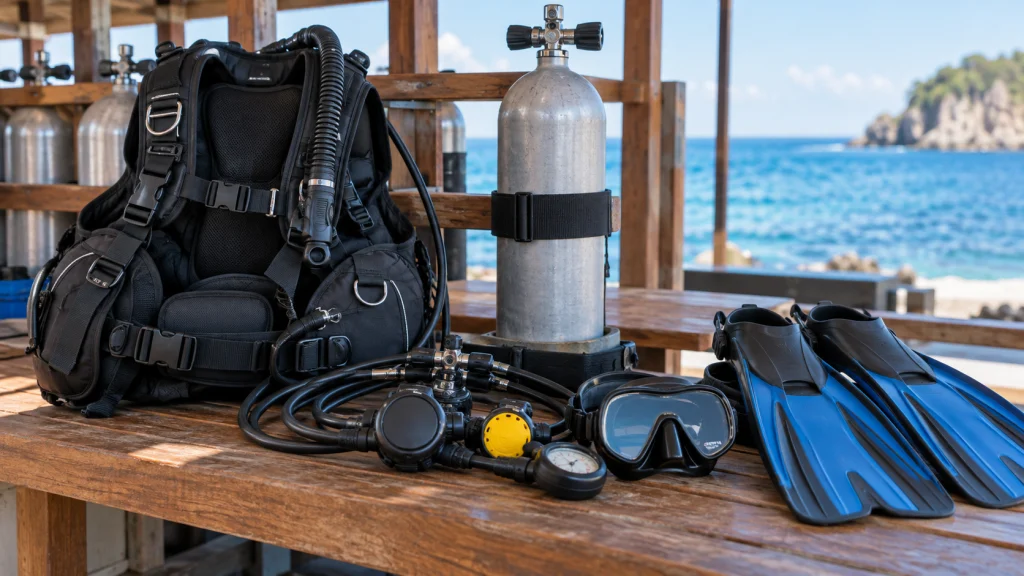
A pre-dive scuba gear checklist helps a trained diver confirm that the actual equipment setup is ready for the planned dive. It should cover function, fit, gas and instrument settings, retention, release access and buddy familiarity. Use the checking sequence taught by your training agency and the specific equipment manuals. This guide explains the equipment questions behind that routine; it does not replace practical instruction or prescribe a universal emergency procedure.
Start before reaching the dive site
Inspect equipment early enough to arrange service or replacement. A fault discovered on the evening before travel leaves fewer good options than one found while preparing the kit. Check service records, required inspections, battery condition and whether the equipment still fits. Confirm that any recently purchased component has already been assessed for compatibility.
Keep equipment with an unresolved fault clearly separate from ready equipment. A clean bag can make everything look prepared even when a regulator needs assessment or a computer has given an unexplained warning. Write down the issue so a rushed packing session cannot erase the distinction. Appropriate servicing happens before the operational pre-dive check, not as a substitute for it.
Match the checklist to the actual configuration
Know what you are assembling and how it is intended to work. Rental equipment, a different cylinder, changed exposure protection or a new BCD can alter familiar details. Ask for an explanation when a control or fitting is unfamiliar. Do not let the pressure to keep up with a group turn uncertainty into an assumed connection.
Use the manufacturer’s instructions and appropriate professional help for assembly and compatibility questions. A pre-dive checklist cannot make an unsupported combination suitable. The objective is to verify a known arrangement, not to test whether a questionable component can be made to fit. Record unfamiliar features for controlled familiarization before the dive.
Inspect cylinder retention and visible condition
Check the cylinder and its attachment using the routine you have been taught and the equipment instructions. Look for visible damage or something that does not sit as intended. A cylinder band, back support or retaining arrangement can differ between BCDs, so do not transfer an adjustment method blindly from another unit.
The cylinder’s inspection and filling requirements are separate from its visible attachment. If records, markings or condition are doubtful, consult the dive operator or qualified facility. Do not improvise valve work or try to correct a high-pressure connection by guesswork. Our cylinder inspection explainer describes why current condition matters alongside scheduled checks.
Check the regulator system as trained
Review the primary and alternate breathing arrangements, hose routing and relevant controls with the buddy. Perform the breathing and supply checks required by your training and the maker’s guidance. Familiarize yourself with where the alternate source is secured and how it is intended to be accessed in that configuration.
Any unexplained leak, unusual breathing behavior, damaged hose or doubtful fitting deserves attention before entering the water. Do not continue because the system appears to work during one brief inhalation. A checklist is useful precisely because it creates a point at which the dive can pause while a problem is resolved by someone appropriately qualified.
Confirm pressure information and the gas plan
Know where the pressure indication is and which units it uses. Check the instrument’s response according to the trained routine. For air integration, confirm the correct transmitter and computer pairing as the manufacturer requires. A displayed number from an unintended source is not useful information for the cylinder you will breathe. Our dive computer buying guide separates wireless pressure support from computer-only models when you research a change of equipment.
The starting pressure check does not replace gas planning, agreed reserves or monitoring during the dive. Use the plan appropriate to your training, buddy team and environment. If instruments disagree or pressure information is unreliable, resolve the issue rather than deciding which reading is more convenient. Read our SPG versus air-integration guide for the equipment distinction.
Review the BCD’s inflation and deflation controls
Check the BCD using its specific pre-dive procedure, including the controls and mechanisms relevant to that model. Locate the inflator, oral inflation provision and dump arrangements. Confirm that hoses and attachments have not obstructed access. An unfamiliar control layout needs explanation and practice before it is relied upon.
Inspect the harness and cylinder attachment as part of the same system. A bladder that holds gas does not establish that every strap and retaining fitting is correctly adjusted. Our BCD maintenance and inspection article separates routine care from the readiness check; both are needed, and neither should be assumed from the appearance of a clean exterior.
Check weights and release access with the buddy
Identify where ballast is carried, how the system is intended to retain it and which releases apply. Integrated pockets, belts and fixed trim positions are not interchangeable. Follow the system’s instructions and the procedures taught for the configuration. Do not invent a new release method immediately before a dive.
Make sure the buddy understands the arrangement and can identify the relevant controls as trained. Check that straps, accessories or another belt do not block access. A weight pocket that appears present may still need its seating or locking mechanism checked according to the maker. Our integrated weights and belt comparison explains the equipment questions behind that discussion.
Confirm computer mode and relevant settings
Check power, readability, the active operating mode and the settings required for the planned dive. With nitrox or another supported breathing mixture, follow your training for analysis, identification and configuration. Do not assume a computer reset to the required setting after the previous dive or after battery work.
Recognize the principal fields and alerts on the model you are wearing. A watch display is not confirmation that the intended dive mode is ready. If the instrument gives an unexplained warning, consult the manual and obtain help before use. Our dive computer reading guide introduces the common information fields without prescribing model-specific responses.
Check mask, fins and exposure equipment
Look for a damaged mask strap, distorted skirt, slipping fin buckle or footwear that does not sit properly in the pocket. Check the mask with the hood arrangement and mouthpiece you will use. Familiar equipment can behave differently when combined with a new hood or thicker boots.
Assess closures and mobility in the exposure suit as instructed. Persistent pinching, restricted movement or a fit that requires improvisation needs attention. These are not minor details merely because they are outside the breathing system. A poorly retained fin or persistent mask leak can create unnecessary task loading during the dive.
Review lights and task-specific accessories
Inspect the equipment needed for the actual dive, including lights, signaling devices and other accessories covered by the plan. Confirm power, condition, placement and access using the relevant training and manuals. A backup device needs an accessible, usable role; it should not be assumed ready because it is somewhere in a pocket.
Check that attachments do not create an unassessed obstruction or snag arrangement. Additional equipment can make a familiar kit more complicated. Introduce it with appropriate instruction and familiarization. If an accessory distracts from essential monitoring or skills, review the plan before taking it on a more demanding dive.
Recheck after the journey to the site
Transport can change an arrangement that looked ready at home. Unpack on a suitable surface and confirm that the mask case, straps, hoses and accessories have not been crushed, pulled or left behind. A checklist completed before a flight does not establish the condition of the equipment after baggage handling. Allow time at the destination to inspect, assemble and familiarize yourself with the actual kit.
When renting an item, ask the operator to explain the controls and inspect the fit with your own equipment. Do not treat the rental label as a substitute for understanding the configuration. If a search device is part of the plan, review its depth rating and complete submerged setup separately from the diver’s operating limits.
Make the buddy check an exchange
A buddy check works best when both divers actively confirm understanding. Describe important features rather than silently inspecting only your own setup. Ask about unfamiliar weight releases, alternate sources and instrument arrangements. Use the checking system taught during training so essential parts are not lost in an improvised conversation.
If interrupted, return to the relevant part of the sequence rather than assuming it was completed. Repeat appropriate checks after a meaningful equipment change. A cylinder swap, battery issue or adjusted harness can alter what was previously verified. Being familiar with a buddy is not a reason to skip checking the equipment actually being used today.
Pause when a finding is unresolved
Treat a doubtful connection, damaged part, unexplained alarm or missing required equipment as a reason to stop preparation and seek the appropriate help. Avoid bargaining with a fault because the boat is ready to leave. A checklist should make the decision visible early enough to change the arrangement safely.
PADI’s basic equipment checks and DAN’s return-to-diving equipment guidance provide useful context. Apply them alongside your certification, operator’s procedures and exact manuals. The checklist succeeds when it confirms a suitable, understood configuration or identifies why the dive should wait.
About the author
Robert
Robert writes about scuba-diving equipment for GearDeep, focusing on fit, compatibility and the practical differences between products. His buying guides use manufacturer specifications and manuals to help readers compare their options, understand important limitations and make informed equipment choices.