
By Robert · Updated
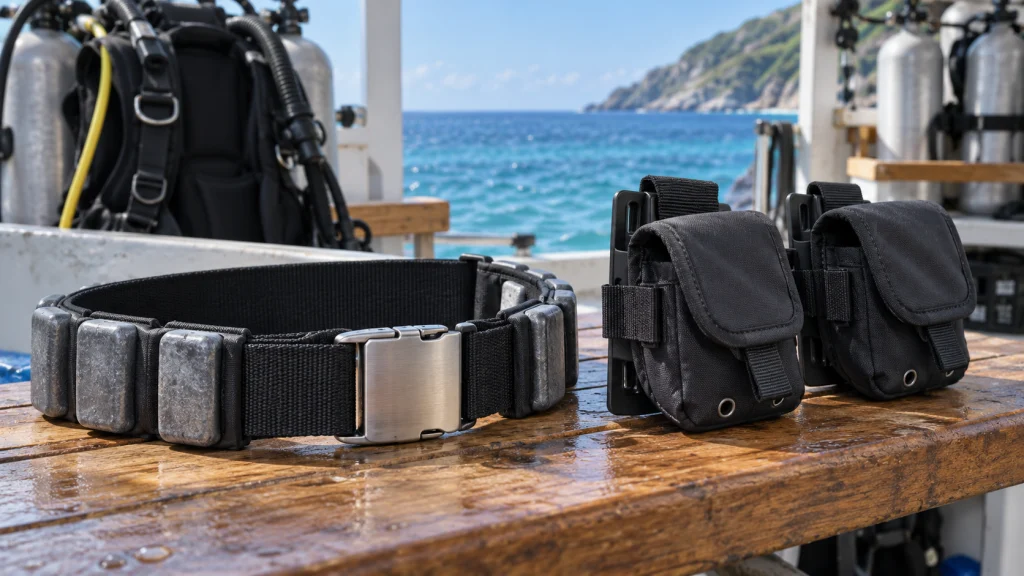
Integrated scuba weights vs a weight belt is a comparison of how ballast is carried, retained and accessed in a complete equipment setup. Integrated pockets place some weights in a compatible BCD system; a belt carries them separately around the body. Neither arrangement determines how much weight a diver needs or replaces weighting and release skills learned in training. Compare fit, compatibility, retention, access, buddy understanding and the conditions in which the configuration will be used.
Separate weight amount from carrying method
The amount of ballast needed depends on the diver and complete equipment, including exposure protection, cylinder and water conditions. Moving the same weight from a belt to BCD pockets changes the carrying arrangement, but it does not establish that the original amount was appropriate. Have weighting assessed through your training and the actual configuration.
Do not use a product’s maximum pocket capacity as a recommendation to fill it. Capacity describes a limit or supported arrangement for that system. The correct amount and distribution need to support the planned diving and trained procedures. A belt that can physically hold more weights is not automatically a better setup either.
What an integrated system includes
An integrated system uses pockets or other retention components intended for a particular BCD or harness. The weights, pocket shape, locking mechanism and release arrangement must be compatible. Similar-looking pockets from another model may not fit or retain correctly, even if they can be pushed partly into place.
Identify the exact BCD and pocket part numbers, especially when buying used equipment. Ask what is included and whether replacements remain available. Do not rely on a retailer photograph to establish that both pockets, handles and required components are supplied. Our BCD style comparison puts weight integration alongside harness fit and bladder layout rather than treating it as an isolated feature.
What a separate belt changes
A belt carries ballast independently from the BCD. Its fit, buckle, weight retainers and routing need to suit the actual equipment arrangement and training. A familiar-looking buckle is not proof that every belt operates or should be configured identically. Check the equipment instructions and trained method for the setup being used.
Assess comfort with the exposure suit and BCD together. A belt can sit differently once other straps and equipment are fitted. Do not judge it only over ordinary clothes in a shop. Persistent movement, discomfort or obstructed access needs review rather than being accepted because the belt is simple in appearance.
Retention and release are different requirements
A weight system must retain ballast appropriately during normal use and provide the release functions intended for the configuration. Convenience in loading does not prove either requirement is satisfied. Inspect and check the system according to its instructions, and learn the relevant skills with qualified instruction.
Do not invent an underwater release drill from a written article or practice dropping weights in an uncontrolled setting. A release can affect buoyancy and people or equipment nearby. The correct training environment and procedures matter. This comparison explains equipment considerations without prescribing which weight to release, when, or how much in an emergency.
Identify every weight location
Some configurations combine releasable ballast with trim weights or other fixed positions. A pocket’s location or appearance does not automatically tell a buddy whether it is intended for quick release. Map the actual arrangement and understand which components do what, within the system’s instructions and your training.
Do not count all ballast as though it has the same role. Changing where it is carried can affect access, balance and handling of the equipment out of water. Have a qualified instructor review an unfamiliar distribution. A diagram from another diver’s setup is not sufficient evidence that the same arrangement suits your body, cylinder and exposure protection.
Check pocket seating on the actual BCD
For integrated systems, use the maker’s method to confirm that pockets are inserted and retained correctly. Some systems have a specific locking indication or sequence; those details should be learned from the exact manual and appropriate instruction. Do not assume that a pocket pushed far enough inward is secure because it looks tidy.
If a mechanism will not seat or a handle, buckle or retaining part is damaged, stop and resolve the fault before diving. Use approved replacements. Forcing an unfamiliar pocket or adding a home-made restraint can interfere with the system’s intended retention and release. The BCD inspection guide includes checking weight-related components as a distinct part of readiness.
Keep releases accessible through the full setup
Check the arrangement with the BCD, suit, other straps and accessories in their intended positions. A control that is easy to reach while the BCD sits on a bench can be obstructed once worn. Gloves can also change how a handle or buckle feels. Assess the required familiar tasks in an appropriate trained setting.
Avoid routing other equipment across release controls without qualified assessment. Do not assume an accessory pouch or strap is harmless simply because it is lightweight. The relevant issue is whether the complete configuration supports the intended function, including what the buddy understands about it.
Discuss the arrangement with the buddy
Make the weight system part of the normal buddy check. Identify the components and the release arrangement as taught. Do not assume a buddy recognizes a mechanism because it resembles one they have used before. Manufacturers and generations can differ in details that matter.
When renting or borrowing equipment, request an explanation and suitable familiarization. A short conversation before gearing up can reveal that a pocket is a trim location or that a retention mechanism works differently. Use the pre-dive equipment checklist to keep that exchange connected to the full setup, rather than treating weights as an afterthought.
Compare comfort without assuming trim results
Divers may prefer the feel of one carrying arrangement, but fit and distribution are individual. Integrated weights can place ballast with the BCD; a belt distributes it through another support around the body. The comfort of either depends on the amount, shape of weights, suit, harness and adjustment.
Do not claim that one system always produces better horizontal trim or makes buoyancy easier. Those outcomes involve the complete configuration and skill. If changing systems, review weighting and distribution with an instructor, then use appropriate controlled familiarization. Comfort on land is helpful information but does not replace that in-water assessment.
Think about handling the equipment on land
A BCD with loaded weight pockets can be heavy to lift, move or pass to another person. A separate belt creates another item to carry and secure. Follow the operator’s equipment-handling routine and communicate clearly with anyone helping. Do not let a convenient carrying arrangement become an unexpected load for a crew member or buddy.
Consider the whole route, including stairs, a vehicle, a shore approach and boat storage. The preferred arrangement may depend partly on how equipment is transported and assembled. Avoid evaluating only the moment when the kit is already worn in the water; the transfers before and after the dive matter too.
Inspect belts, pockets and soft-weight pouches
Look for damaged webbing, stitching, buckles, handles and retention parts. Where soft weights are used, check their pouches according to the relevant instructions and the condition of the covering. Do not keep using a damaged bag simply because most of its contents remain inside.
Rinse and dry the system as directed, giving attention to pockets and closures where grit collects. Store components together so the correct compatible pieces are available for the next trip. Do not leave a heavy loaded pocket pressing against a BCD bladder or delicate instrument in storage. The equipment storage guide describes separating protective storage from temporary transport.
Confirm the weights supplied at a destination
If traveling with your own BCD but using locally supplied weights, ask what forms and sizes the operator provides. A pocket designed for a particular shape or loading arrangement should not be forced around whatever ballast happens to be available. Check the manufacturer’s restrictions and discuss the setup with the operator before departure where possible.
Leave time to review the complete configuration on arrival. A different cylinder, suit or water environment can also affect the weighting assessment, independently of whether the pockets accept the supplied weights. Do not use the familiar amount from home as an automatic instruction for the destination. The useful travel plan confirms compatible loading, accessible controls and the appropriate trained weighting check, instead of treating a packed pair of integrated pockets as proof that every local arrangement is settled.
Choose around compatibility and training
Shortlist systems that fit the BCD, exposure equipment and planned use. Confirm retention, required release access, component condition and local support. Include the cost of missing or replacement pockets when comparing a used BCD with a belt-based arrangement. An apparent bargain may need specific parts before it is usable. Our BCD buying guide distinguishes fixed gravity pockets, removable weight systems and other configuration differences before a purchase.
Manufacturer documentation, such as the SCUBAPRO BCD manual, shows why integrated systems must be considered model by model. The final choice should be comfortable, supported and understood by the diver and buddy. Its purpose is to carry the appropriate ballast within a trained equipment configuration, not to replace weighting judgment or buoyancy skills.
About the author
Robert
Robert writes about scuba-diving equipment for GearDeep, focusing on fit, compatibility and the practical differences between products. His buying guides use manufacturer specifications and manuals to help readers compare their options, understand important limitations and make informed equipment choices.