By GearDeep Editorial · Updated
Scuba gear storage between dive trips should keep equipment dry, protected from deformation and ready for inspection. Packing everything into a closed travel bag may clear space at home, but it can conceal moisture, flatten soft components and make missed servicing easier to overlook. Build a storage arrangement around the different needs of neoprene, masks, fins, buoyancy equipment, regulators, electronics and cylinders. A single cupboard can work if the equipment is prepared properly and each item has an appropriate place.
Finish the trip before closing the bag
The storage routine begins when the equipment comes home, not several weeks later. Empty every compartment, including small pockets where a damp hood, boot or lanyard may be hiding. Separate equipment that needs rinsing from pieces already cleaned. Remove travel labels and temporary packing materials only after checking that nothing important is tucked inside them.
Allow space for the kit to dry before putting it away. If the whole load remains in a bag while you arrange the perfect storage shelf, the immediate problem persists. A clean temporary drying area is more useful than a sophisticated cabinet filled with damp equipment. Treat unpacking as the final part of the dive trip and reserve enough time for it in your return-day schedule. Compare scuba gear bags as transport equipment while planning separate dry storage for items that should not remain packed.
Choose the room before buying organizers
Look for a space protected from sunlight, excessive heat, water intrusion and household chemicals. A convenient garage shelf can be unsuitable if fuel, solvents or other products are stored alongside it. A vehicle is also a poor default for long gaps between trips because temperature and security conditions can change substantially.
Check the room in the season when you will actually use it. A cupboard that seems dry in winter may be humid during another part of the year. Keep equipment off a floor that could become wet, and make sure air can circulate around stored items. Organizers should support these requirements; they should not turn an open shelf into a set of tightly sealed boxes around gear that is not fully dry.
Separate clean, dry and service-needed equipment
Three simple labels prevent confusion. Clean but still drying equipment needs airflow. Ready equipment can enter its normal storage position. Equipment with a fault or uncertain service status should be identified so nobody assumes it is available for the next dive. A note on the storage location can be more reliable than remembering what happened on the last day of a trip.
For a fault, record the symptom rather than diagnosing it beyond your knowledge. “Computer showed an unexplained warning” is useful information for a service provider; an unsupported conclusion about the electronics is less useful. Keep the affected component with its relevant details, and arrange qualified assessment where required. Do not clear a service-needed label simply because the item looks normal after drying.
Masks need protection from pressure and grit
A mask case can help prevent heavier objects from deforming a silicone skirt or pressing against the lenses. Check that the mask is dry before closing it inside. Position the strap so it is not trapped awkwardly in the lid, and do not fill the nose pocket with unrelated small accessories. A case protects equipment best when the contents are not already being squeezed together.
Keep gritty clips and tools away from lens surfaces. If the mask uses corrective lenses or a specialized treatment, retain its care instructions with the model details. Inspect the skirt after a long storage period; a comfortable fit from last season should not be assumed after a strap or component has deteriorated. Our mask cleaning guide covers the separate rinse and inspection routine.
Store fins in their intended shape
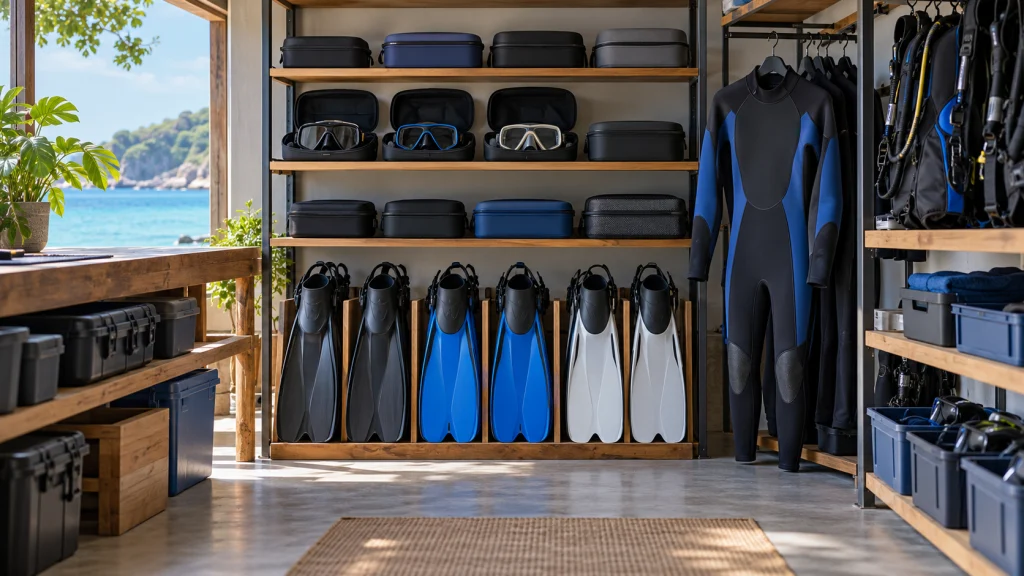
Avoid leaving fin blades bent under a bag, box or piece of furniture. Their apparent toughness is not a reason to store them under a concentrated load for months. Support them without forcing the blade or foot pocket into an unnatural shape. If the manufacturer supplied storage inserts and recommends using them, keep those with the fins rather than discarding them after purchase.
Check heel straps and buckles before putting the fins away. An appropriate replacement can be arranged during the off-season, when there is time to confirm compatibility. Keep paired fins together but avoid tying them so tightly that the pockets distort. See fin cleaning and storage for care of blades, foot pockets and retention hardware.
Give neoprene room to dry and hang correctly
Wetsuits, hoods, boots and gloves should be prepared according to their own care instructions. Thick linings and reinforced soles can remain damp after the outside feels dry. Check inside cuffs and folded sections rather than judging the whole item from a single touch. Drying methods and hanger arrangements vary, so use the garment’s instructions instead of one rule for every suit.
Once dry, avoid crushing neoprene beneath other equipment. Broad supports can reduce concentrated loading where recommended. Leave enough room that sleeves and legs do not become tightly pressed into a corner. Store small exposure items where they can be counted before packing. A missing glove is much easier to deal with at home than at the departure gate.
Treat the BCD as more than a jacket
A buoyancy compensator includes a bladder, inflator, dump mechanisms, harness, cylinder attachment and sometimes integrated weights. Cleaning only the exterior does not address everything that may need attention. Follow the exact manual for internal rinsing, draining, drying and the condition in which the bladder should be stored. Do not improvise a procedure based on another model’s valve arrangement.
Remove loose items from pockets and check that stored accessories cannot press sharply into the bladder. Support the unit as the manufacturer recommends, without hanging its weight from an inappropriate fitting. Note any issue with the inflator or a dump control for qualified assessment. A BCD that has sat unused still needs a proper pre-dive inspection before returning to service.
Protect the regulator and its hose layout
Use the regulator maker’s cleaning and storage instructions, particularly the precautions that prevent water entering the first stage. A dust cap is useful only when it is appropriate, dry and fitted correctly. Do not treat a covered inlet as permission to use any soaking method. If there is uncertainty about water intrusion, ask an authorized technician rather than assuming drying will resolve it.
Arrange hoses in gentle curves without tight coils, kinks or a heavy object pressing on a connection. A regulator bag can help keep the assembly organized and protected, but it should not be a damp sealed container. Keep model and service information with the system so a shop can identify what requires attention before the next trip.
Follow the electronics’ storage instructions
Dive computers and lights have different battery arrangements. Some use removable cells, some have user-replaceable batteries with specific sealing procedures, and others require charging or service by an authorized facility. There is no universal instruction to remove every battery or charge every device fully for storage. Find the directions for the exact product and battery type.
Keep charging accessories with the correct device, clearly distinguished from similar-looking chargers. Check cables for damage before storage. Do not leave equipment charging indefinitely just because it will not be used soon. Set a reminder to review the manufacturer’s storage and return-to-use requirements well before travel, leaving time for a service appointment if necessary.
Keep cylinders within professional guidance
A scuba cylinder is a pressure vessel, not an ordinary piece of luggage. Secure it against falling or rolling, protect it from damage and follow the manufacturer’s and filling facility’s advice about storage condition. Do not vent a cylinder or change its pressure merely to match an internet storage tip. Valve removal, internal inspection and servicing belong with appropriately qualified people.
Keep the cylinder’s identification and inspection records easy to find. A test date is one part of suitability, not a guarantee that damage has not occurred since testing. Before returning it to a fill station, disclose any impact, unusual corrosion, suspected contamination or other concern. Our inspection and hydrostatic testing explainer describes why records and present condition are separate checks.
Create an equipment record that earns its space
Record model names, sizes, relevant serial numbers, service dates and the location of the manual. Avoid making the system so elaborate that it never gets updated. A simple document, folder or notebook is enough if you can find the information when needed. Keep receipts and any warranty conditions that depend on registration or a service history.
Add specific reminders rather than one generic annual alert for the whole kit. Different components have different intervals and conditions of use. When a manufacturer revises its guidance, update the record. Keep private account credentials separately; a gear inventory does not need to contain passwords or payment details to be useful for maintenance planning.
Prepare early for the next trip
Take equipment out with enough lead time to inspect it, confirm fit and arrange professional service. Look for moisture, odor, cracked straps, damaged hoses, abnormal displays and changes in the condition of stored materials. Check the planned configuration as a whole, particularly after changing boots, exposure protection or a cylinder arrangement.
Storage preserves equipment; it does not establish readiness to dive. Follow your training and the relevant manuals for operational checks and familiarization. DAN’s return-to-diving equipment guidance is a useful starting reference for checking equipment after inactivity. If something is doubtful, deal with it before travel. A storage system succeeds when it makes that decision easy, visible and timely.
About the author
Robert
Robert bohat acha bacha hay