
By Robert · Updated
How to clean scuba diving fins starts with a freshwater rinse, careful drying, and storage away from heat and heavy gear. You should also inspect the blades, heel straps, buckles, and foot pockets before your next dive. This guide explains a practical maintenance routine supported by Aqualung and Divers Alert Network, while recognizing that your fin manufacturer’s instructions take precedence.
Why fin maintenance matters
Dive fins appear simpler than regulators or buoyancy equipment, but they still deserve regular care. The blades, pockets, straps and buckles face salt, sand, sunlight, heat and repeated flexing. Neglect may lead to discomfort, unreliable straps or damage discovered just before a dive. Routine inspection is not complicated: learn the components of the exact model, rinse it according to the manufacturer’s instructions, allow it to dry, and store it protected from distortion. Divers Alert Network recommends rinsing and drying masks, snorkels and fins, then preventing heavier equipment from crushing them. Manufacturer instructions remain the priority because materials and fittings vary between models. Maintenance also creates an opportunity to notice parts that should be replaced before equipment is used again.
A quick care checklist after every dive
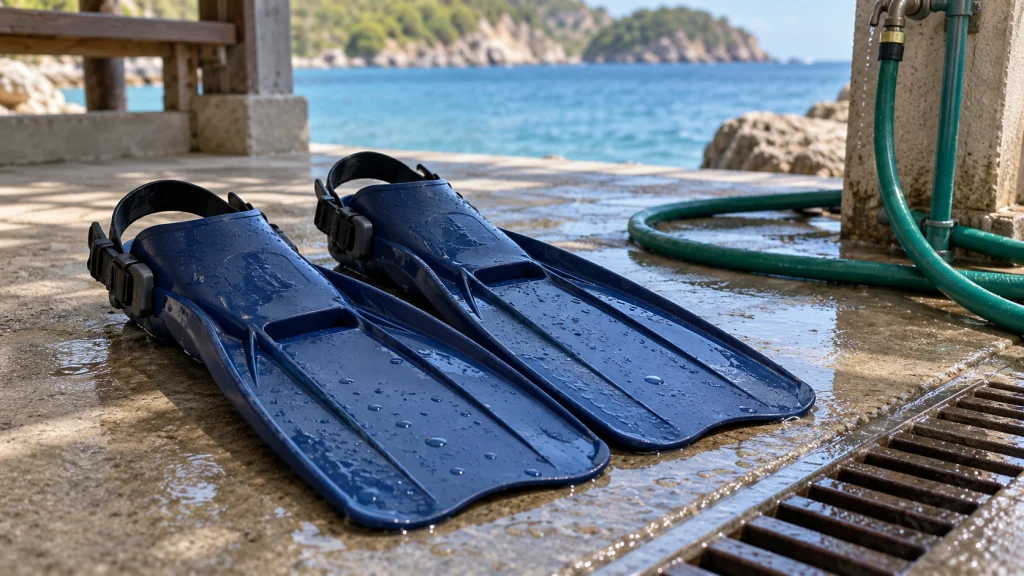
Begin with a visual check while handling the fins carefully. Look for any unexpected damage from the dive or entry area. Rinse both blades and the entire foot pocket with clean fresh water, removing visible salt or sand. Where straps or buckles move, gently operate them during rinsing so deposits do not remain trapped. Do not force a jammed mechanism. After rinsing, allow the fins to dry thoroughly in a suitable shaded and ventilated area. Check that nothing heavy is stacked on their blades. Once dry, put them somewhere protected from direct sunlight, excessive heat, dirt and chemical exposure. These steps are intended as a general routine, not a substitute for instructions printed for your specific model.
What to inspect before the rinse
Before washing, look over each fin for damage that may have occurred during a shore entry or while loading gear. Scan the blade surface, rails, toe area, strap anchor points, buckle housing and heel retention. Pay attention to cracks, tears, detached components, unusual deformation and rough edges that might catch on other equipment. On a bungee or spring-strap design, check for visible deterioration and damage around attachment hardware. On full-foot fins, examine the continuous heel pocket and the surrounding material for splitting or wear. Document a suspicious problem before cleaning if it helps you explain it to the manufacturer or dive shop. If retention hardware or structural parts appear compromised, do not assume rinsing will make the fin ready for another dive.
Freshwater rinsing step by step
Use clean fresh water and ensure that it reaches the areas where salt and sand accumulate. Rinse the front and back of the blades, the underside near the foot pockets and the interior of the pockets themselves. If the model has adjustable straps, move those parts gently while rinsing to help free debris, provided the manufacturer’s directions permit it. Aqualung advises thoroughly rinsing its fins with fresh water after diving, while DAN gives similar guidance for fins generally. Avoid making up a prolonged soak time when the product instructions do not require one. Do not use solvents, petroleum products or improvised household cleaners to remove marks. If an unusual contaminant is present, check the manufacturer’s recommendations before treating the material.
How to remove trapped sand safely
Sand often lodges where a strap meets its adjustment hardware or between a boot and the pocket. Do not scrape mechanisms with sharp metal tools or use excessive force on a tight buckle. Rinse repeatedly with clean water and operate movable components gently when allowed by the manufacturer. If a buckle remains stiff, inspect its visible condition and consult a dealer about removing or replacing it. Avoid disassembling an unfamiliar retention system just because a mechanism is dirty. Springs, pins and fitting shapes can differ. Removing debris without damaging the component is more important than finishing quickly. Before your next dive, verify that both sides of a strap system operate normally and that the fin retains your foot securely.
Drying without damaging the blades
A fin should dry before extended storage, but leaving it in intense sunlight or near a heat source is not the answer. Aqualung recommends towel-drying after freshwater rinsing and keeping fins in a cool, dry, protected place. DAN similarly recommends allowing equipment to dry in a cool, shady, ventilated environment. Position fins so trapped water can drain from the foot pockets. Do not balance them for prolonged periods on blade tips or wedge them into an angle that bends the blade. Leave sufficient space for air circulation instead of sealing damp gear inside a bag. Inspect the pockets again after drying, because an overlooked patch of moisture or grit can persist where footwear normally rests.
Why heat and sunlight matter
Extended exposure to hot surfaces, direct sun and enclosed vehicles may damage certain fin materials. Aqualung specifically cautions against high temperatures and storing fins in a hot car trunk. It also advises against leaving fins standing on the tips of their blades for long periods. Not every manufacturer publishes the same temperature limits, so avoid inventing a single safe number for all fins. The practical approach is to keep equipment away from hot pavement, heating equipment and prolonged direct sunlight. During a boat trip, place fins where they will not become a tripping hazard or get crushed, while following the operator’s storage instructions. For long-term storage, a shaded indoor space is preferable to an exposed balcony or the back of a vehicle.
Chemicals and cleaners to avoid
Do not assume that a solvent which cleans household plastic is suitable for diving equipment. Aqualung warns against alcohol, oils, gasoline, aerosol products, petroleum substances and chemical solvents contacting fin materials. Some cleaners can degrade rubber or plastics or leave unwanted residue. If a fin has sticky marks, odor or unusual surface contamination, review the exact product’s care sheet or request guidance from the manufacturer. Use a cleaning method explicitly compatible with the materials rather than experimenting with harsh products. There is also no reason to lubricate a strap assembly with an arbitrary oil or spray when its instructions do not call for lubrication. An apparently harmless maintenance shortcut can create a more serious material problem later.
Open-heel fins: focus on straps and boots
Open-heel designs typically rely on a strap across the heel, making its condition central to function. During cleaning, inspect buckle bodies, posts, elastic sections or springs, depending on the particular fin. Verify that the retention system is attached correctly and works smoothly after the equipment dries. Rinse dive boots according to their own manufacturer guidance and dry them separately. Salt or sand carried on boots can return to the fin pocket even after the fins have been cleaned. Before packing a complete set, confirm that the boots still fit comfortably and the strap settles into the intended position. A damaged strap should be replaced with a model-compatible component, not a makeshift substitute. Specific replacement methods should follow the manufacturer’s instructions.
Full-foot fins: care for the heel pocket
Full-foot fins enclose the heel and depend on the condition of the pocket for comfortable retention. Pay attention to the heel rim, toe box, inner surface and any areas that contact skin repeatedly. Rinse sand out carefully so it does not abrade the foot during the next use. Inspect for splits or distortion, especially if the fins have been packed tightly. Do not use excessive heat to reshape the pocket or try to stretch it beyond the manufacturer’s guidance. A fin that becomes uncomfortable after storage may be damaged or may simply no longer fit well; evaluate it before using it underwater. Keeping pockets clean and free from sustained heavy compression is a straightforward way to help preserve the fit you selected.
Storage at home between dive trips
Choose a clean, cool, dry place protected from direct sunlight and accidental damage. Store fins in a position that does not bend the blades or deform the foot pockets. Avoid placing scuba cylinders, weights or loaded gear cases directly on top of them. Keep chemical containers and fuel away from the storage area. For divers who have limited space, a shelf or suitable gear compartment may work better than leaving fins loose on the floor. If using a bag, ensure the fins are fully dry and do not remain compressed under other equipment. Consider storing replacement straps and the model information together so that future repairs do not depend on remembering which variant you purchased.
Packing fins for flights and car travel
Fins can be awkward to pack because the blades are long and relatively thin. Use the space in a dive gear bag thoughtfully, protecting straps and avoiding concentrated pressure across the blade tip. Heavy items belong where they cannot crush or permanently bend lighter accessories. Aqualung warns against exposure to extreme vehicle heat, making a parked car a poor long-term storage location. During flights, check how your fins fit in the bag and keep buckles from snagging other equipment. Do not force the equipment into undersized luggage just to close a zipper. A few minutes of careful packing can prevent discovering a bent blade or missing strap at your destination.
Inspection before returning to diving
Gear that has been stored for months deserves a deliberate pre-trip check. DAN’s return-to-diving equipment guidance recommends inspecting fins for tears and flexibility, and checking that buckles and straps work. Examine both fins individually, not just the one that happens to be on top of the bag. Try them with the boots or socks you actually plan to use. Make sure heel retention is secure and that no damaged edge will rub against skin or other equipment. If something appears defective, consult the manufacturer or a knowledgeable dive shop before use. A replacement part should be compatible with the model and properly installed. New or unfamiliar equipment should also be tried in suitable conditions before a demanding dive.
When to repair, replace or seek advice
Some problems are straightforward, such as replacing a manufacturer-approved strap. Other conditions, including significant blade cracking, distorted foot pockets or compromised attachment points, require a more cautious assessment. Avoid making unsupported claims that a structural crack can be safely repaired with household adhesive. Contact the manufacturer’s support team or a qualified dive retailer to find out whether parts are replaceable and whether the product should be retired. Even minor defects can have different consequences depending on where they occur. A damaged cosmetic surface and a damaged heel-retention anchor are not equivalent. If you cannot establish that the equipment will function reliably, do not take it diving until the issue has been resolved.
Mistakes that shorten the useful life of fins
Leaving salty fins closed inside a damp travel bag, stacking heavy cylinders on them, repeatedly trapping straps in zippers and storing them in a hot vehicle are avoidable habits. Equally unhelpful is ignoring small strap damage until a dive trip begins. A clean-looking pair is not necessarily ready for use; moving parts still need inspection. Do not assume expensive fins are immune to heat, chemicals or mechanical strain. Nor should you treat a flexible blade as indestructible because it bends in normal use. Follow the instructions for the exact product and pay special attention to any unusual sounds, distortion or cracks discovered while handling it. Consistent modest care is more reliable than occasional aggressive cleaning.
Frequently asked questions
Should fins be rinsed after freshwater diving? The general advice from DAN is to rinse and dry gear after a dive, and the relevant manufacturer instructions should be followed. Can you use alcohol to disinfect your fins? Aqualung warns against exposing its fin materials to alcohol and solvents, so never apply an unapproved chemical. Can fins be dried outside? A protected shaded and ventilated space is preferable to prolonged direct sun. Should they be stored standing upright on their tips? Aqualung advises against prolonged storage resting on blade tips. Do fins need routine professional servicing? DAN’s gear-care table does not specify routine professional servicing for fins, but visible damage or malfunctioning components still require attention, and manufacturers’ guidance controls replacement decisions.
Putting care into your equipment routine
The simplest approach is to make fin care part of the routine you already follow after each dive. Keep the pair together during the trip, rinse both thoroughly, allow them to dry safely and inspect the retention system while packing. At home, choose a storage place where heat, sunlight, heavy equipment and chemicals will not affect the fins. Before your next trip, repeat the condition check and confirm that the fins still fit your regular footwear. If you are choosing a new pair, our open-heel-versus-full-foot explainer can help you identify which type fits your situation. For help choosing the heel style that matches your footwear, read our open-heel versus full-foot fin comparison. Caring for your current fins is worthwhile regardless of what you eventually decide to buy. If wear makes replacement necessary, compare the heel systems and constructions in our scuba fins buying guide before choosing another pair.
Sources and related guidance
Read Aqualung: How to Care for Your Dive Fins, Divers Alert Network: Gear Care Guidelines, and DAN: Inspect Your Equipment. Compare open-heel and full-foot fin designs or browse dive fins articles. Equipment maintenance information does not replace the model-specific owner’s manual or appropriate scuba instruction.
About the author
Robert
Robert writes about scuba-diving equipment for GearDeep, focusing on fit, compatibility and the practical differences between products. His buying guides use manufacturer specifications and manuals to help readers compare their options, understand important limitations and make informed equipment choices.