By GearDeep Editorial · Updated
Amazon Affiliate Disclosure: As an Amazon Associate I earn from qualifying purchases. This comes at no extra cost to you. How affiliate links work.
The best scuba gear bags make your actual equipment easier to move, pack and look after. The Cressi Moby 5 is our first pick for a wheeled travel bag thanks to its 115 L layout, separate fin pockets and useful carrying options. A wet-gear duffel or a larger divided roller may make more sense if your journey and equipment call for something different.
The short answer
Quick Verdict
The Cressi Moby 5 is our top starting point for a wheeled scuba travel bag. Its 115 L layout, side fin pockets, telescopic handle and stowable backpack straps cover several common transport needs. Check the packed dimensions and weight with your own kit; capacity alone cannot tell you whether an airline will accept the bag.
- Cressi Gorilla Pro: a 135 L duffel to compare for wet equipment, with welded seams and a drain cap.
- Mares Cruise Backpack Roller: another wheeled travel option with a folding layout and external fin pocket.
- SCUBAPRO Definition Roll 130 or Stahlsac Steel 34: larger rollers with different organization priorities.
- AKONA Classic Roller Duffel AKB225: a 100 L U-opening alternative; match the exact model rather than an older AKONA roller.
For our selection process, read How We Research.
On this page
Scuba Gear Bag Comparison
Compare the features that affect your purchase, then check the selected listing for the current price, version and package contents.
| Model | Best For | Capacity / Transport Style | Main Purchase Check | Price / Where to Buy |
|---|---|---|---|---|
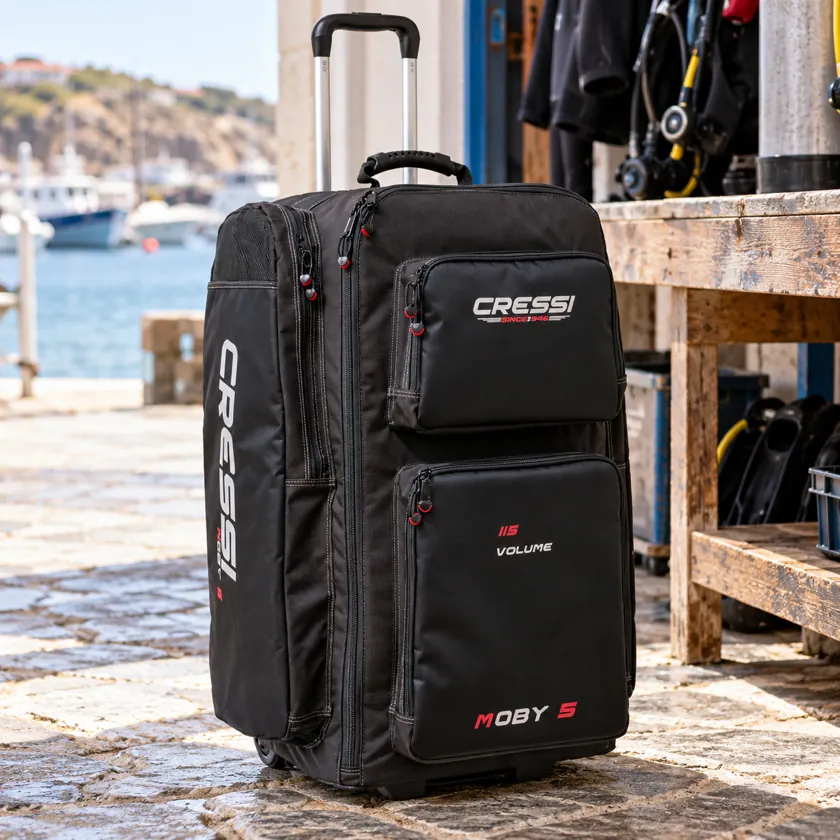 Cressi Moby 5 | Wheeled Travel Bag | 115 L; wheeled travel bag with backpack straps | Loaded dimensions, fin fit and current version | Check price on Amazon |
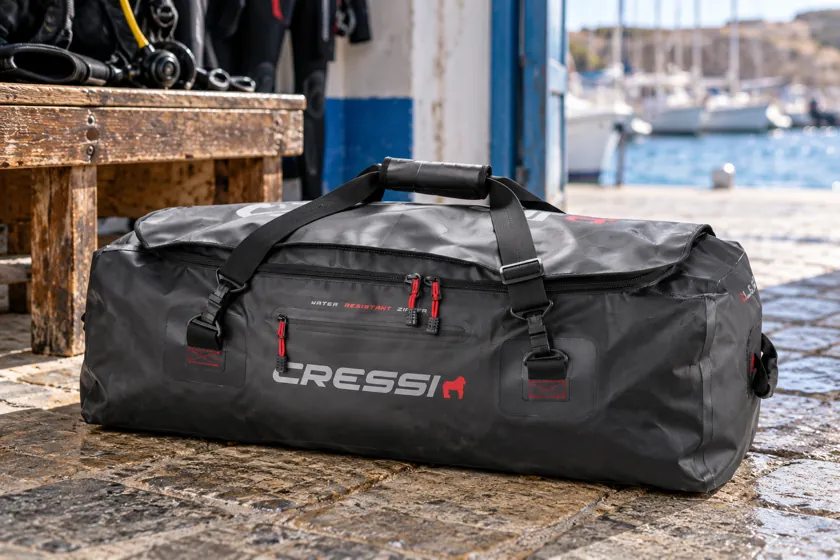 Cressi Gorilla Pro | a Wet-Gear Duffel | 135 L; wet-gear duffel; no wheels | Carrying weight, dimensions and wet-storage needs | Check price on Amazon |
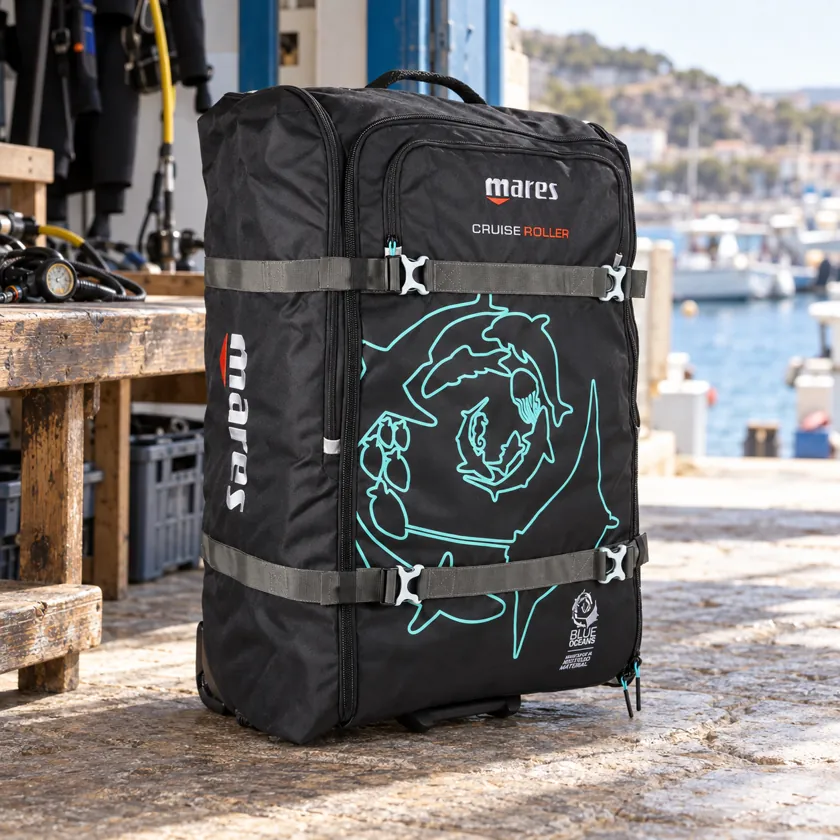 Mares Cruise Backpack Roller | Folding Roller Alternative | Folding wheeled backpack-style travel bag | Current Roller version, fin pocket and loaded size | Check price on Amazon |
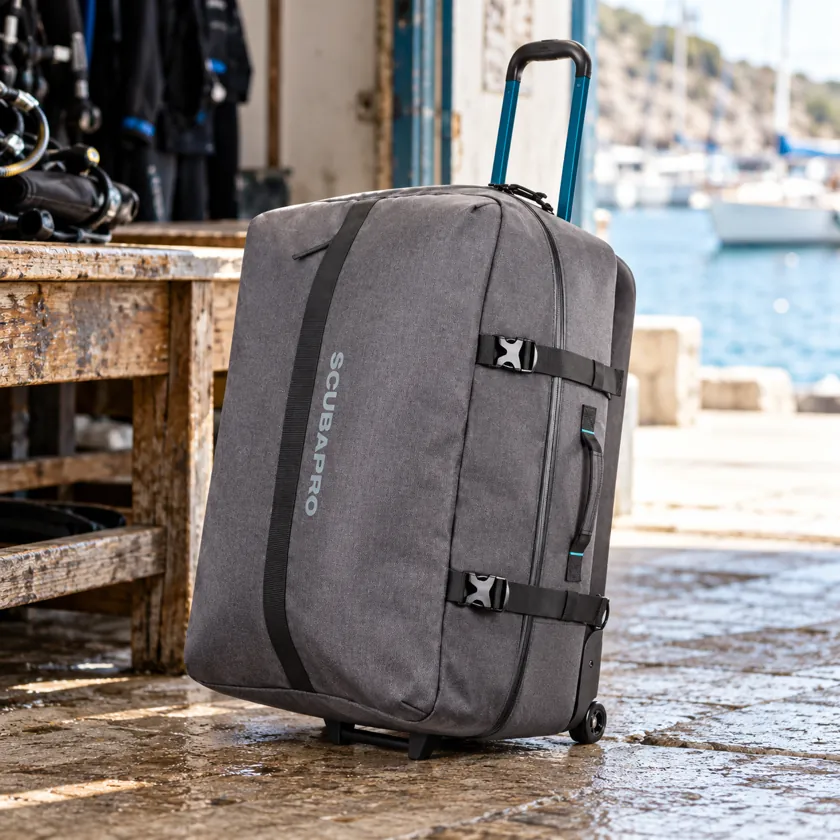 SCUBAPRO Definition Roll 130 | a Large Structured Roller | 130 L; structured wheeled bag | Dimensions, loaded weight and included straps | Check price on Amazon |
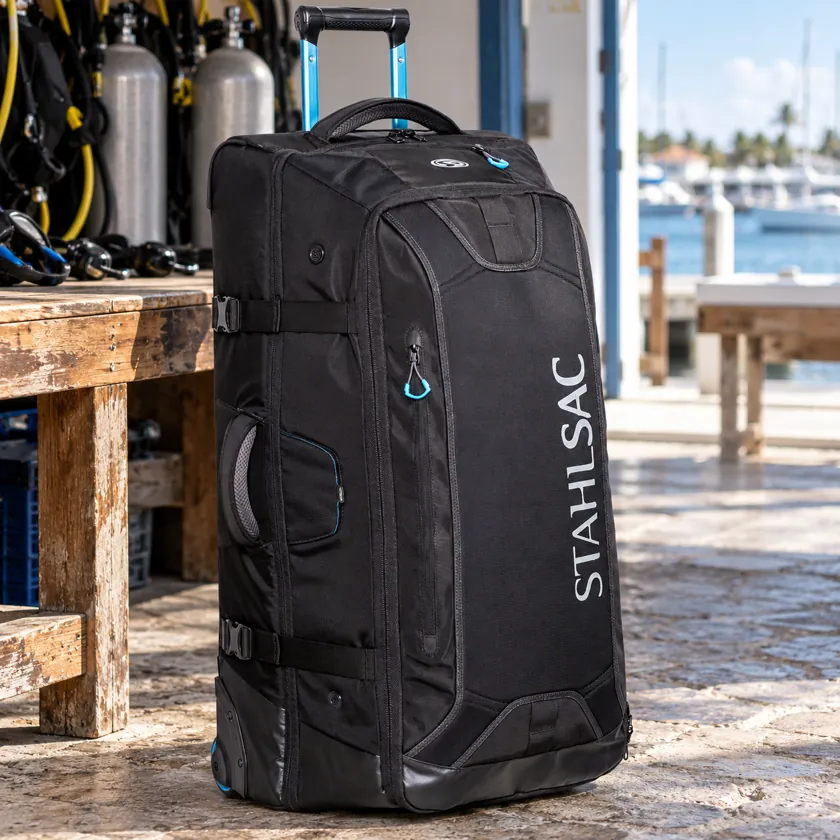 Stahlsac Steel 34 | Divided Wet and Dry Storage | 148 L; large roller with wet/dry organization | Compartment fit, packed dimensions and parts support | Check price on Amazon |
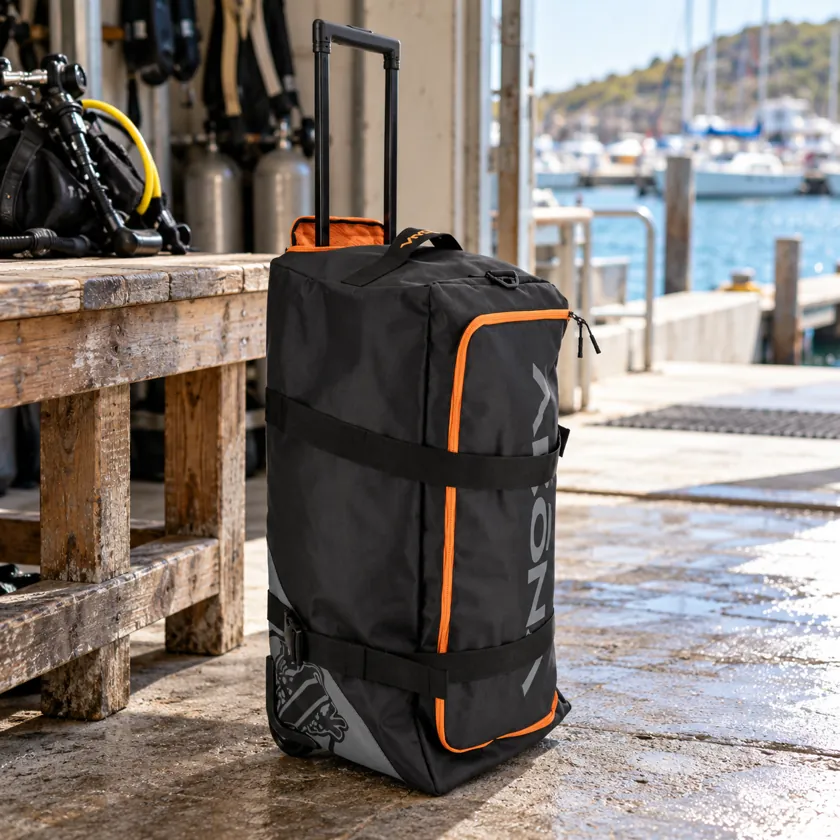 AKONA Classic Roller Duffel AKB225 | 100 L Roller Duffel Alternative | 100 L; U-opening roller duffel | Exact AKB225, package and loaded dimensions | Check Amazon listings |
Entries labeled “Check Amazon listings” open a search for that exact model; confirm a matching product and selected configuration before ordering.
1. Cressi Moby 5 — Best Overall Wheeled Travel Bag
The Moby 5 is our first wheeled bag to compare for a typical scuba travel load. Its appeal is the combination of a roomy main layout, separate fin storage and more than one carrying arrangement.
Key Features
- 115 L published capacity
- Main compartment opens on three sides
- Front bellows pockets and side fin pockets
- Telescopic handle and wheels
- Stowable backpack straps
- Replaceable wheel and support components
Why It’s Our #1 Pick
The Moby 5 earns first place because it combines a useful travel layout with several ways to move the bag. The 115 L main arrangement, front bellows pockets and separate side fin pockets give you places to organize bulky scuba equipment without relying on one large undivided cavity. The main opening also gives access from three sides.
The telescopic handle and wheels address the long flat stretches of an airport, while the stowable backpack straps offer another carrying arrangement where rolling becomes inconvenient. Replaceable wheel and support components are worth asking about when comparing long-term ownership, although local parts availability still needs checking.
The limit is the journey you actually make. A large travel bag can become heavy well before it is full, and backpack straps do not turn a packed roller into a comfortable hiking pack. Choose the Moby 5 if your kit fits its compartments and you can handle the loaded bag; choose a wet-gear duffel or a different roller when that better matches the task.
What to Consider
Compare it with the Cruise Backpack Roller when a rolling bag occasionally has to be carried across stairs or a short uneven section. Check how straps are stowed before an airport handoff and whether the bag can be lifted using its designated handles. A long tow handle is not automatically a lifting handle. The best packing arrangement lets the bag close normally without forcing a fin blade or loading a zipper with an overfilled pocket.
Pros
- Separate places for fins and smaller items
- Rolling and carrying arrangements
- Wide access to the main compartment
Cons
- A full bag can become heavy
- Loaded exterior dimensions need checking
- Replacement-part availability depends on support
Who Should Buy It?
Start with the Moby 5 if you want a wheeled travel bag and its compartments fit your actual gear. Test the loaded handles and check your transport limits before buying.
2. Cressi Gorilla Pro — Best for a Wet-Gear Duffel
The Gorilla Pro is the wet-equipment duffel in this group, rather than a direct substitute for an airport roller. Its large coated body and drain cap are useful features when moving wet gear between the dive site and your drying area.
Key Features
- 135 L published capacity
- PVC construction with welded seams
- Drain cap
- Carry handles and straps
- Published dimensions around 95 × 34 × 42 cm
- Water-resistant zipper; not an immersion case
Why It Makes the Shortlist
The reason to consider it is a large wet-equipment carrying and containment task. A long duffel can accommodate gear that is inconvenient in smaller shaped compartments, provided the actual item fits. The drain arrangement can be useful in an appropriate cleaning routine, but each piece of equipment still has its own rinsing instructions. Do not assume every regulator, light or computer should be soaked together simply because a bag can hold water.
What to Consider
Compare it with a roller only if both genuinely address the same journey. For short transfers between a vehicle and dive center, a duffel’s handling may be acceptable. For long airport concourses, the carrying burden may dominate. Confirm the current Gorilla Pro model rather than using an old XL name to select specifications from a different Gorilla. Its low listed empty weight does not tell you what a bag of wet neoprene and heavy equipment will weigh.
Pros
- Large wet-equipment space
- Drain cap suits the transport task
- Simple duffel layout
Cons
- No wheels for long terminal routes
- Bulky when loaded
- Zipper does not make it an electronics immersion case
Who Should Buy It?
Choose the Gorilla Pro if moving wet kit is the main task and you can handle the loaded duffel. Pick a roller instead when long smooth-surface walks dominate the trip.
3. Mares Cruise Backpack Roller — Best Folding Roller Alternative
The current Cruise Backpack Roller is another travel layout to compare with the Moby 5. Confirm the model reference and version because older Cruise bags and the Backpack Pro should not share one copied specification.
Key Features
- Current rPET-material version
- Folding arrangement
- Large wheels
- Padded shoulder straps
- External fin pocket
- Compression straps
Why It Makes the Shortlist
This is worth investigating when storage between trips and occasional backpack carrying are important. A folding structure can reduce the space an empty bag occupies at home or aboard a boat, but its packed stability and accessibility need a separate check. A bag that folds very compactly is not necessarily the one that organizes your rigid or delicate equipment best. Try the loading arrangement, not just the folding demonstration.
What to Consider
Compare the bag with Moby 5 using the same fins and BCD. Check where the fin pocket sits relative to the rest of the load and whether compression straps help stabilize it without bending the blades. Ask whether wheels or other frequently damaged parts can be obtained in your region. A bag useful for occasional trips can create different priorities from one moved through airports and dive boats every month.
Pros
- Folding travel layout
- Dedicated external fin storage
- Rolling and shoulder-carry options
Cons
- External pockets affect the packed shape
- Straps need assessment with the loaded bag
- Older Cruise and Pro versions differ
Who Should Buy It?
Try this Mares roller if its folding arrangement and fin pocket suit the kit you pack. Confirm the current Cruise Backpack Roller model, including reference 415437 where applicable.
4. SCUBAPRO Definition Roll 130 — Best for a Large Structured Roller
The Definition Roll 130 is worth comparing if you want a larger structured roller with broad access to the main compartment. Measure the actual packed bag rather than treating 130 L as an airline allowance.
Key Features
- 130 L published capacity
- Solid back and telescopic handle
- U-shaped main opening
- Internal mesh storage and front pocket
- Removable backpack straps
- Published dimensions around 72 × 41 × 45 cm
Why It Makes the Shortlist
The model is worth examining when a more structured rolling base and wide opening suit your kit. A solid back can help organize the load while making the empty bag less compact than a highly foldable design. The main question is whether the chosen structure protects and supports your packing arrangement. It does not establish the bag’s resistance to every handling impact or make fragile equipment safe without appropriate individual protection.
What to Consider
Compare it with Steel 34 if you value structure and organization, and with the folding Mares if empty storage matters. Pack your normal equipment layout and inspect the handle when the load is balanced. If the bag tips or the opening requires pressure to close, revisit the arrangement before blaming the wheels. The total package, including separate protective cases, determines what can travel safely.
Pros
- Large main opening
- Structured rolling arrangement
- Separate smaller-item storage
Cons
- Large exterior dimensions
- Packed weight can rise quickly
- Removable straps do not eliminate carrying effort
Who Should Buy It?
Consider the Roll 130 for a larger travel load when its structure and access suit your packing routine. Confirm current specifications and loaded transport limits.
5. Stahlsac Steel 34 — Best for Divided Wet and Dry Storage
The Steel 34 is the large roller to investigate when separating equipment within the bag is a priority. Its wet/dry compartment layout is the useful distinction, rather than a claim that the whole bag is waterproof.
Key Features
- 148 L published capacity
- Wet and dry compartment arrangement
- Bright interior lining
- Quick-access storage
- Replaceable frame and wheel components
- Published dimensions around 34 × 17 × 12 in
Why It Makes the Shortlist
The reason to fit this bag to your equipment is the separation between wet or dirty kit and other belongings. Think through how the compartments share the available space. Filling one section changes what can be packed around it, and an advertised total volume does not guarantee that a rigid object fits through each opening. A bright lining may help locate small items, but delicate components still need their own secure location.
What to Consider
Compare it with the Definition Roll 130 using the actual equipment you want to separate. If most of the kit can dry before packing, a wet compartment may be less important than it first appears. If local transfers routinely involve damp equipment, the separation could address a recurring problem. Choose by that observed need rather than the assumption that more compartments always produce a better bag.
Pros
- Divided organization for different equipment
- Bright lining helps when packing
- Serviceable structural components to ask about
Cons
- Large loaded bag to handle
- Compartments are not an immersion guarantee
- Parts support should be confirmed locally
Who Should Buy It?
Compare the Steel 34 when the divided layout solves a real packing problem and you need its capacity. Keep delicate items in protection suited to their own exposure needs.
6. AKONA Classic Roller Duffel AKB225 — Best 100 L Roller Duffel Alternative
The AKB225 is the Classic Roller Duffel version covered here. Its U-opening and duffel layout are useful to compare if you want 100 L of space without moving to the larger rollers in this guide.
Key Features
- 100 L published capacity
- U-shaped main opening
- Replaceable wheels and axles
- Wraparound straps
- PVC-laminated 600D polyester
- Published dimensions around 31 × 14 × 14 in
Why It Makes the Shortlist
This is worth comparing if you prefer a relatively simple large opening rather than many dedicated equipment pockets. That arrangement can make packing varied gear easier, while leaving more organization and protection to the user. A separate regulator case or small accessory pouch can be helpful when it serves a real requirement, but adding many nested bags also consumes capacity and increases the empty system weight.
What to Consider
Compare it with Moby 5 by packing the same kit into a simple cavity and a compartmented layout. Notice which arrangement leaves fewer items under pressure when the bag closes and which makes daily access easier. The right answer can differ for an owner with rigid fins, a thick hooded suit or a very compact travel BCD. A generic claim that a bag holds a full set is not a measurement of your set.
Pros
- Broad main-compartment access
- Defined 100 L alternative
- Replaceable rolling components
Cons
- Older AKONA rollers use different model numbers
- One large compartment needs a packing plan
- Exact current offers require careful identification
Who Should Buy It?
Investigate the AKB225 if a roller duffel suits your equipment better than a compartment-heavy bag. Match the exact model; AKB223 and other AKONA rollers are different products.
How to Choose a Scuba Gear Bag
Lay out the equipment you actually take, decide what stays in your carry-on, and measure the longest and most awkward items. Then choose the transport layout for your route. Airport rollers, wet-gear duffels and bags carried over steps solve different problems.
Six designs and the job each one addresses
The comparison includes Cressi Moby 5, Cressi Gorilla Pro 135 L, Mares Cruise Backpack Roller, SCUBAPRO Definition Roll 130, Stahlsac 34 Inch Steel Wheeled Bag and AKONA Classic Roller Duffel AKB225. Five provide wheeled travel arrangements; the Gorilla Pro provides a different large wet-gear duffel concept. That difference is deliberate. A bag for containing wet gear during a local car journey can solve a different problem from a structured roller for a long airport transfer.
Each model needs its own exact version record. The ordinary Gorilla, Gorilla Pro, various Moby sizes, Cruise Backpack and Cruise Backpack Roller are distinct products. AKONA’s older Roller Duffel, Classic Roller Duffel and BAM references also have different part numbers. Use the correct record before combining capacity, materials or weight claims from multiple pages under one familiar family name.
Choose for the journey your equipment actually takes
For repeated airport transfers, begin with a packing trial in the Moby 5, Cruise Backpack Roller, Definition Roll 130 or AKONA Classic Roller Duffel. The Moby’s compartment layout and fin pockets, the Mares folding structure, the Definition’s solid back and the AKONA’s simpler U-shaped cavity solve different organization problems. Choose the layout that accepts your longest rigid items without stressing zippers, then check the fully packed external dimensions and weight against the actual itinerary. A capacity label is not an airline allowance.
For wet-deck transport, the unwheeled Gorilla Pro is a different proposition from those rollers: its welded duffel and drain arrangement suit wet-equipment handling, but the load still has to be carried. The Stahlsac Steel 34 provides a wheeled wet/dry organization alternative when its large outline fits your route. Keep electronics protected according to their own requirements in either case. Compare replacement wheel support and drying access before buying a roller; compare handles, lifting distance and the realistic wet load before choosing the big duffel. Neither approach should become sealed long-term storage for damp equipment.
Start with the longest and least flexible items
Lay out the kit before choosing bag volume. Fins, a rigid BCD backplate and protective cases can determine the usable shape more than the sum of their apparent sizes. Measure the fins you actually own and identify which pocket or main compartment will hold them without forcing a bend. A long external pocket and a large main cavity solve this problem in different ways.
Also consider the opening. An object may fit within the stated exterior dimensions but be difficult to pass through a narrow zip. Ask for internal measurements where the fit is close and conduct a permitted trial when possible. Our gear-bag selection guide covers the underlying bag categories; this comparison applies those decisions to named designs.
Capacity is an organization clue, not a packing guarantee
Manufacturer liters can help group bags by intended scale. They do not tell you how efficiently your equipment will fill shaped pockets, wheel housings and divided spaces. A 130 L roller and a 135 L soft duffel can provide very different practical arrangements. Avoid choosing one because the number is slightly larger without examining the shape and opening.
Keep external dimensions separate from internal usable space. Handles, wheels, rigid backs and protruding pockets affect the overall travel outline. Soft bags also change shape when loaded. A tape measurement of an empty flattened bag is not necessarily the measurement a carrier will apply when it is full. Leave packing room instead of planning to exploit every advertised liter.
Empty weight reduces the equipment allowance
The bag and every protective insert use part of a carrier’s allowance. A large structured roller can be convenient while leaving less available weight for equipment than a lighter duffel. Compare the complete empty packing system, including any regulator case, straps and accessory organizers, rather than a bare shell weight alone.
Weigh the actual packed bag before travel, using a reliable scale and the carrier’s current rules. The Definition page’s conflicting empty-weight entries are a reason to seek clarification, not a reason to select the smaller figure for a packing calculation. A practical margin is useful because wet equipment, souvenirs or changed accessories can alter the return load. The bag’s material strength does not override an airline’s handling limit.
Wheels help on some surfaces and complicate others
Rolling is convenient on a terminal floor or smooth pavement. Stairs, loose sand, boat ladders and rough access routes create different handling tasks. Think through the whole journey before making wheels the deciding feature. A bag with designated lifting handles may be easier to manage over a short awkward section than one whose only convenient grip is the tow handle.
Inspect wheel clearance, axle protection and replacement availability. Replaceable parts are valuable only if the correct parts and support remain available. Do not assume that the biggest wheel visible in a promotional photograph handles every surface well. A safe loaded demonstration can reveal balance and tipping tendencies without pretending to simulate years of airport handling.
Backpack straps need a realistic load assessment
Several roller bags here include shoulder straps. They can provide another carrying option, but they do not turn any weight of packed equipment into a comfortable backpack. Try the arrangement with an appropriate representative load under the shop’s guidance and your own physical limits. Check whether hard parts press into the back and whether straps remain accessible without dragging when rolling.
Stow straps as the maker recommends before baggage handoff or other handling where loose webbing can catch. If you rarely carry a bag on your back, the straps may be less valuable than a stable rolling base or better lifting handles. If your usual route includes stairs, carrying access may be central. Choose from the real route, not a photograph of an almost empty bag being worn easily.
Wet containment and dry protection are different requirements
A bag can be useful for keeping wet equipment away from a vehicle interior without being an immersion-rated dry case. The Gorilla Pro’s welded body and drain arrangement illustrate one containment concept, while its zipper wording still needs respect. Stahlsac’s divided wet area creates another arrangement. Neither description should become a blanket promise that electronics can be placed anywhere without additional protection.
Identify which items may still be damp when packed and which need separate dry protection. Follow each equipment maker’s instructions, especially for charging connections, lenses and regulator handling. A wet compartment is for a practical transfer and organization task; it does not eliminate the need to unpack and dry equipment afterward. Our between-trip storage guide addresses that separate task.
Protect sensitive equipment by its own requirements
A large dive bag is not automatically a rigid case for every delicate component. Masks, instruments, camera equipment and regulators can need specific protection from crushing, grit and tight hose bends. Place them according to their manuals and the travel plan rather than simply filling every remaining gap with a hard object.
Consider what you can reasonably carry separately and what the carrier permits. Our scuba air-travel packing guide covers the wider arrangement. Keep the bag’s convenience separate from battery and dangerous-goods rules. A zippered pocket labeled for accessories does not establish that every battery or pressurized item is permitted in that baggage location.
Give daily access a deliberate layout
Think about which items you need first at the destination. A broad main opening can make it easier to remove a BCD or wetsuit without disturbing small items, while external compartments can keep particular equipment accessible. The advantage depends on where you place things. An easily reached pocket filled with seldom-used accessories does not improve the morning setup.
Use a small consistent location for essential documents and low-risk accessories while keeping valuable or sensitive items appropriately protected. Avoid overloading outside pockets in a way that changes balance or puts pressure on equipment beneath them. A packing trial should include taking the kit out again; easy loading is only half the practical test.
Compare a compartmented bag with an open duffel
Moby 5 and AKONA Classic provide a useful comparison of organization approaches. Dedicated pockets can make repeated packing predictable, especially when the same fins and accessories travel every time. An open main cavity can adapt more easily to changing equipment shapes, but requires a deliberate arrangement so smaller items do not migrate beneath heavy gear.
Neither approach has to win universally. Pack the items you own and see which closes normally, protects the equipment and makes unloading straightforward. If your setup changes between local and travel diving, consider whether one bag can support both arrangements sensibly. Buying a larger bag just to avoid planning the layout can make the packed weight and handling worse.
Zippers, closures and cleaning
Saltwater-resistant hardware still needs the care described by the manufacturer. Rinse and dry the bag appropriately, remove trapped grit and avoid forcing a closure against an overfilled compartment. A zipper failure can begin with poor loading rather than a lack of strength in the bag fabric. Check the instructions before applying lubricants or household cleaners.
Inspect handles, seams, wheel mounts and drain closures as well as the main zipper. A small fault discovered before travel can be easier to repair than one found during an airport transfer. If service is needed, ask for the correct replacement part and follow the manufacturer’s repair route. A generic wheel that appears to fit may not provide the intended support or attachment.
Drying and storage between journeys
Empty the bag after travel and check every pocket for wet boots, gloves or small accessories. A dry exterior does not prove the inside is ready to close. Give the lining, pockets and any wet compartment adequate airflow under the care instructions. Folding a damp bag tightly can conceal moisture just as effectively as leaving damp equipment in a closed cavity.
Choose storage that does not crush the frame, bend the tow handle or load a wheel unevenly for months. A foldable bag can save space when prepared correctly. A rigid-backed bag may need a designated upright or supported location. Ownership convenience includes where the bag lives for most of the year, not only how it looks beside an airport trolley.
Airline wording needs itinerary-specific checks
Check the carrier’s current size, mass and baggage rules for every leg, including smaller aircraft or separate local bookings. Manufacturers’ phrases such as travel optimized and built to airline requirements cannot establish acceptance across all airlines. Overall packed dimensions, including protruding handles and pockets, are more relevant than a general marketing category.
Also verify rules for the contents separately. A bag’s capacity does not make a cylinder or battery eligible for ordinary checked carriage. If a particular item creates uncertainty, resolve it through the relevant carrier and authoritative guidance before packing. Avoid rearranging equipment at the departure counter under pressure because a bag description sounded like a blanket travel approval.
A useful packing trial
Use a clean, dry representation of the actual kit under the retailer’s trial conditions. Put long and rigid items in first, then add suitable protection and the remaining equipment. Close the bag without forcing the zip. Check the packed outline, lift it using the designated handles and test rolling or carrying only within an appropriate load and space.
Unpack in the order you expect at the dive center. Note where items catch, which compartments are difficult to reach and whether loose equipment shifts. Then change one part of the arrangement and repeat. This produces useful personal evidence without pretending that a shop trial measures airline abuse, waterproofness or long-term wheel durability.
Ownership cost and repair support
Compare the complete system cost, including required protective inserts and replacement running gear. A bag with serviceable wheels may be appealing for frequent travel, while a simple duffel may suit a short local route. Ask how repairs are arranged in your country and what a warranty actually covers. Wear, airline damage and manufacturing faults may be treated differently.
Keep the model and receipt so a service provider can identify the correct frame or wheel. If a source page and retailer offer disagree about part number, weight or pockets, resolve the version before ordering. A current price comparison should match exact models and contents. Include any required accessories or replacement components in the total current cost.
Choose by the journey you repeat
For regular airport trips with the same kit, compare Moby 5, Definition Roll 130 and Steel 34 on actual packing, weight and compartment access. For limited empty-storage space, examine the folding Cruise Backpack Roller. For a simpler large rolling cavity, inspect AKONA Classic AKB225. For local wet-kit containment where carrying is practical, assess Gorilla Pro as the different duffel concept it is.
Reject a poor fin fit or impractical carrying load before comparing cosmetic details. Then verify carrier requirements, repair support and the actual retail version. The most useful bag makes the repeated journey easier while protecting the equipment appropriately. It does not have to have the largest capacity, the most pockets or the boldest travel claim.
Plan the return packing before the first dive
The journey home often has different constraints from the outward trip. Equipment may still be damp, a protective insert may have been repurposed at the destination and the original packing order may have been forgotten. Photograph or note a useful dry packing arrangement before travel, then identify which parts need a separate plan if the final dive leaves less drying time than expected.
Do not assume that a wet compartment provides unlimited time before unpacking. Arrange a realistic opportunity to remove and dry equipment after arrival. Keep clean clothing and sensitive items protected through their own suitable packaging, and check the return bag’s weight after any change in contents. A system that works on both journeys is more valuable than one that only closes neatly with perfectly dry gear at home. This is where an accessible wet area, drain arrangement or removable organizer can become a practical feature rather than merely another catalog bullet.
Frequently Asked Questions
How large should a scuba gear bag be?
Start with the equipment you actually transport in the bag, including exposure protection and fins. Leave separate space planning for delicate items that travel elsewhere. Published liters help compare models, but usable shape, pocket layout and the longest item matter just as much.
Is a wheeled scuba bag worth buying?
Wheels help on smooth surfaces and long terminal routes. They also add structure and components, while stairs, boats and rough ground still involve carrying. Compare the loaded bag’s handles and your actual route rather than choosing wheels solely because the bag is large.
Can I check a scuba gear bag on an airline?
Check the airline’s current size, weight and equipment rules for your booking. Measure and weigh the packed bag, including items placed in external pockets. A published capacity or a photograph of an airport does not establish acceptance on every airline.
Is a water-resistant gear bag waterproof?
No. A coated fabric or welded seam does not prove that every opening and zipper keeps water out during immersion. The Gorilla Pro’s wet-gear design should not be treated as a protective immersion case for electronics. Use storage suited to the item and the actual exposure.
Should I leave wet dive gear packed in the bag?
Use the bag for transport, then follow each item’s cleaning and drying instructions. Open and dry the bag itself before long-term storage. A wet compartment can help organize a journey but does not remove the need to clean, ventilate and inspect the equipment.
Does a larger bag make packing easier?
It can give bulky equipment more room, but it also makes it easy to exceed a comfortable carrying weight or a transport limit. Compare access, internal shape and compartment placement first. A smaller bag that fits your kit neatly may be easier to manage than a larger bag with unused space.
Our recommendation
Final Verdict
Choose the Cressi Moby 5 first for a wheeled scuba travel layout with dedicated fin storage. Compare the Mares Cruise Backpack Roller if its folding arrangement and pocket layout suit your kit better.
,The Gorilla Pro serves a different wet-equipment task. The Definition Roll 130 and Steel 34 offer larger roller layouts, while the AKONA AKB225 is the 100 L duffel-style alternative. Pack your real kit, check loaded weight and dimensions, and choose the bag you can manage throughout the journey.
Specifications and Manuals
For model details, see Cressi Moby 5 specifications, Cressi Gorilla Pro specifications, Mares Cruise Backpack Roller specifications, SCUBAPRO Definition Roll 130 specifications, Stahlsac Steel 34 specifications, AKONA Classic Roller Duffel AKB225 specifications.
About the author
Robert
Robert bohat acha bacha hay