
By Robert · Updated
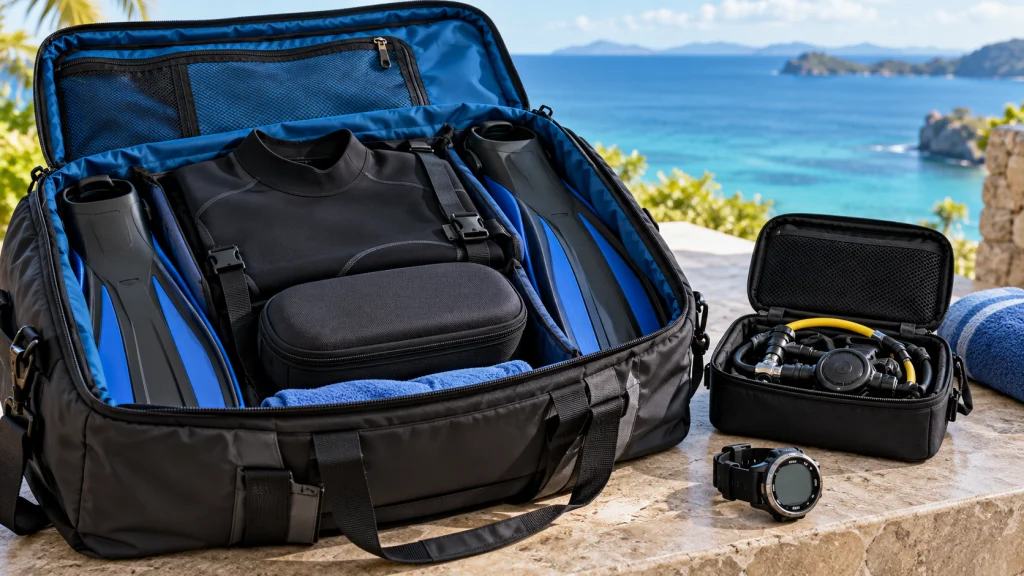
How to Pack Scuba Gear for Air Travel is an essential equipment topic for scuba divers who want to understand airline baggage rules, protecting regulators, carrying computers, wet gear, battery restrictions and bag organization before making decisions. This informational guide explains the relevant differences and practical checks without inventing product tests, safe operating thresholds, or universal rules. Follow your certification, dive operator, local regulations and exact manufacturer instructions for any safety-critical decision.
Plan around the actual airline rules
Before choosing bags, read the baggage rules for every airline and flight segment on your itinerary. Weight limits, dimensions and special-sports-equipment provisions can differ by carrier and fare class. PADI recommends checking the fine print before flying and anticipating that allowances may change. Do not assume an old trip’s baggage privilege applies to a new booking. Record the baggage allowance and weigh your loaded bag at home. If your itinerary includes separate tickets, check whether baggage must be collected and rechecked. Airport staff and aviation regulations ultimately govern what may travel, so a generic packing checklist cannot promise acceptance.
Make a complete equipment inventory
List the equipment you plan to carry, including mask, fins, boots, exposure suit, regulator, dive computer, BCD and any permitted accessories. Separate indispensable personal items from equipment available for rental at the destination. The goal is to avoid packing duplicate heavy gear without a purpose. Note items with batteries or special transport rules, and identify which pieces are fragile. Keep model information and any relevant service documentation accessible. A checklist also makes repacking easier after the trip when gear is wet or spread across a boat and hotel room. Avoid placing safety-critical accessories in a bag whose whereabouts are uncertain without a suitable contingency.
Choose a bag that fits the equipment
PADI describes roller, backpack and duffel styles, plus mesh and padded secondary bags. The right choice depends on airline limits, your walking distance, destination transport and gear dimensions. Measure long fins before buying luggage. If a bag has wheels, remember that the frame and wheels consume part of the total weight allowance. Backpack straps can help on stairs or uneven approaches, but a heavily loaded bag may be uncomfortable. A bag with reinforced handles, corrosion-resistant hardware and internal organization is easier to manage in wet environments. Think about the entire route from home to dive boat, not only the airport terminal.
Before choosing a roller or mesh design, compare the usable space, carrying route and wet-gear handling in our scuba gear bag selection guide.
Protect regulators and gauges
A regulator and attached gauges should be packed to avoid concentrated impact, bending or abrasion. PADI suggests using padded protection for delicate equipment, with a dedicated regulator bag as one option. Avoid winding hoses into sharp tight bends and do not put heavy objects directly against exposed instruments. Follow the manufacturer’s transport guidance and confirm that gear is dry and protected before storage. Travelers differ in whether they carry regulators in cabin luggage or checked bags, depending on airline allowances and security requirements. Check the applicable rules rather than assuming any one arrangement is guaranteed. Inspect the equipment after arrival and before use.
Carry and protect the dive computer
Dive computers can have vulnerable screens, buttons, sensors and batteries. Use an appropriate protective case and keep the instrument from being crushed in a densely packed bag. Review its manufacturer instructions before a long flight, especially if the product has travel or battery guidance. Lithium batteries and powered electronics may be subject to airline rules, so check the airline and aviation authority requirements. Do not treat a dive computer as exempt merely because it is diving equipment. Avoid storing it in a place where a heavy cylinder accessory or belt buckle can strike the display. After arrival, confirm battery state and settings before diving.
Fins as padding—without bending them
Long fins can sometimes help organize a bag by lining its sides, as a PADI travel article notes, but do not use them as rigid structural supports if that means crushing or bending blades. Separate sharp or heavy hardware from flexible fin materials. Check that the fin pockets are not filled with objects that could deform them, and protect buckle and strap connections. If you pack wet boots nearby, ensure any trapped moisture does not reach sensitive electronics or documents. The best arrangement uses available space without turning the fins into sacrificial packing material. Inspect them on arrival for cracks or damage.
Packing the mask safely
A mask should travel in a protective case or another arrangement that prevents impacts and deformation of the skirt. Do not squeeze it between heavy gear or leave the lens against metal hardware. If you use corrective lenses, take particular care because replacement may be difficult at the destination. Keep the strap from snagging on zippers. A small case can often fit in a cabin bag if permitted by the airline, but packing choices must still meet size, weight and security limits. Before the first dive, check the mask seal, lenses and strap rather than assuming they survived travel unaltered.
Wetsuits and BCDs in the bag
A wetsuit can provide some cushioning around fragile items, but it should be clean and suitably dry before a long journey. Fold or roll it according to the manufacturer’s care instructions without sharply compressing delicate seams. A BCD contains inflator components, valves and buckles that deserve protection; avoid placing weight against them. Remove integrated weights before travel where required and check transport restrictions for any lead or other accessories. Do not treat the BCD bladder as a convenient container for sharp equipment. Inspect and function-check the unit after arrival with assistance as appropriate. A tidy packing arrangement should never undermine the condition of buoyancy equipment.
Batteries and dive lights
Dive lights, cameras and power banks require special attention because airlines restrict certain batteries and spare cells. Policies depend on chemistry, capacity, installation and whether cells are loose or in equipment. Always check current aviation authority and airline instructions, rather than relying on an old chart. Secure terminals where required, prevent accidental activation and use appropriate protective packaging. A dive light’s underwater depth rating has no bearing on airline battery acceptance. Do not place spare lithium batteries in checked baggage contrary to applicable rules. If unsure, consult the airline before traveling and consider whether an approved rental light is available at the destination.
Separate wet and dry equipment
A mesh bag can be useful for moving wet gear between the boat and rinse area, while a dry bag can protect spare clothes and paperwork from spray. PADI describes both as complementary to a main gear bag. Do not assume a sealed bag makes damp scuba equipment suitable for long-term storage. Rinse and dry gear according to its instructions when time permits, and isolate remaining moisture from electronics. Pack a small towel or compatible absorbent material for transit. On the return journey, consider the practical limitations of drying time and airline baggage weight. Water retained in gear may make an already-full suitcase noticeably heavier.
Travel documents, service history and contact details
Keep booking information, certifications, required medical documents, equipment service records and emergency contact details organized in a secure place. Requirements vary by destination and operator. A dive shop may ask about recent servicing or equipment compatibility, particularly for technical setups. Photograph serial numbers for your private records if useful, but keep sensitive account details secure. A checklist of model names can help with lost luggage reports or replacement accessories. Do not assume every destination stocks spare parts for an uncommon product. Ask the operator what rental or replacement equipment is available before deciding what to leave behind.
Weighing the bag and packing in layers
Place dense, durable items where they will not crush delicate equipment. Keep items needed first easy to reach, and avoid packing critical paperwork at the very bottom. Use clothing strategically as protection without exposing delicate surfaces to sharp hardware. Weigh the bag after fully packing it, not before adding wet gear bags, footwear and toiletries. Record the packed dimensions, especially if fins create unusual length. Leave enough space to repack the bag reasonably after the trip. PADI advises preparing for baggage limits rather than counting on favorable airport discretion. Efficient packing is about predictable handling, not bypassing carrier policies.
Arrival-day checks
After the flight, unpack essential equipment early enough to find damage or missing components before the first dive. Inspect mask lenses, fin straps, regulator hoses, instrument displays and BCD hardware. Charge devices only with approved equipment and check computer settings. Confirm the dive operator’s cylinder and inflator compatibility, and ask for help if anything appears unfamiliar. Avoid rushing into a demanding dive with equipment that has not been inspected since transport. If luggage is delayed, coordinate rentals and appropriate familiarization rather than assembling an untested improvised setup.
Frequently asked questions
Should a dive computer go in hand luggage? Cabin carriage may protect it from rough handling, but applicable battery and baggage rules must be checked. Can fins be packed diagonally? Yes if their dimensions and protection allow it without harmful bending. Does a wet bag count differently? Water adds weight and can damage other contents. Can a scuba cylinder fly as ordinary baggage? Do not assume so; pressure-vessel transport requires separate rule verification. Is a roller bag always better? No, wheel weight and rough ground may favor another design. Should I keep spare parts? Compatible consumables can help, but avoid unauthorized modifications.
The practical preflight checklist
Confirm airline baggage allowances, dimensions, battery restrictions and any sporting-equipment rules. Make an inventory, weigh the finished bag and protect delicate instruments individually. Keep liquids and damp gear away from electronics, and secure all moving straps and buckles. Pack documentation and identify where to obtain rental replacements if necessary. Verify that no prohibited pressure vessel, battery or other restricted item has been included by assumption. At the destination, inspect the equipment and resolve concerns before diving. Our gear-bags category will eventually compare models with exact Amazon listings, but the packing method should be sound regardless of brand.
Practical final checklist
For international trips, verify luggage allowances independently for each leg of travel, including codeshare airlines and regional connections. Review current airline and aviation-authority requirements for lithium batteries, electronics, compressed-gas equipment and other restricted items. A specialist dive bag cannot override transport regulations. Protect expensive equipment while leaving enough space to repack it safely after diving. Use our scuba gear bag comparison to assess access and carrying options, then verify the actual packed bag against your itinerary.
Sources and related GearDeep guides
Primary reference: PADI air-travel packing. Browse related scuba gear bags guides and scuba equipment explainers. GearDeep does not claim to have tested the equipment described here. Training and exact manufacturer guidance control safety-critical decisions.
About the author
Robert
Robert writes about scuba-diving equipment for GearDeep, focusing on fit, compatibility and the practical differences between products. His buying guides use manufacturer specifications and manuals to help readers compare their options, understand important limitations and make informed equipment choices.