By GearDeep Editorial · Updated
Amazon Affiliate Disclosure: As an Amazon Associate I earn from qualifying purchases. This comes at no extra cost to you. How affiliate links work.
The best scuba BCDs fit your body, support your cylinder setup and put the controls where you can reach them. Our first recommendation is the Cressi Travelight for recreational divers who want a folding jacket with integrated weights, but the right choice changes if you prefer a rigid backpack, a modular back-inflate design or a different release system.
The short answer
Quick Verdict
The Cressi Travelight is our top starting point for a travel-friendly recreational jacket. Its folding layout, separate waist adjustment and integrated weights make it a useful all-round candidate to fit in person. Confirm lift and weight capacity for your size and complete equipment setup before choosing it.
- Cressi Start Pro 2.0: a conventional jacket with a rigid padded backpack and fixed gravity-release weight pockets.
- SCUBAPRO GO: compare this folding jacket if its harness and Quick Cinch cylinder band suit you better.
- SCUBAPRO Hydros Pro: the modular back-inflate option for divers who want to configure the harness and accessories.
- Mares Magellan and Magellan HD: two distinct back-buoyancy choices with different travel and storage priorities.
For our selection process, read How We Research.
On this page
Scuba BCD Comparison
Compare the features that affect your purchase, then check the selected listing for the current price, version and package contents.
| Model | Best For | Layout / Weight System | Main Purchase Check | Price / Where to Buy |
|---|---|---|---|---|
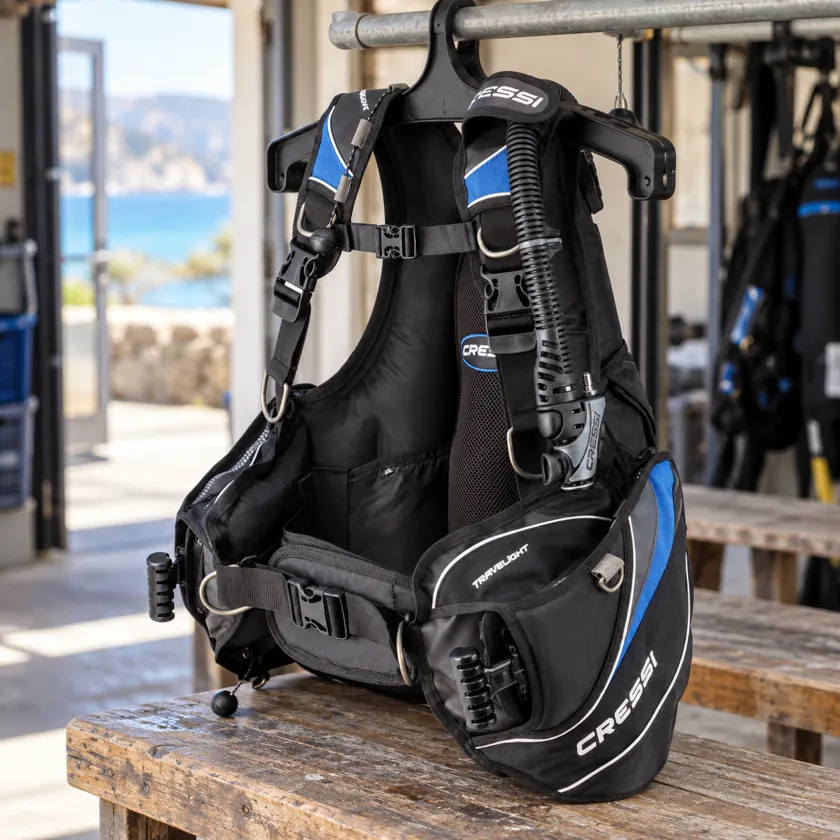 Cressi Travelight | Starting Point | Folding jacket; integrated and trim weights | Size, lift, release system and supplied package | Check price on Amazon |
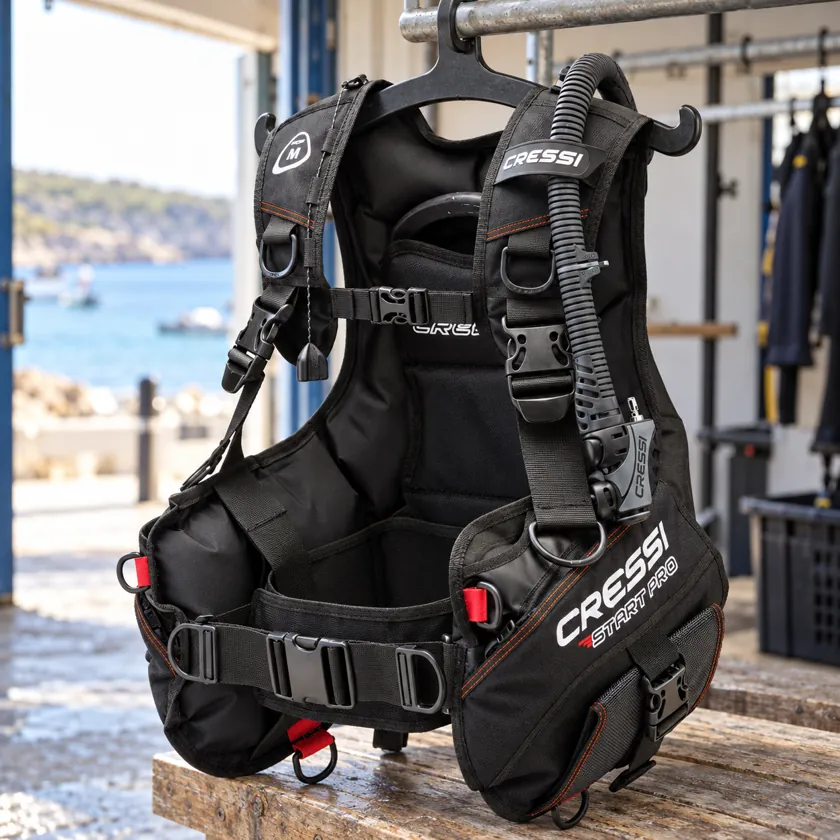 Cressi Start Pro 2.0 | a Rigid Backpack | Rigid-backpack jacket; fixed gravity pockets | Start Pro 2.0 and its weight-release arrangement | Check price on Amazon |
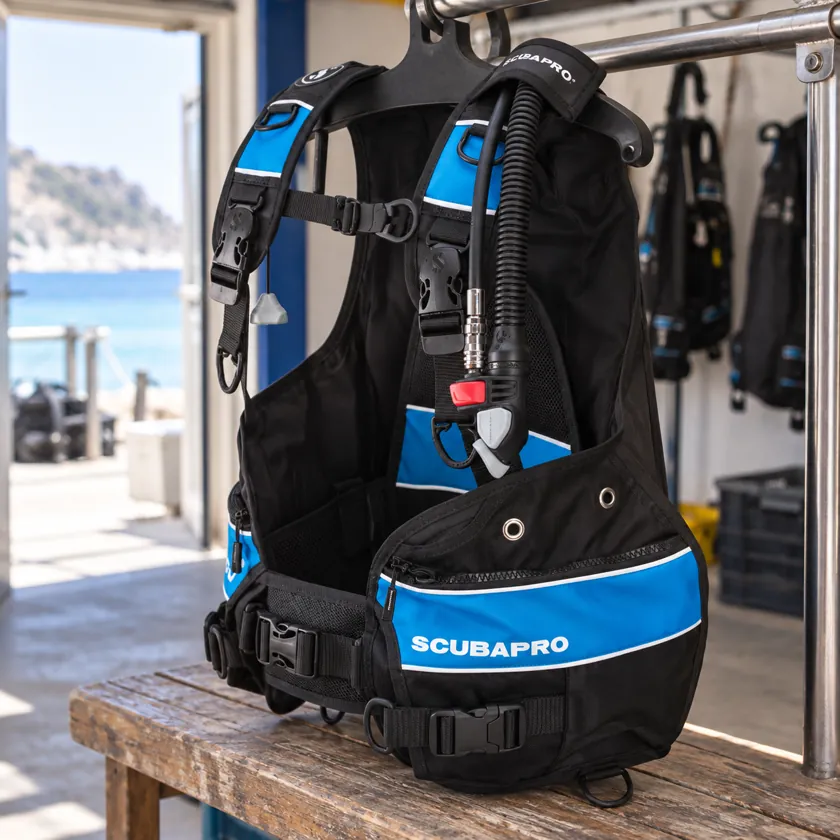 SCUBAPRO GO | Alternative Travel Jacket | Folding wraparound jacket; integrated weights | Quick Cinch package, size and cylinder fit | Check price on Amazon |
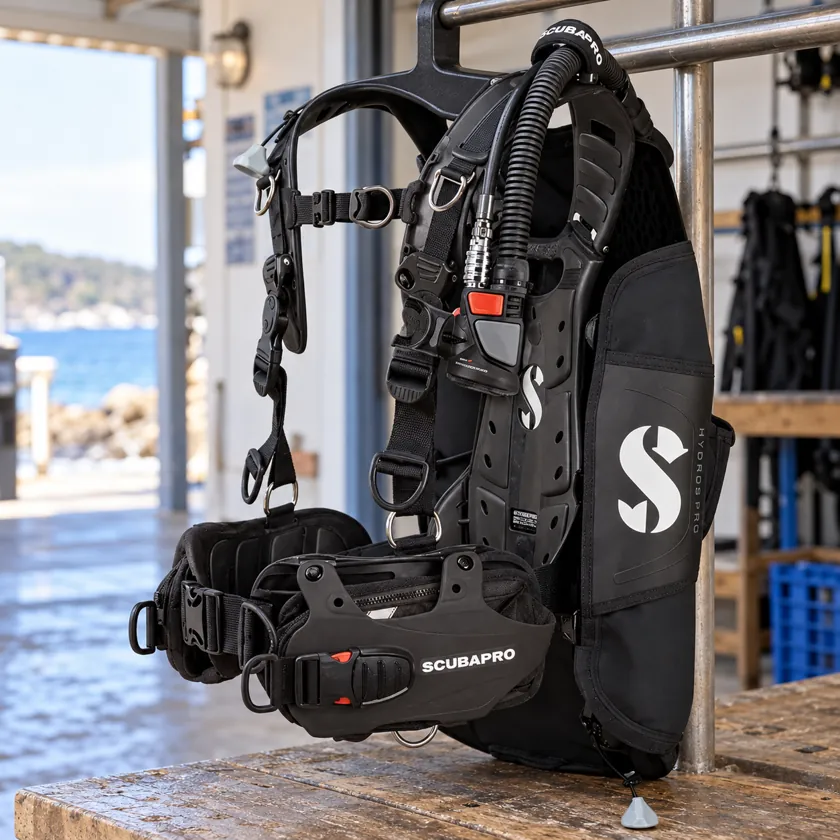 SCUBAPRO Hydros Pro | Modular Configuration | Modular back-inflate; removable weight arrangement | Original Hydros Pro, body fit and BPI package | Check price on Amazon |
 Mares Magellan | a Foldable Back-Buoyancy Setup | Foldable back buoyancy; integrated weights | Magellan model, combined size and harness fit | Check price on Amazon |
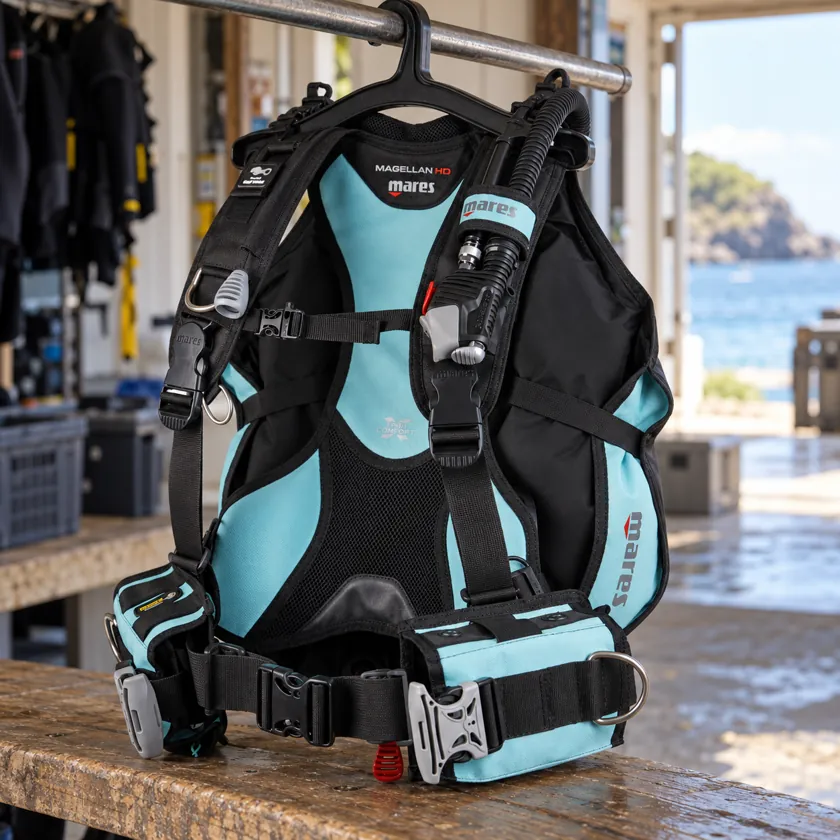 Mares Magellan HD | Storage in a Back-Buoyancy Layout | Back buoyancy; trim pockets and roll-down storage | HD version, size, storage access and package | Check price on Amazon |
1. Cressi Travelight — Best Overall Starting Point
The Travelight is our first fitting recommendation for a recreational diver who wants a folding jacket and integrated weights. It combines a familiar layout with packing flexibility, provided the chosen size supports your complete setup.
Key Features
- Jacket-style buoyancy layout
- Folding travel arrangement
- Independent waist strap
- Integrated weight system
- Rear trim-weight pockets
- Size-specific lift and weight capacity
Why It’s Our #1 Pick
The Travelight takes first place because it offers a practical combination for a recreational diver who also travels: a folding jacket, integrated weights, rear trim pockets and independent waist adjustment. Those are useful ownership features, and they give you clear things to evaluate in a shop rather than relying on an impressive-looking materials list.
It is also a sensible reference point for the other choices. The Start Pro 2.0 puts more emphasis on a rigid backpack and a different weight-release arrangement, while the GO offers another folding jacket to compare. The Hydros Pro and Magellan models appeal when you specifically want a back-inflate layout instead.
The Travelight should keep the top spot only if it fits your body and equipment. Check the actual size’s lift, the weight system’s capacity, how securely the cylinder attaches and whether you can reach the controls and pockets when wearing it. A better-fitting alternative is the better purchase, even if the Travelight packs more conveniently.
What to Consider
Compare this model with the SCUBAPRO GO when you want a travel-oriented jacket. Try the pockets with your normal gloves and the harness in its properly fitted condition. A roomy pocket on an empty BCD can be harder to access when the unit is worn. Obtain the exact manual and ask how the weight pockets are checked for secure engagement, rather than assuming every integrated system locks in the same way.
Pros
- Useful balance of travel packing and jacket familiarity
- Separate waist adjustment
- Integrated and trim-weight provisions
Cons
- Release system needs familiarization
- Pocket access must be checked when worn
- Specifications can vary with size and regional version
Who Should Buy It?
Start here if you want a folding recreational jacket and its harness fits you well. Compare it with the GO using the same exposure garment and an appropriate cylinder setup.
2. Cressi Start Pro 2.0 — Best for a Rigid Backpack
The Start Pro 2.0 is the conventional jacket to compare when a rigid padded backpack and a straightforward equipment layout matter more than folding luggage convenience. Its fixed gravity pockets deserve a proper demonstration before purchase.
Key Features
- Conventional jacket layout
- Rigid padded backpack with carry handle
- Fixed gravity-release weight-pocket concept
- Two zippered cargo pockets
- Three exhaust valves
- Version-specific size and lift information
Why It Makes the Shortlist
The model is worth evaluating for somebody who values a conventional jacket and a clearly identified equipment-school or regular-use design. Its weight release needs its own demonstration and practice under appropriate instruction. Familiarity with removing another brand’s weight pouch does not prove familiarity with this arrangement. Make sure your buddy understands the actual system used rather than describing it simply as integrated weights.
What to Consider
Compare it with Travelight as a different ownership priority, not just a heavier or lighter version of the same BCD. Fit, cylinder stability and control access come before luggage convenience. Ask the supplier to identify the Start Pro version and demonstrate the approved handling of its weights. Do not assume that a retailer photo of a similarly named Start supplies the same pockets or release system.
Pros
- Defined rigid backpack arrangement
- Cargo pockets and carry handle
- Distinct release method can be demonstrated before buying
Cons
- Rigid structure affects packing
- Weight release differs from removable pouches
- The similarly named Start is a separate listing check
Who Should Buy It?
Consider the Start Pro 2.0 for regular recreational use when its jacket fit and fixed-pocket system suit your routine. Learn the actual release arrangement rather than assuming all integrated weights work alike.
3. SCUBAPRO GO — Best Alternative Travel Jacket
The GO gives travel-minded divers another jacket to try alongside the Travelight. Its soft backpack, rotating shoulder buckles and named cylinder-band system make fit and attachment the useful points of comparison.
Key Features
- Wraparound buoyancy bladder
- Soft padded air-net backpack
- Folding travel configuration
- Rotating shoulder buckles
- Integrated weights
- Quick Cinch cylinder-band system
Why It Makes the Shortlist
The GO is a fitting candidate when travel packing and jacket-style familiarity are both important. A soft backpack can change the way the cylinder assembly feels during handling compared with a rigid backplate. Have the intended cylinder configuration assessed rather than deciding from a photograph of an empty harness. Also check the actual attachment range in the supplied manual; a broad marketing phrase about fitting tanks does not establish compatibility with every cylinder arrangement.
What to Consider
Compare the GO with Travelight using the same exposure garment and similar cylinder setup where a shop demonstration allows it. Record how the shoulders and waist sit rather than deciding only by empty weight. Check whether the travel bag, weights and optional components shown in a listing are included. A package title should identify the exact inflator arrangement and regional model.
Pros
- Folds for packing
- Rotating buckles offer another harness fit to try
- Clearly identified cylinder-band system
Cons
- Soft backpack feels different from a rigid structure
- Cylinder-band assembly needs familiarization
- Package contents and size-specific figures need checking
Who Should Buy It?
Try the GO if you want a folding jacket and its shoulders, waist and cylinder attachment work better for you than the Travelight’s arrangement.
4. SCUBAPRO Hydros Pro — Best for Modular Configuration
The original Hydros Pro is the back-inflate choice for divers who value a configurable harness and attachment system. Match the original model and BPI package discussed here rather than assuming a Hydros Pro 2 or AIR2 offer is identical.
Key Features
- Original Hydros Pro back-inflate design
- Monprene harness
- Modular accessory attachments
- Removable integrated-weight arrangement
- Travel configuration available within the system
- BPI and AIR2 packages must be distinguished
Why It Makes the Shortlist
The reason to fit the Hydros Pro is the modular harness and back-inflate layout. A buyer who wants to adjust storage and weight components may find that concept useful, provided the compatible parts and service support are available. Modularity is not the same as unlimited interchangeability. Use only the combinations and adjustments supported for the exact model, particularly where later accessories use a different attachment mechanism.
What to Consider
Try it against the jacket options with qualified fitting help and arrange appropriate familiarization if changing layout. Ask how much weight the actual selected pockets can carry and where trim weights may be placed under the manual. Do not convert a page’s lift number into allowable lead capacity. When comparing prices, match the body cut, size, inflator and included accessories rather than a generic Hydros Pro name.
Pros
- Configurable harness and accessory layout
- Distinct back-inflate alternative to the jackets
- Travel configuration can change the setup
Cons
- Optional parts affect the complete cost
- Configuration changes require familiarization
- Original, Pro 2 and inflator packages can be confused
Who Should Buy It?
Choose the Hydros Pro when you specifically want its modular back-inflate approach and have checked the complete configuration. Price the accessories and inflator you actually intend to use.
5. Mares Magellan — Best for a Foldable Back-Buoyancy Setup
The Magellan is worth trying if a folding back-buoyancy BCD fits your travel priorities. Its lack of a rigid backrest is a real configuration choice, so assess support and cylinder handling in person.
Key Features
- Back-buoyancy layout
- No rigid backrest
- Foldable travel design
- Concave shoulder-strap arrangement
- Integrated quick-release weights
- Combined sizing system
Why It Makes the Shortlist
The Magellan belongs in a fitting comparison for somebody whose travel requirements favor a foldable structure. Check the combined size range against your measurements and exposure garment. A range such as S/M does not mean that the harness will automatically fit anyone who wears small or medium clothes. It still needs the intended adjustment and a check of how the cylinder and weights sit.
What to Consider
Compare it with the GO or Travelight where packing is the real requirement, then compare the worn arrangement rather than the folded object alone. Ask for the exact inflator and weight-pocket instructions and identify the release controls before diving. A minimal travel design still has the same need for correct assembly, inspection and familiarization as a larger local-diving BCD.
Pros
- Folds without a rigid backrest
- Travel-oriented layout
- Another shoulder and harness arrangement to compare
Cons
- Combined sizes still need a proper fitting
- Soft structure may not suit every preference
- Magellan HD is a separate model
Who Should Buy It?
Consider the Magellan when packing flexibility and a back-buoyancy layout are priorities. Confirm the harness works with your exposure protection and intended cylinder.
6. Mares Magellan HD — Best for Storage in a Back-Buoyancy Layout
The Magellan HD deserves its own comparison because it adds a different storage and attachment arrangement. It should be selected for those practical differences rather than treated as the ordinary Magellan in another color.
Key Features
- Distinct Magellan HD back-buoyancy model
- Trim-weight pockets
- Roll-down storage pocket
- Accessory attachment points
- Model-specific harness and capacity information
- Separate from Magellan and She Dives variants
Why It Makes the Shortlist
This model is worth fitting when the back-buoyancy layout and listed storage arrangement address your actual kit. Try reaching the roll-down pocket while wearing the BCD and the gloves you use. A feature is useful only if it remains accessible in the configuration. Check whether attachments and cutting-tool mounts are appropriate for your training and local operator requirements, rather than filling every available location by default.
What to Consider
Compare it with the original Hydros Pro when a back-inflate arrangement is a concrete requirement. Then investigate fit, controls, service support and the actual package. One model’s wider accessory system may matter less than another model’s more comfortable harness. Compare the complete configured prices after both harnesses have passed your fitting checks.
Pros
- Useful storage layout to inspect when worn
- Trim-weight provisions
- Accessory attachment options
Cons
- Extra features add package and fit checks
- Pocket accessibility depends on the fitted setup
- Related Mares names are not interchangeable
Who Should Buy It?
Try the HD if a roll-down pocket and its attachment layout solve a real storage need. Compare the fitted unit with the ordinary Magellan before deciding which travel compromise suits you.
How to Choose a Scuba BCD
Fit the BCD over the exposure protection you use, then check the harness, cylinder attachment, weight release and control access as a complete system. Lift and weight-pocket capacity are separate specifications. Compare the exact size, inflator and package instead of relying on one family-wide number.
Six different configurations to investigate
The comparison covers Cressi Travelight, Cressi Start Pro 2.0, SCUBAPRO GO, SCUBAPRO Hydros Pro, Mares Magellan and Mares Magellan HD. These are distinct products, with different harness and storage priorities. The ordinary Magellan and Magellan HD should not be merged, and the Hydros Pro should not inherit the Hydros Pro 2’s attachment or weight-pocket specifications. Similarly, Start and Start Pro are different Cressi product records.
The useful first split is between the configuration you already understand and a configuration you have a reason to change. If a familiar jacket fits well and supports your diving, a new back-inflate model is not automatically an improvement. If a travel or modular arrangement solves a specific problem, compare it on that requirement and leave time for familiarization. Our jacket versus back-inflate BCD comparison explains the underlying design choices.
Match the BCD to the configuration you need
For a folding travel arrangement, compare the Travelight, GO and ordinary Magellan with your actual cylinder and exposure equipment. Travelight and GO provide jacket-style fitting comparisons; the Magellan has its own backrest, shoulder-strap and sizing decisions. A small packed shape is useful only after harness fit, required lift and weight-system capacities are established. The Start Pro 2.0 is the more relevant contrasting option when you want to assess a rigid padded backpack and fixed gravity-release pockets rather than prioritize folding.
For a back-inflate comparison, investigate the original Hydros Pro and Magellan HD as complete configurations. The Hydros Pro’s modular harness, selected inflator and weight arrangement must be specified together. Magellan HD offers a distinct trim-weight and pocket layout rather than simply being the ordinary Magellan with a new label. Try the release and dump-control locations while wearing the equipment you normally use. A harness that fits on land still needs in-water familiarization. Assess trim and surface handling in the complete configuration.
Fit the harness over the equipment you use
A BCD is worn over exposure protection and interacts with the cylinder and weights. Start with the manufacturer’s sizing process, then fit the actual unit with appropriate professional help. Check the shoulders, waist and torso length without assuming that tightening every strap as far as possible produces a better fit. A too-large harness can remain unstable even when its straps are heavily tightened.
Look at the range available for adjustment rather than one standing pose. Exposure garments and cylinder choices can change the fit, and a thick wetsuit can create a different arrangement from a thin warm-water suit. If you change to a drysuit or a substantially different cylinder system, revisit the BCD’s suitability instead of assuming that the old configuration transfers unchanged.
Separate lift from integrated-weight capacity
Lift describes the buoyant force of the bladder under specified conditions; weight capacity describes how much weight particular pockets or components may carry. They are different specifications. A product with more lift does not automatically accept more lead in each pocket, and a pocket that physically closes around a load is not necessarily approved for it.
Use the exact size’s manufacturer data and have the full configuration assessed for your diving. Body weight alone cannot establish BCD size or the lift required for the whole setup. Check the figure for your actual size; a value displayed for one selected option may not apply to the others.
Weight release is a system to learn
The Start Pro’s fixed gravity pockets illustrate why integrated weights are not one universal mechanism. Other models use removable pouches or different locks. Learn the exact engagement check and release method through the manual and appropriate instruction. Your buddy needs to understand the actual arrangement as part of the equipment check.
Think about handling on the boat as well as underwater use. Weight pockets can make an assembled unit heavy and can create a separate loading task. Follow the maker’s instructions for putting them in, removing them and carrying equipment. Our integrated weights versus belt comparison explains the choice, while a fitting professional can help assess an appropriate configuration for your needs.
Cylinder attachment needs exact compatibility
Confirm the cylinder sizes and configurations the BCD is designed to support. Cylinder-band length, buckle operation, back support and any required additional strap all matter. A broad promise of universal fit on a sales page should not override the exact manual. Do not assume that a single-cylinder recreational BCD is approved for twins, sidemount or an improvised extra cylinder.
Have the cylinder securely fitted using the correct procedure before assessing stability. The product name of a buckle does not teach its operation, and wetting or tensioning instructions can be model-specific. Follow the exact manual and have an unfamiliar band demonstrated. If your usual dive center supplies different cylinders from the ones you own, ask the operator and supplier to check the actual compatibility in advance.
Compare the location of inflation and dump controls
Identify the oral inflator, power-inflation control and dump mechanisms on the exact BCD. Check that you can reach and distinguish them in your normal equipment. More valves do not automatically make a BCD easier to use, and a familiar-looking pull location can behave differently across models. Follow the manual and your training for orientation and operation.
Optional alternate-air-source inflators create an additional configuration question. The Hydros Pro’s BPI and AIR2 listings should not be compared as identical packages. Training, compatible hose connections, service and the diver’s alternate-air arrangement all need consideration. A retailer’s bundle discount is not a reason to change that arrangement without appropriate instruction and planning.
Pockets and attachment points should serve a real task
Lay out the accessories you actually carry and consider where each belongs under your training and site requirements. Storage that looks generous when the BCD is empty may be harder to access when the harness is fitted or weights are installed. Try zippers and release pulls with your usual gloves where a shop demonstration permits it.
Avoid treating a D-ring count as a quality score. Position, accessibility and supported loading matter more than the number alone. The conflicting counts on the current Travelight page are also a reminder to inspect the actual product when a detail affects your purchase. More attachments can create more clutter if they have no planned role in the equipment arrangement.
Travel weight is the weight of the chosen configuration
Compare the dry weight of the correct size with the exact pockets, inflator and accessories you intend to take. A stripped travel harness and a fully equipped integrated-weight package are not the same load. Ask whether the manufacturer’s number includes removable parts and avoid comparing a per-size figure with an unspecified family weight.
Packing shape matters as well as mass. A folding BCD can be easier to organize, while a rigid backplate may require a different bag layout. Check airline rules for the actual journey and leave space for the rest of the equipment. No maker’s travel label can guarantee that a complete kit will fit every carrier’s baggage allowance. Our air-travel packing guide covers the larger packing decision.
Surface behavior should be learned, not promised
A BCD’s surface position depends on the diver, equipment and use. Fit, weight placement, inflation and the rest of the configuration affect the result with either bladder layout. Have a changed arrangement assessed through appropriate instruction and familiarization.
Do not select equipment solely because a marketing line promises perfect trim. Underwater control also depends on training, cylinder and weight arrangement, exposure protection and practiced technique. A BCD can support an appropriate configuration without doing the diver’s buoyancy work automatically. Assess the equipment and your technique together.
Materials and repair support
Fabric denier, Monprene components and reinforced panels describe material choices. They do not establish a measured lifespan across different handling, storage and service conditions. A modular design may make particular repairs possible, but confirm parts supply and authorized-service arrangements in your region. Do not assume that every component can be substituted with a similar-looking accessory.
Check wear areas on the actual BCD when it arrives and retain the manual, model and size information. If a component is damaged or a valve behaves abnormally, seek appropriate service rather than improvising a repair. A product described as durable still needs regular inspection. Ownership support can be a more useful deciding factor than a promotional claim that a material is nearly indestructible.
Maintenance affects the purchase
Read the model’s instructions for exterior and internal rinsing, draining, drying and storage before committing to an ownership routine. A BCD contains more than the fabric you can see. Inflator, bladder, valves, weight systems and cylinder attachment all need the attention defined by the manufacturer. Different designs may have different maintenance access and service tasks.
Consider whether you have appropriate drying space and local service support. Leaving a damp unit compressed in its travel bag defeats the purpose of careful packing. Our BCD inspection and maintenance guide explains the general equipment-care questions, while the exact manual controls the actual procedure. A low purchase price is less attractive if required service cannot be arranged conveniently.
Build a useful fitting record
Record model, generation, size, body cut, inflator and weight configuration. Note the exposure garment and cylinder used during the fitting. Write down specific observations, such as shoulder pressure, difficult pocket access or insufficient adjustment range, rather than only comfortable. Those notes let a supplier compare alternatives without repeating an unfocused search through every available model.
Where a controlled water trial is available, keep it within your training and the provider’s conditions. Give a changed configuration time for familiarization before a demanding trip. A brief successful trial is personal evidence about that arrangement, not proof that the same model will suit everyone.
Compare complete purchase packages
Confirm whether the selected offer includes integrated-weight pockets, travel straps, an inflator hose and any pictured bag. Some accessories shown in promotional images are optional. A body-only listing and a complete package can look similar while requiring different additional purchases. Resolve missing parts before choosing on price.
Check the seller’s return policy, warranty eligibility and support route in your country. Shipment by a marketplace does not by itself establish an authorized dealer. If the seller cannot identify the exact BCD and inflator configuration, choose another listed offer rather than guessing. Preserve receipts and correspondence so service providers can establish what was supplied.
A shortlist by the problem you need to solve
For a folding jacket arrangement, compare Travelight and GO on fit, weight-system operation and the actual packed configuration. For a conventional reinforced jacket with a different release concept, examine Start Pro. For a modular back-inflate arrangement, fit Hydros Pro in the configuration you intend to use. Compare ordinary Magellan’s travel structure and Magellan HD’s separately listed back-buoyancy and storage layout without exchanging specifications between them.
Use these groups to organize a fitting appointment. First reject unsuitable fit and unsupported cylinder or weight arrangements. Then evaluate control access, service and travel requirements. Only after those checks should a current, properly matched price comparison settle a choice between suitable options. The most expensive BCD is not automatically the one that resolves your particular equipment problem.
Three ownership situations that change the shortlist
If you mostly rent a BCD abroad, identify the practical problem you want ownership to solve. Consistent controls and a repeatable personal fit can be valuable, but the purchased unit still has to work with the destination’s cylinders and your luggage. Ask the operator about the supplied cylinder arrangement before choosing a very specific harness. A familiar release system may be a stronger reason to buy than saving a small amount of dry weight.
If you mostly dive locally from shore, think about the complete carrying task. A padded harness, an appropriate carry handle and the way weights are handled can affect preparation and recovery. Do not select a travel BCD merely because it is compact when the important requirement is supporting your usual local rig comfortably. Likewise, a handle should be used only as the manufacturer permits; a convenient-looking strap is not automatically a lifting point for an assembled system.
If you share equipment with another household member, treat each person’s fit as a separate assessment. An overlapping size range does not establish that one unit is suitable for both. Record the intended adjustments and ask a professional whether the arrangement is practical. Repeated changes can also make a pre-dive fit and configuration check particularly important. The convenience of owning one BCD is not a reason to accept poor fit for either diver.
Keep weight-system spares identifiable
A lost pouch can turn a seemingly complete integrated system into an incomplete rig. Before purchase, establish which replacement pouch or component matches the exact model and generation. Similar shapes and matching brand colors are not proof of compatibility. The distinction between Hydros Pro and Hydros Pro 2 is one reason to retain the full product record rather than only a familiar family name.
Ask whether the part is stocked locally and what the approved alternative is if it is unavailable. Do not improvise a pouch lock, tie a release mechanism closed or substitute an unapproved component to keep a trip on schedule. If your configuration cannot be completed correctly, obtain an appropriate professional solution before diving. The availability of a spare is an ownership consideration, not a promise that any item sold as a weight pocket will work.
This shortlist is not every buoyancy-system category
Backplates, wings, sidemount systems and specialized technical configurations have their own compatibility and training requirements. This article focuses on six recreational BCD products and does not imply that a modular jacket or harness is equivalent to every other modular system. A product should be selected for the supported configuration and the user’s training rather than the general appeal of customization.
If your planned course or equipment change calls for another category, obtain the instructor’s requirements before ordering from this shortlist. Cylinder arrangements, wing shape, harness fit and release strategy need assessment together. It is better to research the appropriate system as a complete configuration than to buy one of these BCDs and discover later that the intended conversion is unsupported.
Frequently Asked Questions
What matters most when choosing a scuba BCD?
Start with harness fit, suitable lift and compatibility with your cylinder and exposure system. Then check weight capacity, release operation and access to the inflator and dump controls. A model’s popularity or small packed size cannot establish that it is suitable for your complete configuration.
Is a jacket BCD better than a back-inflate BCD?
They place the buoyancy bladder differently and can feel different in the water. Neither layout guarantees a particular surface position or effortless trim. Try an appropriate configuration under qualified guidance and choose the fit and handling you understand, with enough lift for the intended equipment.
Are all integrated weight systems operated the same way?
No. Some release a removable pouch; others, such as the fixed gravity-pocket concept on the Start Pro 2.0, release weights from attached pockets. Learn the exact system in the supplied manual and during appropriate instruction. Your buddy should also know how your actual release works.
How much BCD lift do I need?
The answer depends on the complete equipment and exposure configuration, including the buoyancy changes involved in the dive. Check the lift for the exact BCD size and have the setup assessed by a qualified professional. Integrated-weight capacity is a separate figure and should not be used as a substitute for lift.
Should I buy the lightest travel BCD?
Only after it meets the fit, lift and equipment requirements. Compare the packed weight of the size and configuration you will actually take, including weight pockets and accessories. A small saving is less useful if the harness, storage or cylinder attachment does not work well for you.
Does a BCD listing include everything shown in the photographs?
Not necessarily. Confirm the exact model generation, size, inflator, weight pouches and included accessories. The original Hydros Pro, Hydros Pro 2 and packages with different inflators should not be treated as one product. Ask the seller to identify the actual package before ordering.
Our recommendation
Final Verdict
The Cressi Travelight is our first BCD to try for a balanced recreational and travel setup. Compare it directly with the SCUBAPRO GO if a folding jacket is your priority, and with the Start Pro 2.0 if you prefer a rigid backpack and its distinct weight-release system.
,Choose the original Hydros Pro for its modular back-inflate approach, or assess the Magellan and Magellan HD for their respective travel and storage layouts. Let harness fit, suitable lift, cylinder attachment and familiar control access settle the decision before luggage weight or styling.
Specifications and Manuals
For model details, see Cressi Travelight specifications, Cressi Start Pro 2.0 specifications, SCUBAPRO GO specifications, SCUBAPRO Hydros Pro specifications, Mares Magellan specifications, Mares Magellan HD specifications.
About the author
Robert
Robert bohat acha bacha hay