
By Robert · Updated
Dive glove fit, thickness and dexterity need to be considered together. A glove must provide appropriate protection for the planned conditions while allowing you to operate the equipment you use. More material can change warmth, flexibility, grip and the feel of small controls. Start with the diving environment and local operator’s requirements, then evaluate the actual glove with your configuration. A nominal thickness or ordinary clothing size cannot establish that the combination will work for your hands.
Define the purpose of the glove
Thermal protection, abrasion resistance and handling comfort are different requirements. A thin protective glove may not provide suitable insulation, while a thick neoprene glove may be awkward for a particular control. Identify what you need before shopping. Ask the operator about expected conditions and whether gloves are permitted or restricted at the site.
Gloves are not permission to touch wildlife, hold onto coral or use the bottom to compensate for poor buoyancy. Plan equipment handling around the skills you have been taught. If a task requires a specialist glove or a different exposure system, obtain relevant advice instead of stretching the role of an ordinary recreational product beyond its intended use.
Read thickness as a material specification
A glove described by a millimeter figure is usually communicating nominal material thickness, not a measured promise of warmth for every diver. Panels, linings, seams and closures may differ across the glove. Check the exact product description rather than assuming the whole item is made from one uniform sheet.
Thickness also does not directly tell you how flexible the glove feels. Material formulation, panel shape and reinforcement can change the effort required to move the fingers. Compare candidates in the size you would actually wear. Do not assign a universal water-temperature limit to a glove based only on the number in its name.
Measure hands with the relevant size chart
Use the manufacturer’s method for hand length, palm circumference or any other measurement its chart requires. Do not substitute a chart from a different brand. Take measurements without pulling the tape unusually tight, and record both hands if they differ. A size label is a starting point for trying the glove, rather than a guarantee of fit.
Check whether a particular chart concerns the glove itself or the diver’s hand. Those measurements are not necessarily interchangeable. SCUBAPRO’s size guides, for example, provide model-family sizing information that should be interpreted using the accompanying diagram. Ask the supplier when the chart is ambiguous instead of guessing from an isolated number.
Seat the fingers before judging the palm
Put the glove on carefully so each finger reaches its intended position. Fabric twisted between the fingers can make an otherwise reasonable size feel wrong. Notice whether the fingertips are crowded or whether excess material extends far beyond them. Both can interfere with handling. Check the thumb separately because its panel shape may be the deciding factor.
Then assess the palm and the webbing between the fingers. The glove should not require an unnatural hand position just to feel comfortable. Avoid choosing a painfully tight size in the hope that it will stretch enough later. If finger length and palm width cannot both be accommodated, a different model’s shape may be more suitable than moving repeatedly between sizes.
Open and close the hand realistically
Assess how the glove feels when the hand is relaxed, gently closed and extended. Look for pressure across the knuckles or material pulling at the base of the thumb. A glove that feels acceptable flat on a shop counter can become restrictive when gripping an instrument or operating a larger control.
Do not turn a fitting into a test of how hard you can squeeze. The objective is comfortable usable movement, not forcing the material through its range. Notice whether the fingers return naturally when the hand relaxes. If reinforcement creates an awkward crease in the palm, compare another design before deciding that the issue is unavoidable at that thickness.
Check controls with the actual equipment
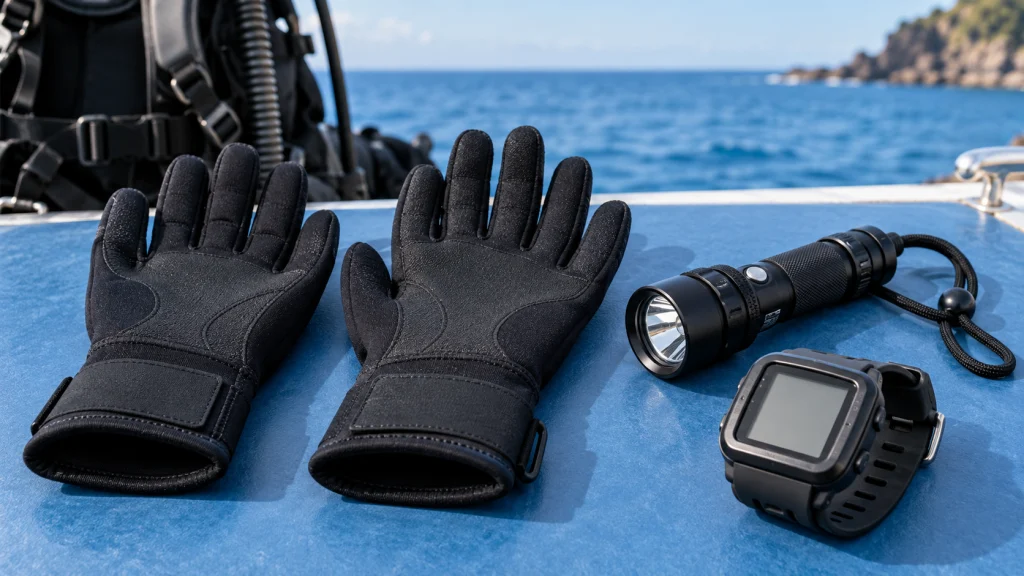
Small buttons, rotating bezels, clips and straps can feel different through a glove. With suitable supervision and equipment in a safe condition, assess the controls you are expected to use. Include your computer, light and relevant adjustment systems. A glove that works well with one large-button computer may be less convenient with a small multi-button watch. Our dive light buying guide distinguishes side controls, tail operation and locks so those differences can be included in a glove trial.
Do not judge emergency-equipment access from appearance alone or invent a new release procedure during a shop trial. Have an instructor assess access and handling within your trained configuration. The important result is whether you can perform the required familiar skills reliably, rather than whether the glove’s packaging describes it as highly dexterous.
Cuff and sleeve overlap matters
The glove cuff must work with the exposure suit’s wrist arrangement. A long cuff can provide useful overlap in one setup and create bulk or discomfort in another. Check the intended arrangement in the garment instructions. Avoid assuming that any two neoprene products form a suitable seal simply because one can be pulled over the other.
Dry gloves used with drysuit systems are a separate equipment choice with their own compatibility and training requirements. An ordinary wet neoprene glove is not interchangeable with a dry-glove system. If your configuration changes, revisit sizing, cuff interaction and handling with the complete equipment rather than carrying over a decision from a different suit.
Palm texture and reinforcement
A textured palm may help a particular handling task, but grip depends on the surface, fit and conditions. It should not be treated as a guarantee that wet equipment cannot slip. Examine how reinforcement changes flexibility and where seams sit when you grip an object. A durable-looking patch is less useful if it creates a pressure point or prevents comfortable movement.
Think about wear locations from your own routine. Repeated contact with a particular clip or strap may affect a small area while the rest of the glove remains sound. Choose construction that suits legitimate equipment handling, then care for it appropriately. Do not assume added abrasion resistance provides protection against sharp objects, bites or every underwater hazard.
Understand five-finger and mitten trade-offs
Different handwear layouts change how fingers move and share space. A five-finger design preserves individual finger positions; mitten-style options and hybrid arrangements have a different handling feel. Suitability depends on the environment, exposure system, equipment controls and training. A layout cannot be ranked solely from its photograph.
If considering a substantially different style, arrange a meaningful assessment with an instructor or experienced equipment professional. Check the complete set of tasks, including the ones performed infrequently. A design that is comfortable during an ordinary swim still needs to support the required equipment skills. Do not make a demanding dive the first occasion on which you discover those limitations.
Reassess when hands become cold or uncomfortable
Hand discomfort is not something to ignore because the glove appeared suitable in a shop. Numbness, persistent pain or loss of useful handling needs attention within your training and dive plan. Review the fit, conditions and the full exposure-protection arrangement before further use. Seek appropriate professional or medical advice when symptoms require it.
Avoid solving every thermal problem by ordering the next thickness without checking the rest of the setup. A poorly fitting cuff, excessive compression or unsuitable overall exposure protection can remain a problem. Our wetsuit thickness article explains why duration, fit and conditions belong in the wider thermal decision.
Clean and dry all the way to the fingertips
Rinse gloves according to the manufacturer, including the lining and cuffs. Salt and sand can remain in folds, and reinforced areas may dry differently from thinner panels. Open or turn them only as their construction permits; forcing a delicate lining inside out can create damage. Check inside the fingertips before packing them for long-term storage.
Keep hook-and-loop tabs from snagging other garments. Use approved cleaners when needed, and avoid improvised heat to speed drying. Store the pair together without compressing them beneath heavy equipment. Our scuba gear storage guide covers organizing small exposure items so they are ready to inspect before the next trip.
Allow time for replacement before a trip
Inspect both gloves early enough to replace a damaged pair or resolve a sizing problem. A small tear at a finger or cuff may be easy to overlook when the equipment is still in its bag. Check whether the manufacturer supports repair in that location, and compare the repaired fit with the original. Keep any spare handwear appropriate to the same conditions and configuration; an old, thin pair is not automatically a suitable substitute simply because it occupies little luggage space.
Make the final choice around tasks
Compare a shortlist using the same equipment and the same fitting checks. Record the model, size, cuff arrangement and any control that was difficult to use. Where appropriate, confirm the decision in a controlled water familiarization before more demanding diving. This is more informative than choosing the thickest option or trusting an unspecific comfort claim.
For a product example, SCUBAPRO’s Everflex glove documentation separately describes construction, cuff features and thickness. That illustrates why a full specification is more useful than one number. Your final choice still needs a comfortable fit, suitable protection and usable equipment handling.
About the author
Robert
Robert writes about scuba-diving equipment for GearDeep, focusing on fit, compatibility and the practical differences between products. His buying guides use manufacturer specifications and manuals to help readers compare their options, understand important limitations and make informed equipment choices.