By GearDeep Editorial · Updated
Amazon Affiliate Disclosure: As an Amazon Associate I earn from qualifying purchases. This comes at no extra cost to you. How affiliate links work.
The best dive lights for scuba diving combine the beam you need with controls and a power system you can manage comfortably. Maximum lumens tell only part of the story: ordinary output, runtime, switch position and the complete battery package affect the purchase. These six handheld lights cover different ways to build a narrow-beam recreational lighting setup.
The short answer
Quick Verdict
The OrcaTorch D710 is our top narrow-beam pick for its output choices, side control and lock.
- Compare the D530 cold white if you prefer an 18650-based setup.
- Choose a Sea Dragon Mini Power Kit when you want the specified battery and charger supplied together.
For our selection process, read How We Research.
On this page
Best Dive Lights: Quick Comparison
Compare the features that affect your purchase, then check the selected listing for the current price, version and package contents.
| Model | Best For | Power System | Main Purchase Check | Price / Where to Buy |
|---|---|---|---|---|
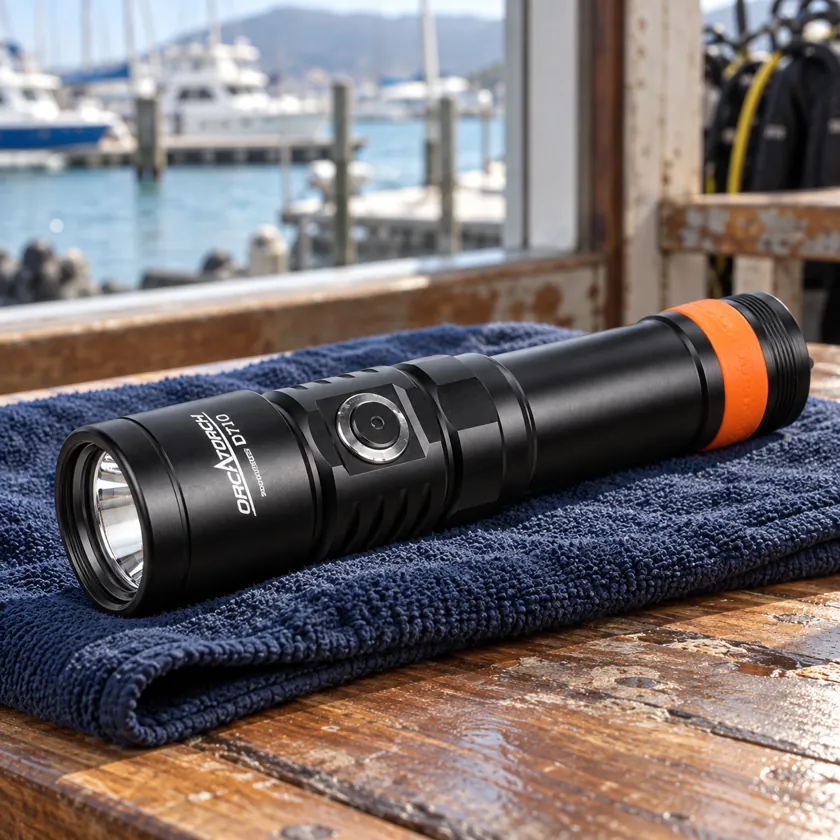 OrcaTorch D710 | Recreational Spot Light | 21700 rechargeable battery | Confirm the supplied battery and charging arrangement | Check price on Amazon |
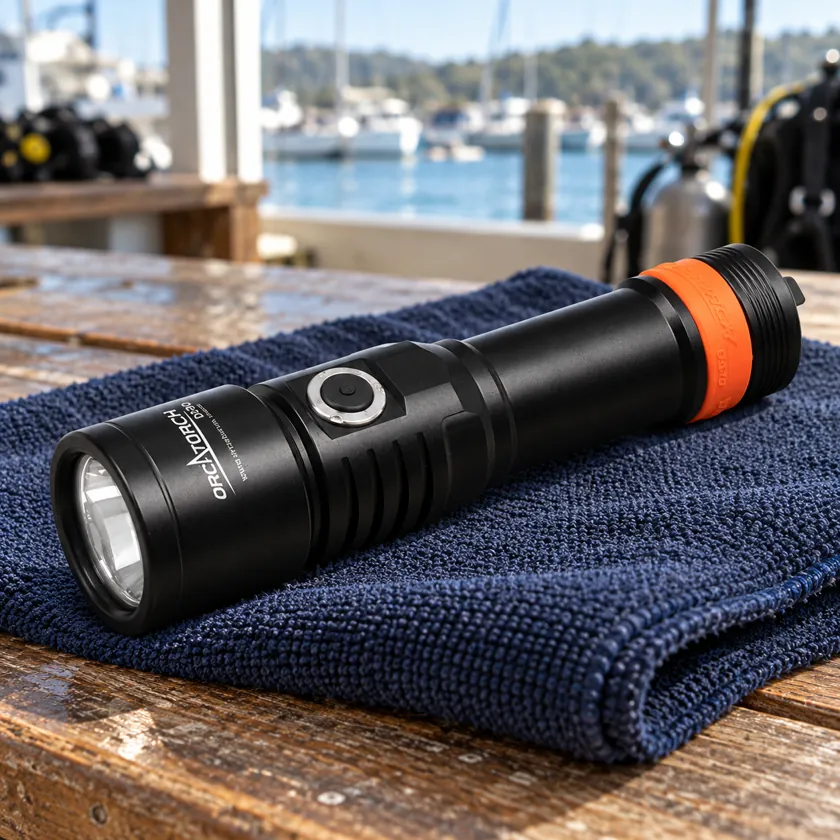 OrcaTorch D530 Cold White | 18650-Based Side-Switch Option | 18650 rechargeable battery | Keep older output figures separate from the current model | Check price on Amazon |
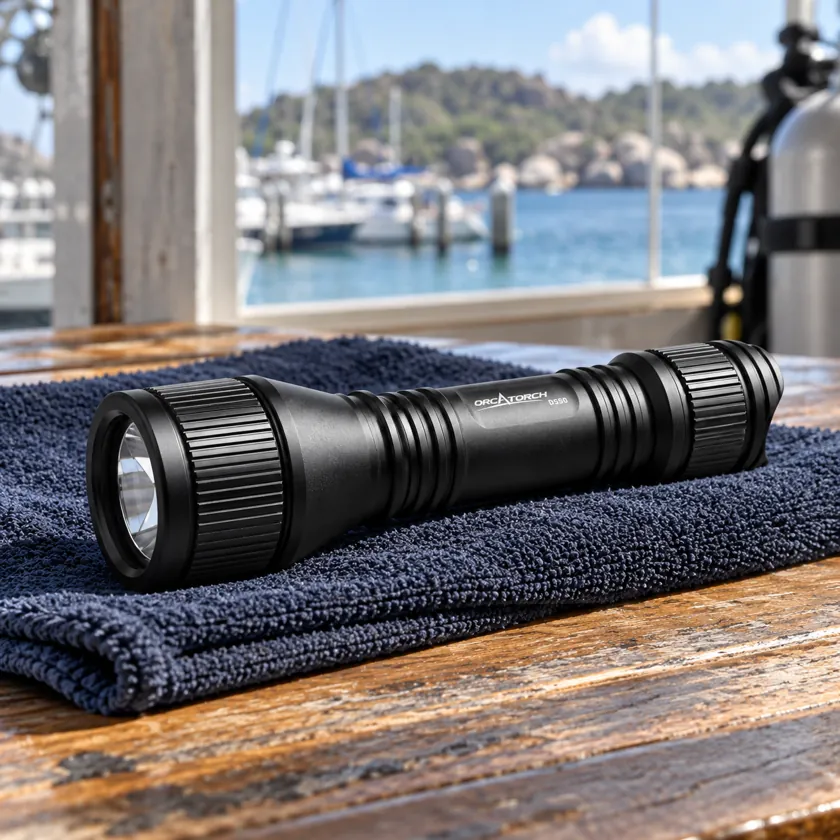 OrcaTorch D550 | Tail-Switch Alternative | 18650 rechargeable battery | Match the runtime and battery information to the version | Check price on Amazon |
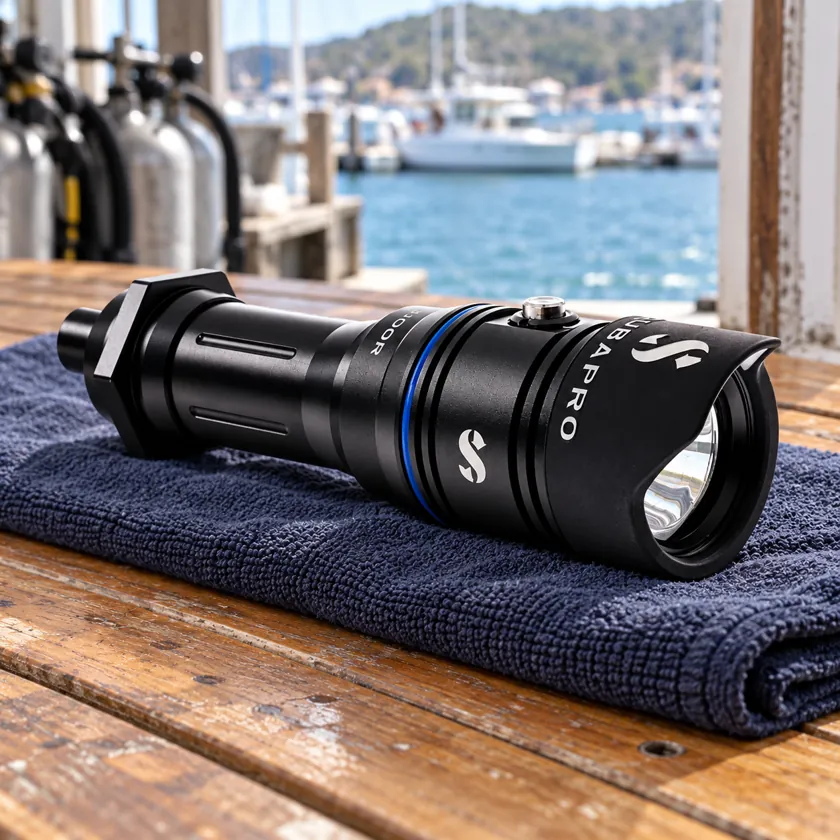 SCUBAPRO Nova 1000R | Alternative Narrow-Beam Power System | Single rechargeable 21700 cell | Distinguish the narrow model, Wide model and battery-kit contents | Check price on Amazon |
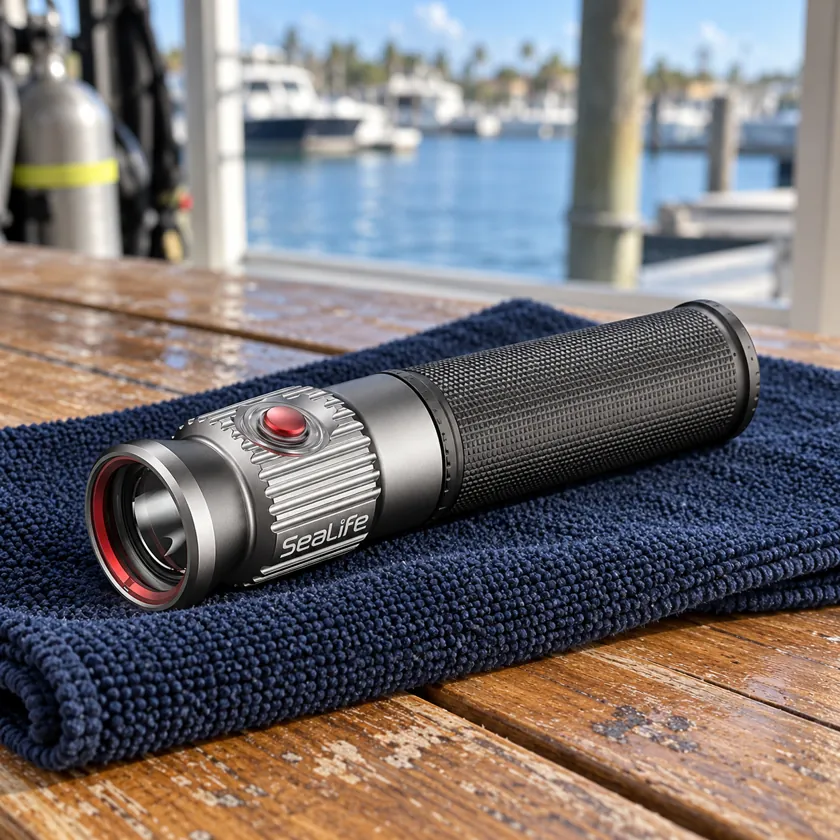 SeaLife Sea Dragon Mini 1200 Power Kit | Lower-Output Complete Kit to Compare | Included 2600 mAh 18650 cell and charger | Do not borrow optional-cell runtime for the included battery | Check Amazon listings |
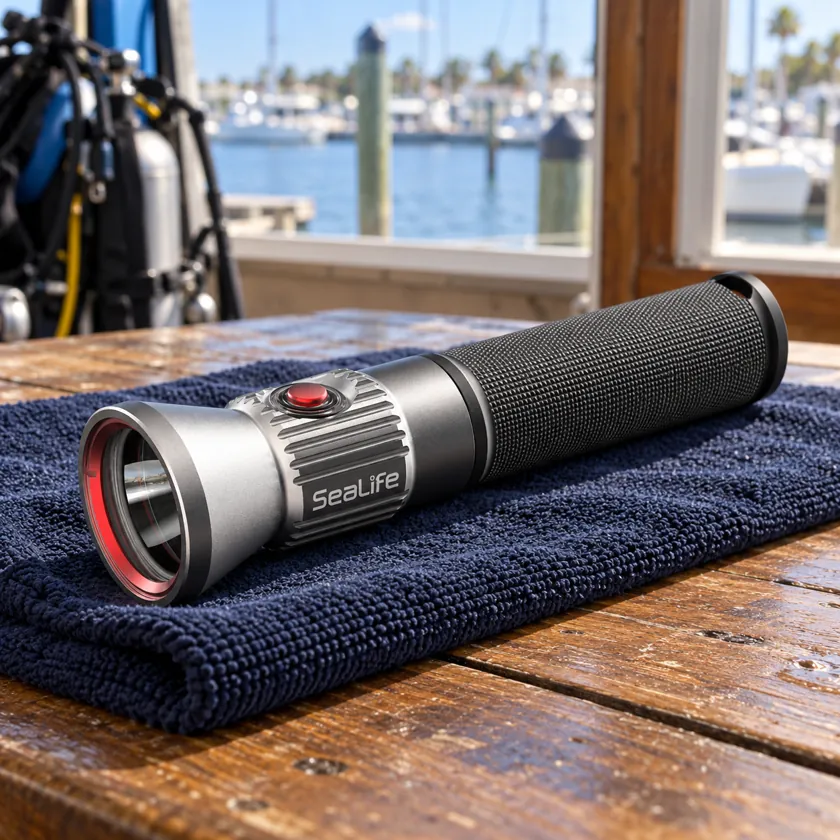 SeaLife Sea Dragon Mini 1600 Power Kit | Higher-Output Complete Kit to Compare | Included 3500 mAh 18650 cell and charger | Confirm compatible battery requirements and actual package | Check price on Amazon |
Entries labeled “Check Amazon listings” open a search for that exact model; confirm a matching product and selected configuration before ordering.
1. OrcaTorch D710 — Best Overall Recreational Spot Light
The D710 is the first narrow-beam light we would compare for a recreational setup. It pairs a side button and lock with several output choices, while using a specified rechargeable 21700 battery.
Key Features
- 6-degree spot beam
- 3,000-lumen turbo and separate 1,700-lumen high mode
- Side push-button control
- Lock function and battery indication
- Specified rechargeable 21700 battery
Why It’s Our #1 Pick
The D710 earns our first position for recreational spot-light use because it combines a concentrated 6-degree beam, multiple output settings and a side button with a lock function. Those features address three practical decisions at once: where the light goes, how you change its output and how you prevent accidental activation during handling.
The output table also lets us make a more useful comparison than the 3,000-lumen headline alone. That figure is turbo; ordinary high is listed separately at 1,700 lumens. We would choose the operating mode around the required duration and dive plan, rather than expecting turbo brightness throughout the published high-mode runtime.
Its 21700 battery system will not be the best fit for every equipment bag. The D530 is worth a look when an approved 18650 arrangement suits you better, and a SeaLife Power Kit can simplify the initial battery-and-charger purchase. The D710 leads this narrow-beam shortlist through that mix of controls and output choices, rather than an assumption that more lumens suit every task.
What to Consider
Ask the seller to identify the exact included battery, charging method and current package contents. The current D710 documentation describes charging through the supplied battery’s port. That is different from assuming the torch body itself accepts a cable. This matters in a wet work area, where opening a light and charging a removable battery require appropriate preparation and dry handling under the manual.
Pros
- Several output choices
- Concentrated spot beam
- Side control and lock
Cons
- Turbo is separate from sustained high output
- 21700 power system needs compatible charging equipment
- A narrow spot does not replace video floodlighting
Who Should Buy It?
Choose the D710 when a concentrated spot, side control and its battery routine fit your recreational lighting plan. Compare the normal mode and runtime rather than the turbo headline alone.
2. OrcaTorch D530 Cold White — Best 18650-Based Side-Switch Option
The current cold-white D530 is the alternative to compare when you prefer an 18650 power system. Its side switch, status indication and narrow beam make the controls and battery logistics central to the choice.
Key Features
- Current cold-white output listed at 1,500 lumens
- 7-degree beam
- Specified rechargeable 18650 battery
- Side switch with lock
- Battery-status indicator
Why It Makes the Shortlist
The D530 is a useful comparison with the D710 if you prefer an 18650-based light or already have a supported battery and charger arrangement. That preference is about logistics, not proof that every 18650 cell you own will fit. Length, terminal style, protection circuitry and discharge capability can matter. Use the exact approved battery specification rather than treating a cylindrical format number as a complete compatibility statement.
What to Consider
For a buyer comparing a discounted older unit with the current version, request the manual and package identification before comparing output. An accurately described older product can still be a sensible purchase, but only with its own specifications. The newer brightness figure applies to the matching version; an older D530 keeps its own specification. Do not use a product review to select an unapproved battery in an attempt to increase output.
Pros
- 18650-based arrangement
- Side control and status indication
- Defined current cold-white version
Cons
- Older D530 output figures differ
- Emitter-color variants serve different purposes
- Approved cell requirements still need checking
Who Should Buy It?
Try the D530 if the current cold-white model and supported 18650 arrangement suit your kit. Confirm the generation before comparing an older discounted listing.
3. OrcaTorch D550 — Best Tail-Switch Alternative
The D550 is the interface alternative in the OrcaTorch group. Its tail control is worth trying if a side button does not fit the grip, glove or mounting arrangement you normally use.
Key Features
- Magnetically controlled tail switch
- Specified 18650 battery
- 1,000-lumen high mode
- Separate 380-lumen low mode
- Manufacturer equipment rating of 150 m
Why It Makes the Shortlist
The useful distinction here is the tail-operated interface. A diver who dislikes a side button may prefer the way a tail control sits in the hand, while another may find it awkward with a particular grip or glove. A higher-output alternative does not automatically improve this interaction. During a dry demonstration, ask to hold the light with the lanyard or handle arrangement you intend to use.
What to Consider
If considering the D550 as a backup, examine how it will be stowed and retrieved. A control that is easy on an uncluttered shop counter may be harder to use when the torch is tucked beside other equipment. Your instructor’s lighting and redundancy requirements decide whether a particular arrangement is suitable. The manufacturer’s broad description of primary or backup use does not settle suitability for a technical or overhead dive.
Pros
- Tail-operated alternative
- Identified battery family
- Separate ordinary output levels
Cons
- Tail access depends on grip and storage
- Version-specific runtime figures need matching
- Headline output does not establish backup suitability
Who Should Buy It?
Choose it for a tail-operated arrangement you can reach and use comfortably. Assess the complete stowage and retention setup if the light will serve a backup role.
4. SCUBAPRO Nova 1000R — Best Alternative Narrow-Beam Power System
The narrow-beam Nova 1000R offers a different control and battery package to compare with the OrcaTorch models. Check the cost of the complete supported system because a bare-light offer may exclude the power accessories.
Key Features
- 8-degree narrow beam
- 1,000-lumen-class output
- Specified rechargeable 21700 cell
- Full and reduced-output operation
- Push-button control and electronic lock
Why It Makes the Shortlist
The linked manufacturer manual gives up to 2.5 hours of runtime and explains that battery type and quality affect duration. It also makes clear that the quoted light-output measurements are taken at switch-on. These figures do not establish that the light maintains its initial maximum brightness for that entire period. Compare a stated runtime with its measurement conditions, and do not turn an initial-output specification into a sustained-output test result.
Package identification is particularly useful here. The US product page lists the light, lanyard and reusable box, with the battery and charger sold separately. A regional battery kit may include more, but that must be checked against the actual offer. Price the complete compatible system rather than treating a bare light as equivalent to either SeaLife Power Kit. An owner who already uses a supported 21700 charging setup may assess the package differently from someone starting with no battery or charger.
The manual describes an electronic lock and full/reduced-output operation. Confirm the complete sequence in that manual and practice it with your gloves before relying on the light. A travel lock is useful only when you can recognize its state and unlock the torch when needed. Check that the chosen backup location lets you reach the control without leaving another item dangling or directing the beam at a buddy.
Pros
- Defined narrow-beam version
- Electronic lock
- Straightforward ordinary output choices
Cons
- Battery and charger can be separate purchases
- Wide version is a different model
- Published runtime depends on battery and conditions
Who Should Buy It?
Compare the Nova 1000R when its controls and 21700 arrangement suit you. Match the narrow version and price the battery and charger alongside the torch.
5. SeaLife Sea Dragon Mini 1200 Power Kit — Best Lower-Output Complete Kit to Compare
The Mini 1200 Power Kit is useful when you want the light, specified battery and charger identified together. It is the SeaLife option to compare before deciding whether the Mini 1600’s tighter beam and different included cell are useful.
Key Features
- 1,200-lumen output
- 8-degree beam described as 6 degrees underwater
- Included 2,600 mAh 18650 battery
- Charger included in the Power Kit
- Full, half and quarter brightness settings
Why It Makes the Shortlist
This package is worth comparing when you want the light, specified cell and charger identified together. A bare-light offer may have a different total purchase cost and may leave you sourcing the battery separately. Check that the selected retailer title actually says Power Kit and matches the package contents, rather than relying on a photograph that shows accessories from another bundle.
What to Consider
The relevant manual defines acceptable battery specifications. The product page calls for a protected button-top 18650 with stated minimum requirements, so a random flat-top cell is not an equivalent purchase. Keep the battery and charger identities in the equipment record. If you replace either, establish compatibility again rather than assuming that a similar plug or printed capacity is sufficient.
Pros
- Specified battery-and-charger package
- Several ordinary brightness levels
- Clear underwater beam wording
Cons
- Optional-cell runtime differs from the included kit
- Signaling modes add a sequence to learn
- A narrow beam is not a general video flood
Who Should Buy It?
Choose the exact Power Kit if its included cell and charger simplify the purchase. Confirm a matching offer and distinguish it from a bare Mini 1200 light.
6. SeaLife Sea Dragon Mini 1600 Power Kit — Best Higher-Output Complete Kit to Compare
The Mini 1600 Power Kit combines a higher maximum output and more concentrated beam than the Mini 1200, with a different included battery. That makes it a specific alternative rather than simply the same torch with another color.
Key Features
- 1,600-lumen maximum
- 6-degree beam described as 4.5 degrees underwater
- Included 3,500 mAh 18650 battery in the Power Kit
- Charger included in the Power Kit
- Listed full-output runtime of one hour with the included cell
Why It Makes the Shortlist
The Mini 1600 provides a meaningful comparison with the Mini 1200 because the standard package battery and beam description differ as well as the maximum output. It is not simply the same product offered in another color. A diver who wants to point out a small feature may value a concentrated spot; a diver trying to light a broad camera scene may need a different light category altogether.
What to Consider
Try the operating sequence before packing it for a night dive. Make sure you can return from a signaling mode to ordinary illumination without confusion and understand the lock or transport instructions in the supplied manual. A more powerful maximum is helpful only if the chosen mode, control layout and charging routine work for your diving. It is not a replacement for carrying the lighting required by your training and dive plan.
Pros
- Identified kit power accessories
- Concentrated beam
- Separate output choices
Cons
- Narrower beam may not suit a broad scene
- Full output affects usable duration
- Do not assume every 18650 cell is compatible
Who Should Buy It?
Compare the Mini 1600 when its concentrated spot and complete supported kit address your needs. Check that the selected retail offer includes the Power Kit accessories.
How to Choose a Dive Light
Decide what you need to illuminate before comparing maximum output. A concentrated spot, a broad camera beam and a backup that is easy to retrieve solve different problems. Within this shortlist, compare the normal operating mode and complete supported battery arrangement rather than combining the brightest figure with the longest advertised runtime.
What belongs in this comparison
The six designs are the OrcaTorch D710, current cold-white D530, D550, SCUBAPRO Nova 1000R, SeaLife Sea Dragon Mini 1200 Power Kit and Sea Dragon Mini 1600 Power Kit. The comparison concentrates on handheld spot lights rather than canister systems or wide-angle video lighting. The choices cover different controls, beam widths, battery families and package contents. Choose the role first, then compare the complete system required to use each model.
A bare light, a light supplied with a rechargeable cell, and a kit containing a charger are different purchases even when the advertised output is similar. Record the exact model, emitted-light color, battery and charger in a comparison before considering price. Owners researching a replacement should also check which existing accessories remain explicitly compatible; a connector that appears to fit is not sufficient evidence that a battery or charging system is suitable.
Choose by beam, controls and the complete power system
Compare the D710 and narrow-beam Nova 1000R when a 21700-powered handheld fits your equipment routine. The D710’s turbo headline needs to remain separate from its ordinary high mode; the Nova’s listed full and reduced output provide a different comparison. Its standard US package also needs a battery-and-charger budget. A higher peak number is not enough reason to replace a light that already provides the beam and runtime your trained plan requires.
For an 18650-based arrangement, compare the D530’s side control with the D550’s tail operation before deciding on brightness. The SeaLife Power Kits are worth considering when clearly identified battery and charger contents simplify the purchase. The Mini 1200 and Mini 1600 still differ in beam wording and supplied cell capacity, so a Power Kit label does not make their runtime tables interchangeable. All six are spot-oriented choices. A buyer who actually needs broad scene illumination for video should investigate that lighting category rather than expect a narrow handheld to perform both jobs.
Compare usable light rather than marketing brightness
Lumens describe total emitted light, while a beam angle helps describe where that light goes. A concentrated spot can appear intense on a small target even when its total output is below that of a wide light. Conversely, a flood can illuminate more of a camera scene while looking less bright in the center. These are different jobs. It makes little sense to reject a well-suited spot because a video light advertises a larger lumen figure.
Ask how a manufacturer measures beam angle and whether the number is in air or underwater. SeaLife explicitly supplies both for the Mini models in this comparison. Other brands may not state the same distinction on a product page. A table that strips away those labels can create false precision. Our lumens versus beam-angle explainer goes into the underlying choice with practical examples.
Also separate peak, turbo and sustained output. The D710 is a concrete example: its turbo and high figures occupy different rows. Runtime and brightness are a pair, not two independent superlatives to combine from anywhere on a page. If a seller advertises a maximum output and an up-to runtime, check whether they refer to the same mode, battery and test conditions. If the answer is unclear, leave the comparison unresolved rather than inventing a continuous-output figure.
Make runtime part of the lighting plan
Start from the planned use and the redundancy required by your training. A short daylight inspection of a crevice and a night dive relying on carried illumination are different demands. Technical and overhead diving introduce requirements that a general buying article cannot establish for you. Consult the relevant instructor and procedures rather than treating any manufacturer’s depth rating as approval for a particular environment.
Manufacturer runtime can depend on battery age, temperature, output steps and the point used to define the end of a test. A light that remains faintly on has not necessarily retained useful task illumination. Ask for the performance chart where available and understand any automatic output reduction. Do not plan to exhaust a published runtime exactly. Plan a reserve for your conditions and dive procedures.
Primary and backup are roles
A small torch is not automatically a backup and a large torch is not automatically an appropriate primary. The roles depend on the dive and the lighting arrangement. A backup should be accessible, independently powered where required and familiar enough to operate when needed. It should not remain an untouched accessory whose switch and retention have never been checked.
Consider how a failure in one part of the system could affect another. A shared charging mistake, two damaged batteries stored together or an awkward stowage location can undermine apparent redundancy. Appropriate instruction helps determine the actual arrangement. Our primary versus backup light guide explains the distinction without turning a shopping list into technical-diving authorization.
Controls, gloves and retention
Handle a sample with your ordinary gloves if possible. Check whether you can locate the switch without rotating the torch repeatedly and whether normal grip pressure could change modes accidentally. Side and tail controls create different hand movements. Neither layout is universally superior, and a manufacturer’s claim of one-handed use should be tested against your own dexterity during a safe demonstration.
Review the retention arrangement separately. A wrist loop, handle, clip and lanyard can each affect access and snag exposure. Use an arrangement appropriate to your training and configuration. Do not improvise an attachment that traps equipment or prevents release where release is required. Keep the light’s controls available rather than covering them with a generic holder simply because the tube diameter fits.
Battery choice is a specification decision
The D710’s 21700 requirement differs from the 18650-based products here, but even the 18650 lights do not share one universal cell specification. Capacity, protection, terminal shape and current requirements must match the exact maker’s instructions. A higher printed mAh figure does not automatically make a replacement safe or compatible. Do not combine cells of unknown origin with an unfamiliar charger to save a small amount on an otherwise listed lighting system.
Before travel, make a list of approved batteries and charging accessories. Distinguish charging a removable battery from plugging a cable into a housing. Inspect connectors and cells for damage, keep wet equipment away from charging work and follow the manufacturer instructions. Our dive-light battery and charging guide addresses these handling decisions; it does not authorize substitutions outside a product’s approved specification.
Seals, switches and maintenance access
Opening a battery compartment creates a sealing task. Read the exact manual for inspection, cleaning, lubrication and closure. More grease is not a universal improvement, and an O-ring from another light is not equivalent because its diameter looks close. Keep the correct spare part identification with the torch. Do not open a questionable pressurized or damaged housing casually; follow the manufacturer’s fault and service guidance.
Rinsing and drying are also model-specific. A light that is rated for immersion can still be damaged by the wrong handling around an open seal or charging connection. Inspect lens and body damage before packing, and keep a record of unusual behavior. A flooded light is a fault requiring assessment, not a reason to dry it quickly, reinstall a cell and assume the underlying problem has disappeared.
Travel and accidental activation
Read the transport-lock instructions and practice using them before the trip. A lock function can reduce accidental operation, but it should not be assumed to disconnect every electrical part. Follow the manual’s storage and transport directions. Avoid packing a light where another object can press its switch, and protect the lens from concentrated loads in luggage.
Airline battery rules depend on the battery and route. Verify current carrier and aviation guidance for spare lithium cells, terminal protection and baggage placement. A torch’s waterproof depth rating has no bearing on whether its battery may travel in checked baggage. Keep approved cells identifiable so you can establish their rating and chemistry without relying on an unmarked loose battery found at the bottom of a bag.
A comparison demonstration that tells you something
If a shop offers a trial, compare lights on the same target and identify the selected output mode. Hold them at the same distance and note whether the view is useful for the task. A bright hotspot on a white wall is a limited demonstration, not an underwater visibility test. Do not point beams at eyes or use a demonstration to disturb marine life.
Record control comfort, beam purpose, package battery and any obvious handling issue. These observations are more useful than a single word such as powerful. Where an in-water trial is permitted, keep it within appropriate conditions and instruction. Keep the light mode, battery, conditions and camera exposure consistent if you want a useful comparison.
Budget for the complete supported system
Compare the cost of the required light, approved cell, charger, retention and any spare parts. A bare torch and a Power Kit are not equivalent packages. Check warranty eligibility and authorized-service arrangements in your country; shipment by a marketplace does not by itself prove that a seller is an authorized dealer. Returns and a manufacturer’s warranty are also separate protections.
Spend first on a system you can operate and maintain correctly. Extra output, optional heads or a color finish may be attractive, but they should follow suitable controls, a verified battery arrangement and adequate documentation. If a source conflict remains unresolved, postponing that candidate is more sensible than choosing it on a favorable number. Compare current prices for the exact light and battery package before deciding which offers better value.
When a camera changes the purchase
A camera can create a second lighting job alongside the diver’s own illumination. A spot useful for pointing out a detail may produce a small bright area and dark edges in a broad video frame. Buying a stronger spot does not necessarily fix that coverage problem. Identify whether you need a viewing light, focus assistance, a video flood or a lighting combination before comparing products with different purposes.
Check camera mounting separately from the light itself. An optional mount establishes a mechanical connection only for the supported arrangement. It does not turn the beam into a wide-angle light or establish that the camera tray can safely carry every accessory. A mounted light also occupies a different position from a handheld light, affecting controls and the way you direct illumination. If photography is new to you, leave room to learn the camera task without letting it interfere with ordinary equipment management.
Be considerate when illuminating marine life. Avoid prolonged or repeated disturbance merely to compare beams or obtain a photograph. Follow local operator rules and the guidance appropriate to the species and site. A buying decision should help you manage a legitimate task, not encourage more intrusive lighting because the new torch can emit a larger number.
Decide whether replacing an existing light solves the problem
Write down what your present light fails to do. An awkward switch suggests a control problem; illumination that is too narrow for a scene suggests a beam problem; a known healthy battery that does not support the required plan suggests a system-capacity question. These are different reasons to change equipment. Replacing a light with a brighter version can leave the original issue untouched.
Have faults assessed rather than diagnosing them solely from brightness. Unusual flickering, rapid charge loss or evidence of water intrusion may require service. A new battery is not a universal remedy. Record the exact symptoms, battery identity and circumstances so the manufacturer or authorized service provider has useful information. Do not repeatedly run damaged equipment to reproduce an intermittent fault without the maker’s advice.
If the existing light remains appropriate and supported, a second compatible arrangement may be more useful than replacing it for a headline upgrade. Compatibility still needs checking at the individual cell and charger level. Keep old and new instructions separate if a familiar model name now refers to revised hardware. An orderly equipment record prevents a well-intended simplification from producing mixed parts or incorrect charging assumptions.
Questions a useful retailer answer should resolve
Ask which manufacturer model and revision the offer supplies, which approved battery is included, and whether the listing is for a complete light, a head only or a package. Request confirmation of the actual manual when historical specifications remain online. A helpful answer identifies parts; a reply that merely repeats waterproof and very bright has not resolved the purchase question.
For the Nova 1000R, establish whether the offer is the narrow-beam light or Wide version and whether it includes a compatible cell and charger. For the D530, establish whether the retailer supplies the current cold-white 1,500-lumen version or an earlier unit. For either SeaLife kit, match the battery capacity in the contents to the runtime table you use. These are product-specific questions; the brand name or a marketplace badge does not answer them.
Keep the response with the receipt and product record. If the box arrives with a different manual, cell or part number, resolve the mismatch before taking it diving. Returns are easier to manage while equipment is unused, and a clear record prevents a later disagreement over which package was ordered. The goal is a supported, identifiable lighting system rather than an impressive collection of disconnected specifications.
Frequently Asked Questions
Which Dive Light Should I Buy for Recreational Night Diving?
The D710 is our first comparison point for a narrow handheld spot, provided its controls and battery system suit you. Your complete lighting arrangement should follow the requirements of your training and planned dive. A high-output main light does not by itself settle how a backup will be carried, retrieved or operated.
Does 3,000 Lumens Mean the D710 Runs at That Output Continuously?
No. The D710 separates its 3,000-lumen turbo setting from ordinary high output. Runtime figures need to be matched to the stated mode, battery and measurement conditions. Do not take a duration listed for one setting and assume it applies to the brightest setting simply because both numbers appear on the same page.
Should I Choose a Narrow Spot or a Wide Beam?
A narrow spot concentrates illumination and can be useful for pointing out a small feature or looking into a limited area. A broad beam suits a different job, including lighting a camera scene. These shortlisted handhelds emphasize narrow-beam use; a powerful spot is not automatically a substitute for a purpose-built video floodlight.
Is an 18650 Battery Interchangeable with Every Other 18650?
The format name is only part of the specification. Length, terminal shape, protection and the light’s current requirements can differ. Use the battery type and charger approved for the exact light. A cell that physically enters the tube is not enough evidence that it is a suitable replacement.
Do SeaLife Power Kits Include the Battery and Charger?
The manufacturer’s Power Kit descriptions identify an included battery and charger, with different cells for the Mini 1200 and Mini 1600. Retail offers can be bare lights or bundles, so check the selected package. A product image or shortened title should not be used as proof of every accessory in the box.
Does the Equipment Depth Rating Tell Me How Deep I Should Dive?
No. It describes an equipment specification under the manufacturer’s conditions, not a diver’s operating limit. Training, the dive plan, conditions and the complete equipment configuration remain separate decisions. Also check seals, supported batteries and the exact instructions for the supplied light before use.
Our recommendation
Final Verdict
Start with the OrcaTorch D710 if you want a narrow recreational spot and its 21700 charging routine suits you. Compare the D530 for a smaller battery format, or the D550 when a tail-operated switch feels more natural.
,The Nova 1000R provides another narrow-beam arrangement, while the SeaLife Power Kits identify a light, battery and charger together. Select the normal output, beam and controls around your lighting plan; camera floodlighting and specialized redundancy requirements call for their own assessment.
Specifications and Manuals
For model details, see OrcaTorch D710 specifications, OrcaTorch D530 Cold White specifications, OrcaTorch D550 specifications, SCUBAPRO Nova 1000R specifications, SeaLife Sea Dragon Mini 1200 Power Kit specifications, SeaLife Sea Dragon Mini 1600 Power Kit specifications.
About the author
Robert
Robert bohat acha bacha hay