By GearDeep Editorial · Updated
Amazon Affiliate Disclosure: As an Amazon Associate I earn from qualifying purchases. This comes at no extra cost to you. How affiliate links work.
The best scuba wetsuits fit your body and the conditions you actually dive. Thickness is a useful starting point, but a loose torso, restrictive shoulders or a poorly fitting hood can make the wrong suit an expensive compromise. These six full suits cover different exposure needs, with the Cressi Fast 5 mm our first fitting recommendation when a 5 mm suit suits your planned dives.
The short answer
Quick Verdict
Our first pick is the Cressi Fast 5 mm for divers shopping for a versatile 5 mm full suit. Its conventional rear entry, inner zip flap and wrist and ankle seals give you useful features to assess during a fitting. Choose the cut that fits best rather than treating that recommendation as a universal warmth rating.
- Cressi Diver 7 mm: investigate this thicker, hooded suit when your exposure plan calls for that combination.
- Mares Flexa 5/4: compare its front entry and mixed-thickness panels if flexibility and zip access matter.
- Aqualung HydroFlex 3 mm: the lighter full-suit option where local conditions and your own cold tolerance support it.
- BARE Revel 5 mm and Henderson Thermoprene Pro 5 mm: useful alternative cuts if the Fast does not fit your proportions.
For our selection process, read How We Research.
On this page
Scuba Wetsuit Comparison
Compare the features that affect your purchase, then check the selected listing for the current price, version and package contents.
| Model | Best For | Thickness / Entry | Main Purchase Check | Price / Where to Buy |
|---|---|---|---|---|
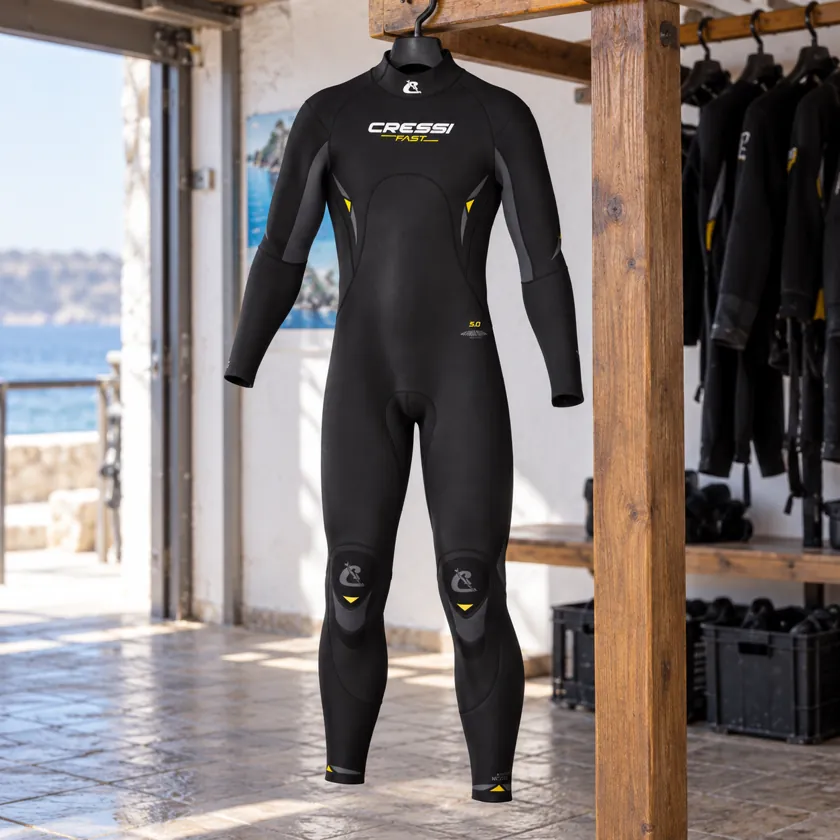 Cressi Fast 5 mm | Starting Point | 5 mm; rear zip | Current version, body cut and size | Check price on Amazon |
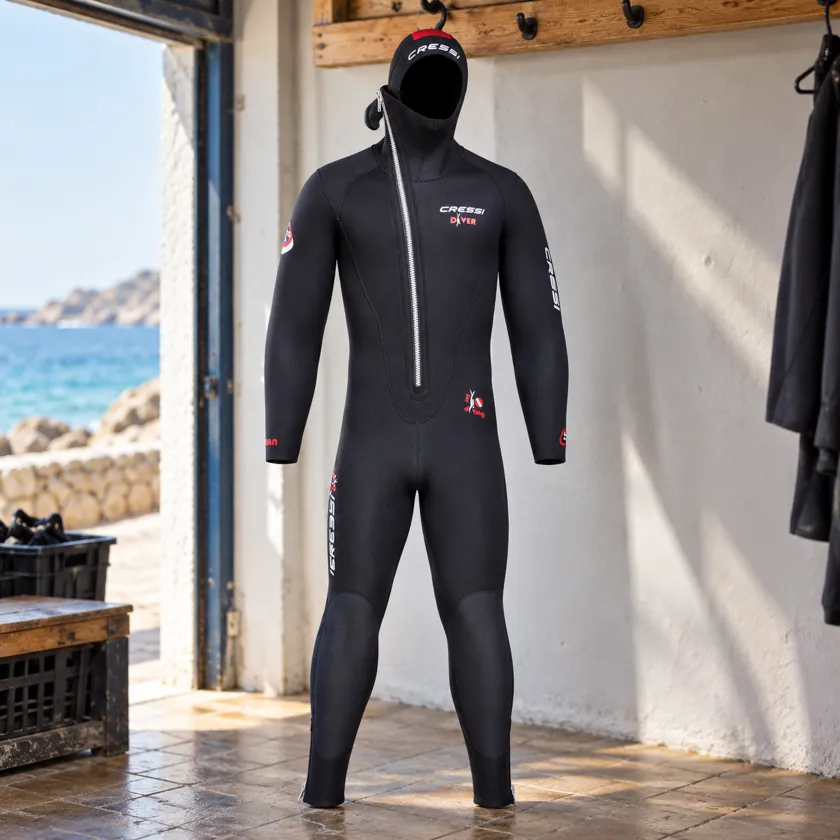 Cressi Diver 7 mm | an Integrated Hood | 7 mm; front entry; integrated hood | Adult 7 mm version and hood fit | Check price on Amazon |
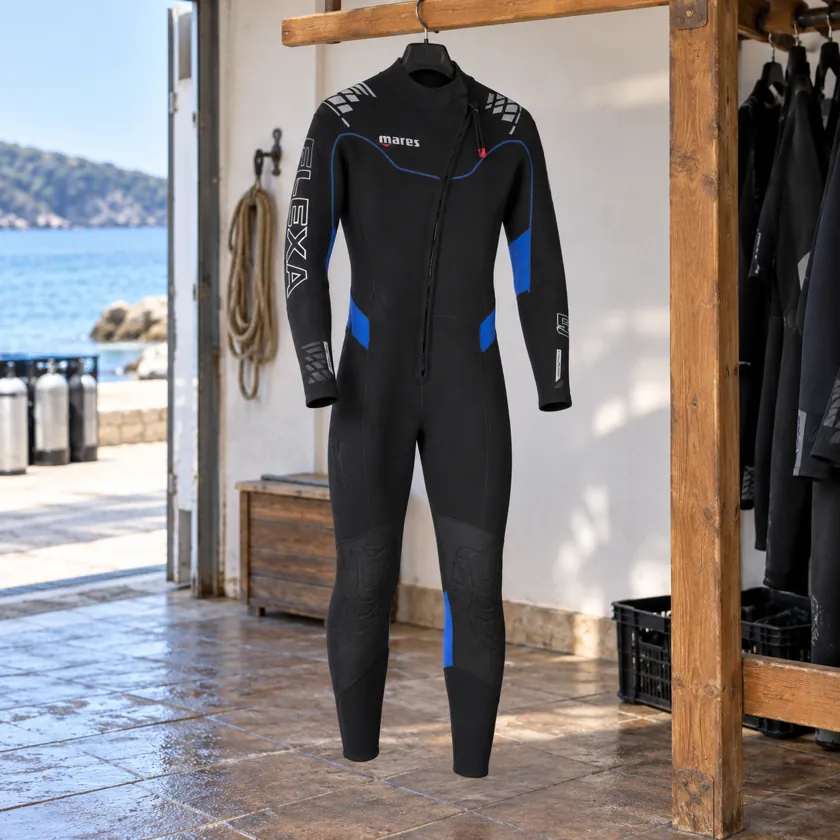 Mares Flexa 5/4 | Front Entry and Mixed Panels | 5/4 mm mixed panels; front zip | Current 5/4, not older 5.4.3 | Check Amazon listings |
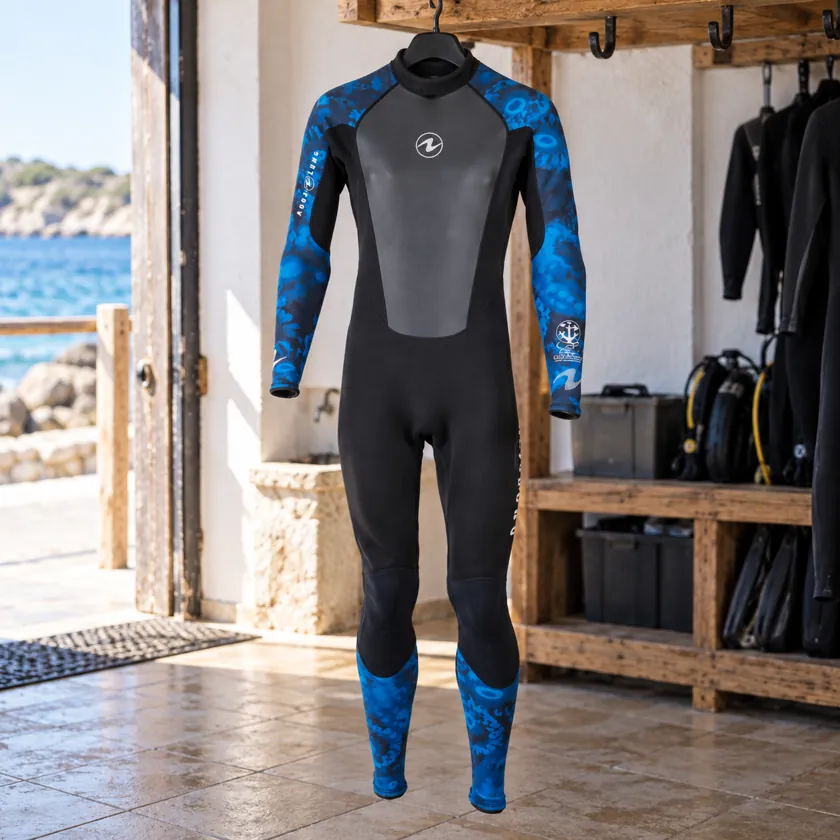 Aqualung HydroFlex Full Suit 3 mm | Lighter Full-Suit Option | 3 mm; full-length suit | Full suit, body cut and version | Check price on Amazon |
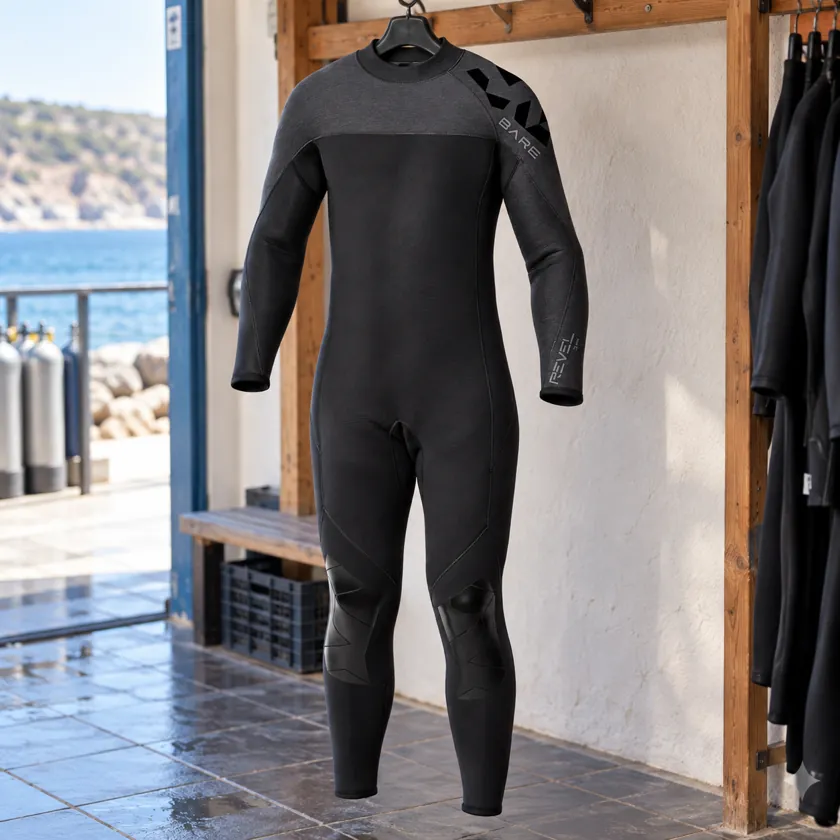 BARE Revel Full 5 mm | Alternative 5 mm Fit | 5 mm; anatomical full suit | Revel Full 5 mm and correct size | Check price on Amazon |
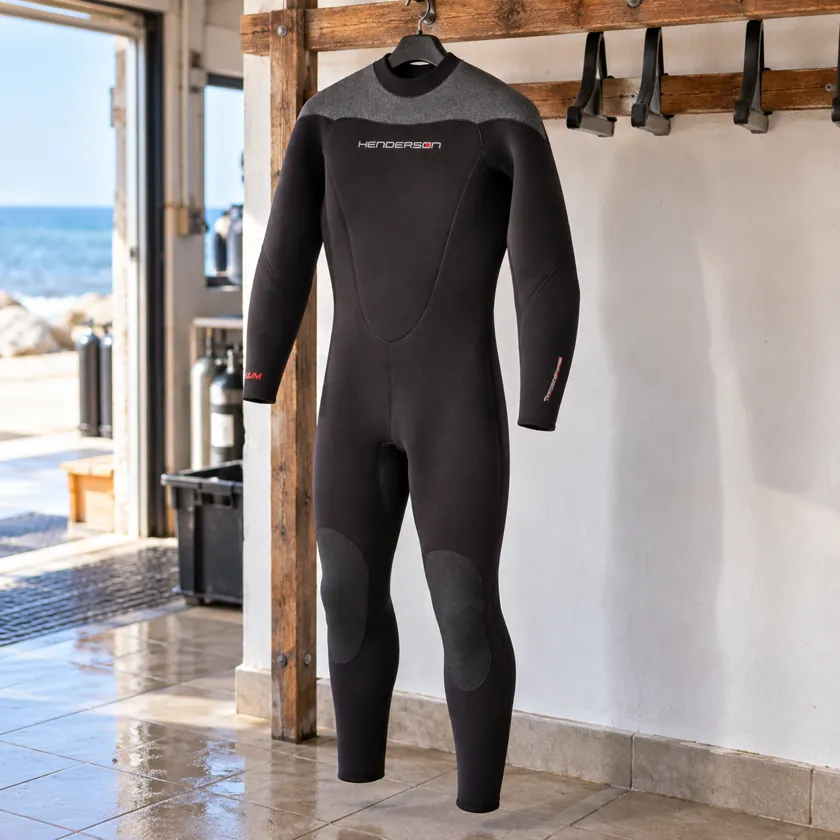 Henderson Thermoprene Pro 5 mm | Exploring Size Options | 5 mm; back zip; variant-specific sizes | Pro model, body cut and size option | Check price on Amazon |
Entries labeled “Check Amazon listings” open a search for that exact model; confirm a matching product and selected configuration before ordering.
1. Cressi Fast 5 mm — Best Overall Starting Point
The Fast 5 mm is our first fitting stop for divers who already know a 5 mm full suit fits their exposure needs. Its appeal is a familiar back-entry layout combined with specific cuff and zip details you can inspect on the garment.
Key Features
- 5 mm double-lined, ultra-stretch neoprene full suit
- Rear vertical YKK zipper with an inner flap
- Internal ring seals at the wrists and ankles
- Reinforced knee areas
- Current version must be matched to the retailer’s supplied suit
Why It’s Our #1 Pick
The Fast earns the first place here because it brings together the features many divers want to examine in a 5 mm full suit without making the buying decision needlessly complicated. The rear zip is familiar, while the inner flap and internal wrist and ankle rings give you specific places to check for a smooth, close fit.
It also sits in a useful part of this shortlist: fuller exposure protection than the 3 mm HydroFlex, without tying the purchase to an integrated hood like the Diver 7 mm. That makes it a sensible starting point for comparing the Revel and Thermoprene Pro when the planned diving already calls for a suit around this thickness.
The recommendation has a clear limit. A different cut that fits your torso and shoulders better should win, and colder or warmer conditions may call for another exposure system altogether. Try the current Fast version, check the seals and zip flap on the supplied garment, and assess it with the rest of your kit before buying.
What to Consider
Compare the Fast with the Revel and Thermoprene Pro when shopping around a nominal 5 mm full suit. Try the torso length and shoulder movement before choosing by branding or color. A similarly thick suit that fits better may be the more useful purchase. Confirm the current model, cut, size and care instructions with the seller, and do not treat a family’s 3 mm or 7 mm listing as the same product.
Pros
- Familiar rear-entry arrangement
- Cuff and zip features are easy to assess during fitting
- Useful 5 mm comparison point against other body cuts
Cons
- Rear zip access may need assistance
- Older Fast listings can show a different version
- Fit and conditions still determine warmth
Who Should Buy It?
Try the Fast first if your dive plan calls for a 5 mm full suit and you prefer a conventional rear zip. Choose another cut if it fits your shoulders, torso or cuffs better.
2. Cressi Diver 7 mm — Best for an Integrated Hood
The Diver 7 mm stands apart because its hood is part of the suit. It belongs on the shortlist when a thicker hooded wetsuit is appropriate, with hood fit treated as seriously as chest and torso fit.
Key Features
- 7 mm adult full-suit configuration
- Integrated hood
- Long front entry
- Separate from the family’s thinner and junior versions
- Hood, face opening and torso must fit together
Why It Makes the Shortlist
A connected hood can simplify the number of separate garments to organize, but it makes hood fit part of the suit purchase. Check head movement, face opening and mask placement with professional fitting assistance. If the torso fits while the hood pulls uncomfortably, the garment has not become suitable simply because the size chart matches your chest. The front entry should also be evaluated for access, flexibility and the way its closure sits when you bend.
What to Consider
This is worth investigating for divers whose locally advised exposure system includes a thicker wetsuit and hood, subject to personal fit and conditions. A manufacturer’s temperature band is not reproduced here as a universal safe range. Dive duration, repeated exposure, depth, water movement, personal cold response and surface conditions all change the decision. Ask the operator and an appropriately qualified instructor what type of system is suitable before using a shopping guide to choose thickness alone.
Pros
- Suit and hood stay together
- Front entry offers a different dressing arrangement
- Clear thicker-suit option within this shortlist
Cons
- Hood fit cannot be chosen independently
- More material to pack and dry
- Can be excessive for warmer conditions
Who Should Buy It?
Consider it when local advice and your experience point to a thicker wetsuit with a hood, and both parts fit comfortably. It is a wetsuit and does not keep you dry.
3. Mares Flexa 5/4 — Best for Front Entry and Mixed Panels
The Flexa 5/4 is worth comparing if a front zip and mixed-thickness panels suit your preferences. Check the exact 5/4 model carefully: the older Flexa 5.4.3 and other Flexa thicknesses are different products.
Key Features
- 5/4 mm mixed-thickness neoprene panels
- Stretch construction
- Front zip with a neoprene flap
- Wrist and ankle lining intended to limit water entry
- Reinforced knees and a back-and-shoulder comfort system
Why It Makes the Shortlist
The 5/4 name should not be reduced to one uniform thickness, nor should the 8/6 model’s details be copied into its specification. Ask which panels use which thickness where that affects your fitting decision. A suit can use thinner material in areas requiring movement without providing a direct, independently tested warmth comparison against a uniform 5 mm competitor. Material, seam treatment, fit and closure all remain relevant.
What to Consider
Try it beside the Fast or Revel if nominal thickness alone has left you undecided. Raise the arms, bend gently and check whether material pulls across the lower back or bunches behind the knees. Follow the supplier’s fitting process and do not force movement against an obviously unsuitable size. If adding the compatible optional vest or shorty, repeat the overall fitting rather than treating an extra layer as a simple numerical increase in warmth.
Pros
- Front zip provides an alternative to rear entry
- Panel layout balances different garment areas
- Useful details around cuffs and the BCD contact area
Cons
- Similar Flexa names can confuse listings
- Panel numbers do not provide a full warmth comparison
- Comfort features still need checking with your BCD
Who Should Buy It?
Try the Flexa alongside a conventional 5 mm suit if you value front access and freedom of movement. Confirm it is the current 5/4 version before comparing features or price.
4. Aqualung HydroFlex Full Suit 3 mm — Best Lighter Full-Suit Option
The HydroFlex 3 mm is the lighter nominal-thickness full suit in this group. It makes sense where your planned diving supports that level of exposure protection and you want full-length coverage rather than a shorty.
Key Features
- 3 mm full-length dive wetsuit
- Stretch neoprene
- Separate men’s and women’s body cuts
- Full suit and shorty are separate products
- Exact version and coverage must match the listing
Why It Makes the Shortlist
This is the lighter nominal-thickness full suit in the shortlist. It may be a useful fitting candidate where a knowledgeable local operator and your own experience support that type of exposure protection. Warm water on a destination brochure does not establish the temperature at the planned site, the duration of immersion or how an individual responds to repeated diving.
What to Consider
If your previous suit was a shorty, evaluate the additional coverage and dressing needs of a full suit rather than focusing only on thickness. Check how the cuffs meet boots and gloves where those are used. Ask the supplier for the exact garment’s care and conformity information. Do not infer a standard, test class or temperature rating from a different HydroFlex page merely because the images look similar.
Pros
- Lighter thickness within this comparison
- Full-length coverage
- Different body cuts available to investigate
Cons
- Less nominal material thickness than the other candidates
- Full suit and shorty listings can look similar
- Conditions may call for more exposure protection
Who Should Buy It?
Consider the HydroFlex for suitable warmer-water diving after checking local conditions and your personal exposure needs. Make sure the listing supplies the full suit in the correct body cut.
5. BARE Revel Full 5 mm — Best Alternative 5 mm Fit
The Revel gives you another 5 mm pattern to try when the Fast does not suit your proportions. Its value is the opportunity to find a better fit, rather than a promise that one brand’s nominal thickness is warmer than another’s.
Key Features
- 5 mm full-suit model
- Anatomical garment pattern
- Neoprene-and-laminate construction
- Separate from the Revel 3/2 mm, 7 mm and shorty models
- Elate is BARE’s corresponding women’s range
Why It Makes the Shortlist
The Revel is worth trying when a conventional full suit fits your intended exposure system and you want another pattern to compare against Cressi and Henderson. A model’s fit may work well for one torso and poorly for another, even where both buyers normally wear the same clothing size. Use the manufacturer’s chart as a starting point, then assess the actual garment rather than assuming a stretch claim removes the need for a correct cut.
What to Consider
Ask the supplier to confirm the size and version being fitted, especially if comparing clearance stock against a current product page. Inspect the zip flap and seals on the actual garment and obtain its instructions. A discounted earlier suit may still be suitable, but it should be represented as that garment. The absence of a current color in a shop is not evidence that the whole Revel range is discontinued.
Pros
- Clearly named 5 mm full suit
- Useful alternative body pattern
- Other thicknesses are identified separately
Cons
- Brand sizes are not interchangeable
- Family imagery may show another thickness
- Hood, glove and boot choices remain separate
Who Should Buy It?
Try the Revel when you need a 5 mm full suit and want another cut to compare. Match the exact garment and size rather than ordering from a family photograph.
6. Henderson Thermoprene Pro 5 mm — Best for Exploring Size Options
The Thermoprene Pro is particularly useful to investigate when body proportions make fitting difficult. Check the available short, regular or tall options for the exact thickness and color rather than assuming every chart entry is in stock.
Key Features
- 5 mm back-zip full-suit version
- Glued and sewn seams
- Aqua Silk lining
- Reinforced knees
- Size options vary by thickness and color
- Thermoprene Pro is separate from ordinary Thermoprene
Why It Makes the Shortlist
This model is worth examining when the seam construction and range of body proportions are relevant to your search. A short or tall pattern can address a different problem from simply going up a size. If a larger suit solves shoulder pressure but leaves a loose torso, another cut may be preferable. Ask the supplier to compare the measurements and observe where the garment pulls or creates empty folds.
What to Consider
Compare the Thermoprene Pro with the Fast and Revel while keeping the underlayer and fitting task consistent. A soft-feeling lining can improve the dressing experience without proving superior thermal performance underwater. If you choose a different body cut in the family, obtain that cut’s exact manufacturer specifications. Do not transfer men’s measurements or included features automatically to a women’s, hooded or front-entry version.
Pros
- Specific seam and lining details
- Size system supports a more precise fitting discussion
- Alternative to simply sizing up a loose suit
Cons
- Size choices depend on the selected variant
- Pro and non-Pro names can be confused
- Lining feel alone does not establish warmth
Who Should Buy It?
Compare the Thermoprene Pro if you need a different body proportion or want to assess its seams and lining in person. Confirm the Pro 5 mm back-zip model and exact size availability.
How to Choose a Scuba Wetsuit
Start with the water conditions, dive schedule and exposure protection recommended for your destination. Then compare body cuts and try the suit with the boots, hood and other equipment you expect to wear. A feature-rich suit that leaves empty folds is a weaker choice than a simpler suit that fits well.
Six full suits and the distinction that matters
The shortlist is Cressi Fast 5 mm, Cressi Diver 7 mm, Mares Flexa 5/4, Aqualung HydroFlex full suit 3 mm, BARE Revel Full 5 mm and Henderson Thermoprene Pro back-zip full suit 5 mm. These are distinct models rather than six color variations. A hooded 7 mm design and an unhooded 3 mm full suit are not direct thermal substitutes; including both helps explain different purchase requirements instead of declaring one the warmest or best for everyone.
Keep the comparison within the protection category you actually need. A surface-activity garment is not interchangeable with a scuba wetsuit simply because its neoprene thickness looks similar. Confirm the intended use, body cut and exact current model in the manufacturer documentation, then assess the full exposure system. A bargain in an unsuitable garment category is not a useful substitute for a suit that fits the planned conditions.
Narrow the suit choice before comparing brands
Use required exposure protection to set the first boundary. The HydroFlex full 3 mm is a thinner full-suit candidate; it is not a substitute for the hooded Diver 7 mm merely because both are called scuba wetsuits. If an incorporated hood and front entry suit the requirement, try the Diver as a complete head-and-body fit. If separate hood choice and a rear entry are preferable, the Fast 5 mm, Revel Full 5 mm and Thermoprene Pro 5 mm provide three more relevant fittings.
The Flexa 5/4 belongs in a front-entry comparison when its panel-thickness and back-comfort arrangement address a practical preference. Assess it under the BCD rather than interpreting the comfort-system name as a result. Among the three nominal 5 mm rear-entry candidates, compare torso length, cuff contact, movement and the actual sizing options before seam or lining claims decide the outcome. Reject a poorly fitting suit even when it has the desired thickness. Renting a suitable local configuration first may clarify an uncertain thermal requirement better than ordering a thicker suit by guesswork.
Start with conditions before choosing a model
Ask the operator for expected water conditions at the sites and time of year you will visit, including variation with depth and weather. Then discuss the exposure system with an appropriately qualified instructor or professional who knows those conditions. A destination’s air temperature is not a reliable substitute for the water information. Repeated dives, boat rides and the ability to warm up between dives can also change what is practical.
Your own experience matters, provided you compare similar circumstances. Being comfortable in one suit for a brief warm-water swim does not establish comfort during longer or repeated scuba dives. Avoid turning an anecdote into a guarantee for somebody else. Our wetsuit-thickness guide addresses this system decision; this article helps compare products once the appropriate type of protection has been established.
Thickness is not a complete insulation rating
The printed millimeter value can describe one main material thickness or a combination of panels. The Flexa 5/4 is an explicit example of mixed thicknesses. Other garments may use seals, linings and overlays whose dimensions are not equivalent to the main neoprene. Do not add all those numbers together and present the sum as effective protection.
Neoprene changes under pressure, and real comfort depends on more than the label. Surface thickness alone cannot predict warmth at depth. Where a manufacturer supplies a test class or conformity statement, match it to the exact product. A claim attached to one garment is not proof that every similarly named suit meets that description.
Understand fit and unwanted water movement
A wetsuit is intended to fit closely enough to limit avoidable water circulation while allowing normal breathing and movement. Loose areas, an ill-fitting neck or cuffs positioned incorrectly can undermine that arrangement. An extremely tight garment is not automatically warmer in practice if it restricts comfortable movement or cannot be worn correctly. A professional fitting should consider the whole body rather than only the chest measurement.
Look for the difference between necessary material flexibility and excess empty space. Pay attention to the lower back, underarms, groin and behind the knees, without expecting every body’s contours to match a catalog image. If you cannot achieve a reasonable fit across those areas, try another cut. Repeatedly tightening a collar cannot compensate for a torso that is much too long.
Use measurements as the beginning of a fitting
Take the measurements the particular manufacturer requests and use its chart, in the correct units. Do not apply a Henderson short-size label to a Cressi size or assume a Mares medium matches your everyday clothing. If measurements cross multiple size bands, ask the supplier which cuts are suitable rather than choosing solely from body weight.
During a dry fitting, use the underlayer you intend to wear if the manufacturer and shop permit it. Check the garment’s instructions for dressing and closure. Do not pull delicate seals, use fingernails to force material into place or operate a zipper under unreasonable tension. A garment that requires force to close deserves a fitting reassessment before any purchase decision.
Compare front and rear entries in your routine
Front entry and rear entry change how a suit is put on and closed. The connected-hood Diver and front-entry Flexa create a useful comparison with the rear-entry Fast and Thermoprene Pro. A front zip may make part of the closure easier to reach, but that does not establish a universally easier dressing experience. Flexibility, assistance, the opening shape and the garment’s fit all matter.
Ask for a demonstration of the actual zipper and internal flap arrangement. Check whether the collar sits correctly after closure and whether you can move comfortably without loading the zip. Keep the operation within the maker’s instructions. A zipper that catches lining should not be forced to make the suit appear to fit during a quick shop trial.
Hood, glove and boot interfaces
Decide whether the exposure system needs a hood and whether a connected or separate arrangement is appropriate. An integrated hood has to fit with the torso, while a separate hood adds another interface to position. Check the face opening with the mask you actually use. Do not assume that a loose hood can be fixed by trapping material beneath the mask’s sealing edge.
Gloves and boots likewise affect cuff arrangements and dexterity. Follow the equipment maker’s advice for overlapping components and obtain fitting assistance when unsure. Our hood fitting guide and glove fit comparison explain those decisions without prescribing one universal overlap for all suits. A full exposure system should be tried together before travel.
The BCD changes the fitting experience
A suit that feels comfortable while standing alone can behave differently beneath a harness, cylinder attachment and weight system. Try the relevant equipment arrangement with qualified assistance. Look for a collar or zipper position that becomes uncomfortable under normal harness placement and check that the BCD’s intended adjustment range still works over the garment.
Changing exposure protection can affect buoyancy and weighting. Resolve those changes through your training and appropriate in-water checks; do not use a buying article to assign a fixed weight allowance per millimeter of neoprene. Also check boots against fin pockets if you change their thickness or sole construction. One suit purchase can alter several interfaces in the equipment system.
Seams and seals need their own inspection
Different seam methods and linings create meaningful design differences, but broad claims of maximum warmth do not establish a measured comparison. Henderson explicitly documents the Thermoprene Pro’s seam arrangement. Ask the supplier to confirm the seam method for the exact cut; an external photograph may not show it.
Inspect seam areas for obvious faults on the garment you receive, following the supplier’s advice. Check cuff and zip components without stretching them beyond their intended range. A product’s knee reinforcement can protect a wear area, but it is not permission to kneel on fragile habitat or repeatedly drag equipment across rough surfaces. Good fit, handling and environmental care remain separate from durability marketing.
Shop for proportions instead of a flattering label
The useful size is the one that fits, regardless of the letter printed inside. Short, tall and alternate body cuts can be more helpful than choosing a larger standard size. If arm length is right but the torso is loose, document that observation and compare another pattern. It is easier for a supplier to help with a specific fit problem than with a request for the most flexible suit.
Also leave time to reassess fit if your measurements change between ordering and travel. A suit stored from a previous season should be tried again, not packed on the assumption that it fits because the label has not changed. Keep the return deadline in mind when ordering multiple sizes, and establish the shop’s rules before wearing anything in water.
Budget for ownership and drying space
Include required exposure accessories and suitable care equipment in the purchase decision. A compact 3 mm full suit and a thick hooded garment can create different drying and luggage demands. Think about where the interior can dry between dives and where the suit will be stored at home. Compressing damp neoprene into a closed bag is a poor storage plan regardless of the brand.
Read the exact care instructions for rinsing, cleaning, hanger use and zipper maintenance. Avoid household chemicals or unapproved treatments. Our wetsuit cleaning and storage guide covers the general planning, while the garment’s manual controls the specific method. Protect a wet suit from rough packing surfaces and allow for a realistic drying period on the return trip.
A useful trial record
Write down the model, version, cut, thickness and size of each suit you try. Record specific pressure or loose areas and the underlayer used. Include whether the hood and mask worked together and whether the zipper could be operated correctly. Those observations let you compare a second fitting without relying on vague memories of one suit feeling better than another.
Keep the task consistent when comparing garments. Changing the underlayer, accessories and size at the same time makes it difficult to identify what helped. If a controlled in-water trial is available, follow its conditions and your training. Use the trial to compare fit and movement under those conditions, then consider how your planned dive schedule differs.
Avoid misleading listing shortcuts
Confirm whether the listing supplies a full suit, shorty, jacket, hood or complete layered package. Product-family photographs sometimes show components sold separately. A title that includes the word system does not prove that all pictured garments are in the box. Verify the manufacturer part number, thickness and body cut with the seller where the selection controls are unclear.
Check the seller’s return policy and regional warranty arrangements before ordering. A marketplace return promise is separate from a manufacturer’s warranty, and a fulfilled shipment does not by itself establish authorized-dealer status. Be cautious about an offer whose documentation cannot be matched to the supplied suit. An appealing discount does not compensate for receiving the wrong thickness, an unsupported historical version or an unusable fit.
Choose within the right group
If a nominal 5 mm full suit suits the professionally advised exposure plan, compare the Fast, Revel and Thermoprene Pro primarily on fit, entry and listed construction. Add the Flexa 5/4 as a panel-thickness and front-entry alternative. If a hooded thicker system is appropriate, evaluate the Diver 7 mm as that configuration. If a lighter full suit is appropriate, fit the HydroFlex 3 mm while preserving the distinction from its shorty relatives.
Use the ranking to narrow the fitting shortlist, then reject any poor fit, resolve the model identity and verify the purchase option before ordering. The useful outcome is a properly supported exposure system you understand and can maintain. Buying the highest millimeter number without that process can produce an unsuitable garment just as easily as choosing the lightest one.
When renting first can improve the purchase
If you have only used one rental suit, ask an operator whether another appropriate cut or entry arrangement is available before buying your own. Keep the comparison within the protection recommended for the actual conditions. The purpose is to learn which fit and dressing features matter to you, not to experiment with insufficient exposure protection in order to test a thinner garment.
Record the rental model and size while it is available. A note that a five-millimeter suit fitted well is incomplete if you later discover that the helpful difference was a short torso or a particular neck shape. Discuss persistent fitting problems with a knowledgeable supplier. A personal suit can improve consistency, but ownership alone does not prove that it is a better fit than the rental equipment you already understand.
Inspect an older suit before replacing it
A replacement decision should begin with the reason the current suit no longer meets your needs. A damaged zipper, visible seam separation, a changed body fit and a different dive environment are separate issues. Ask the manufacturer or a qualified repair provider which faults can be assessed or repaired. Do not assume that adding a vest resolves damage or that choosing a thicker new suit fixes a poor cut.
Keep a simple history of repairs and changes in comfort. If a suit that once worked now feels different, compare the circumstances as well as the garment. Different underlayers, longer dives or colder surface intervals can explain part of the experience. The next purchase should address the identified requirement with a supported model and fitting, rather than using age alone or a new marketing term as the whole explanation.
Frequently Asked Questions
What thickness scuba wetsuit should I buy?
Match thickness to the actual water temperature, depth, dive duration, repeated dives and your own response to cold. Ask the local operator about the planned sites, then consider the complete exposure system, including hood and boots. There is no single thickness that keeps every diver comfortable in a given temperature.
How tight should a scuba wetsuit feel?
It should fit closely without restricting breathing or ordinary movement. Watch for loose folds around the torso, pulling at the shoulders, and pressure at the neck, wrists or ankles. Start with the maker’s measurements and have the actual suit assessed during a fitting; everyday clothing size is only a rough guide.
Is a 5/4 mm suit the same as a 5 mm suit?
A 5/4 mm suit uses different nominal material thicknesses in different panels. It should not be described as uniformly 5 mm or automatically warmer than another suit. Compare the panel layout, closures, seams and overall fit rather than turning the two numbers into a complete insulation rating.
Should I choose a front zip or a back zip?
Choose the entry you can manage comfortably and that sits well when you bend and wear your BCD. A front zip can be easier to reach, while many divers already know a conventional rear entry. Neither layout compensates for the wrong torso length or a poorly seated zip flap.
Is an integrated hood better than a separate hood?
An integrated hood keeps the hood and suit together, but both must fit as one garment. A separate hood lets you choose its fit and thickness independently. Check head movement, mask placement and the neck interface instead of assuming either arrangement is better for every diver.
Can I use the same size across different wetsuit brands?
Do not assume the labels are interchangeable. Different patterns can suit different torso lengths, shoulder widths and limb proportions. Compare the chart for the exact model and body cut, then try the garment. Short or tall options may solve a proportion problem more effectively than going up a whole size.
Our recommendation
Final Verdict
Start by trying the Cressi Fast 5 mm if a 5 mm full suit matches your diving. Its rear entry and cuff treatment make it a straightforward candidate to compare with the BARE Revel and Henderson Thermoprene Pro. Let body fit decide between them.
,Choose the Diver 7 mm for a suitable thicker, integrated-hood setup; compare the Flexa 5/4 for front entry and mixed panels; and consider the HydroFlex 3 mm where lighter exposure protection is appropriate. The right suit is the one that fits comfortably and supports your actual dive plan, rather than the thickest model or the biggest discount.
Specifications and Manuals
For model details, see Cressi Fast 5 mm specifications, Cressi Diver 7 mm specifications, Mares Flexa 5/4 specifications, Aqualung HydroFlex Full Suit 3 mm specifications, BARE Revel Full 5 mm specifications, Henderson Thermoprene Pro 5 mm specifications.
About the author
Robert
Robert bohat acha bacha hay