
By Robert · Updated
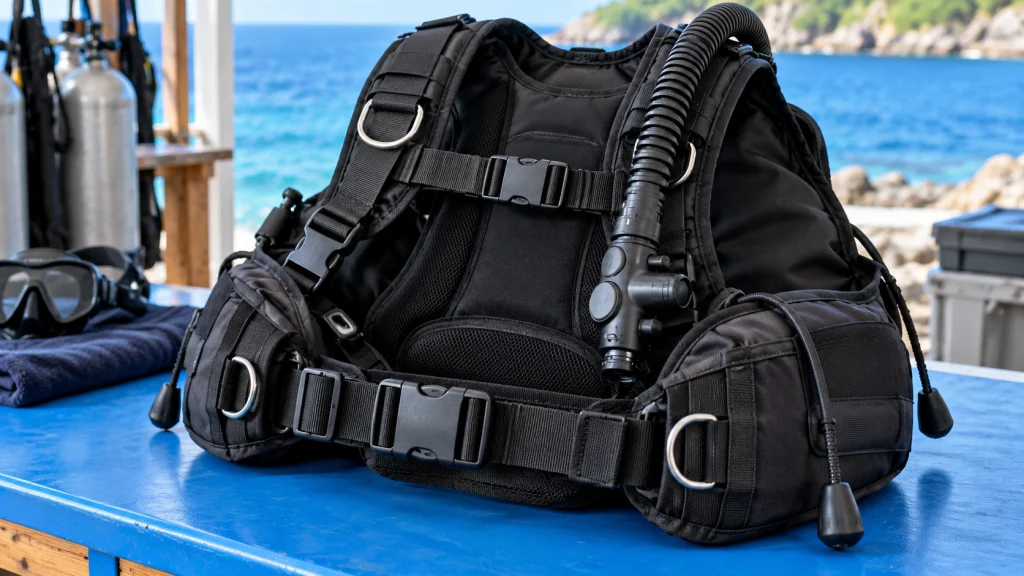
Scuba BCD maintenance combines manufacturer-directed cleaning, regular inspection and professional servicing where required. The pre-dive inspection is a separate check of the equipment as it will be used that day. A clean exterior does not establish that the bladder, inflator, dump mechanisms, harness and weight-retention system are ready. Use the manual for the exact BCD and treat unexplained leaks, sticking controls or damaged retention parts as reasons to obtain qualified help before diving.
Know which BCD and inflator you own
Record the full model, size and inflator arrangement. Product families can contain different versions, and replacement components may have specific compatibility requirements. Keep the manual available with service records. If equipment was bought used, confirm what was changed and whether the current assembly matches the maker’s approved configuration.
Check how the manufacturer distinguishes owner care from authorized servicing. A component that can be removed physically is not automatically intended for owner disassembly. Do not copy an internal cleaning or repair process from a video showing a different model. Knowing the correct equipment and instructions prevents a well-intentioned care routine from creating another fault.
Inspect the exterior before rinsing
Look at the bladder covering, seams, webbing, cylinder attachment and hardware in good light. Check for cuts, abrasion, looseness or a new change in shape. Pay attention to areas that rub against a boat deck or another piece of equipment. Empty pockets so small accessories do not remain hidden during cleaning.
Record anything unusual before it is forgotten. A photograph of an abrasion or loose fitting can help an authorized service provider understand the concern. Do not conceal damage with a patch or tighten unfamiliar hardware by guesswork. The first decision is whether the BCD remains suitable for use, not how quickly the mark can be made less visible.
Rinse outside according to the manual
Use the cleaning method and water conditions specified by the manufacturer. Give attention to salt and grit around buckles, zippers, attachment points and other accessible areas. Avoid a high-pressure cleaning method or a chemical chosen for convenience unless it is expressly supported for the equipment.
Protect the unit from being dragged or stepped on while it is being cleaned. A crowded communal rinse area can introduce new grit or rough handling. Use appropriate support and make space for the BCD to drain. Do not leave it loaded with unrelated heavy objects while moving it between the rinse and drying areas.
Follow the model’s internal bladder-care procedure
Water can enter the bladder during normal use, and internal care needs the correct method. Manufacturers specify how fresh water is introduced, moved and drained through the particular valve and inflator arrangement. Follow those instructions rather than treating all BCDs as identical containers.
Do not remove valves or fittings casually to speed rinsing. If the manual’s method is unclear, ask an authorized dealer or technician to demonstrate it. Make sure the prescribed draining steps are completed before storage. A tidy exterior can hide retained water, and a generic rinse of the outside does not replace the maker’s internal-care requirements.
Dry and support the BCD appropriately
Use the recommended drying location and support. Keep the unit away from excessive heat and direct sun where the instructions require it. Check pockets, padded areas and folds that can remain damp after the outer surface feels dry. A tightly folded BCD may dry poorly in the center even in an otherwise ventilated room.
Follow the maker’s specified bladder condition for storage. Do not force inflation or assume the same arrangement applies to a jacket BCD, a back-inflate unit and a modular wing. Support the equipment without concentrating its weight on a component not intended as a hanger. Leave enough space that hoses and controls are not bent sharply against a wall.
Inspect the low-pressure inflator system
Look for visible damage or contamination on the hose and inflator assembly, and perform the functional checks described in training and the manual. Know how the particular controls are intended to behave. A button that sticks, an unexplained flow of gas or a connection that does not operate correctly needs assessment before use.
Do not dismantle the inflator or alter a pressurized connection as an improvised repair at the dive site. Use qualified service where required and compatible parts. Changing an inflator can affect hose compatibility and familiar control use, so the complete setup needs checking and appropriate familiarization after any approved replacement.
Check dump controls and their access
Locate the deflation mechanisms on the actual unit and inspect the accessible parts according to the manual. Confirm that nothing in the equipment layout blocks the controls or creates an unfamiliar pulling direction. A release cord and a carrying handle can look like convenient attachment points while having different purposes.
Use the manufacturer’s functional procedure rather than inventing a pressure test or a time-to-deflate standard. If a control does not respond as expected, stop and seek help. Cleaning a visible surface is not proof that a valve is functioning correctly inside. Operational behavior needs to make sense before the BCD is taken into the water.
Review harness and cylinder attachment
Inspect webbing, stitching, buckles, adjustment mechanisms and the parts that retain the cylinder. Check for wear, deformation or slipping. The attachment procedure may differ between designs, especially when using unfamiliar rental equipment or changing cylinder dimensions. Follow the manual and trained routine for that arrangement.
Fit the BCD with the exposure protection and other equipment you will use. Do not assume last season’s harness setting remains appropriate after a change in suit thickness or body measurements. A unit can be in good mechanical condition yet poorly adjusted for the diver. Our jacket and back-inflate comparison discusses why harness fit belongs alongside bladder layout in equipment selection.
Check integrated weight retention separately
If the BCD uses integrated weights, identify the approved pockets and their seating or locking method. Confirm the capacity and type of weights allowed for the particular system. A pocket that looks similar is not necessarily compatible, and its presence does not prove it is secured correctly.
Practice the required identification and release skills only as trained and in an appropriate setting. Make sure the buddy understands the arrangement. If a pocket will not seat, a handle is damaged or access is obstructed, resolve it before diving. The weight-system comparison separates retained ballast, accessible releases and the role of different weight positions.
Include accessories in the inspection
Look inside pockets and around clips, reels and other attached equipment. A useful accessory can also rub against material, block a control or remain wet in storage. Remove anything that does not belong in the current dive configuration. Inspect attachment arrangements within your training rather than adding tethers by guesswork.
After changing accessories, repeat the relevant fit and access checks. A neat-looking arrangement while the BCD is empty may sit differently once worn with the full kit. If the equipment is unfamiliar, discuss it with an instructor before relying on it in a demanding environment. Maintenance and configuration are related, but they answer different readiness questions.
Arrange service on the correct schedule
Use the manufacturer’s current service instructions and the condition of the equipment. Do not assume one annual interval quoted online applies to every BCD or every use pattern. Frequent use, an incident or an operational fault can create a need for assessment before a calendar reminder is due.
Keep a record of the provider, date, work and any remaining advice. After service, review what changed and perform the prescribed checks before returning to ordinary use. A service receipt does not replace a pre-dive check, and a successful check does not cancel a required service appointment. Both are parts of responsible equipment ownership.
Buying or borrowing a used BCD
Before relying on a used unit, identify its exact model, size, approved components and any available service history. Inspect it in person where possible and have uncertain condition assessed by a qualified facility. A photograph showing an inflated bladder cannot establish the condition of every valve, hose, retaining component or seam. Ask whether replacement parts and authorized service remain available for that version.
Fit is still a separate question. A sound used BCD can be a poor purchase if its harness does not suit your body or exposure equipment. Do not accept missing weight pockets or an unfamiliar replacement inflator without resolving compatibility. The saving is meaningful only after the complete unit is appropriate, serviceable and understood. Include any necessary assessment, approved parts and familiarization in the cost and time needed before its first dive with you.
Build a repeatable care routine
Prepare space for cleaning, drying and inspection at the end of a diving day. Keep the manual accessible, identify faults clearly and allow time before the next trip for qualified help. Store the BCD without unnecessary compression or hidden damp items, following the model’s instructions. If a change of BCD is being considered, our BCD comparison helps identify harness, inflator and weight-system differences before a fitting.
SCUBAPRO’s equipment-care overview and DAN’s equipment inspection guidance provide useful background. The exact BCD manual and relevant training determine the procedure you use. A dependable routine preserves condition, confirms familiar operation and makes uncertainty a reason to pause before the next dive.
About the author
Robert
Robert writes about scuba-diving equipment for GearDeep, focusing on fit, compatibility and the practical differences between products. His buying guides use manufacturer specifications and manuals to help readers compare their options, understand important limitations and make informed equipment choices.